
Did you know there is a Japanese tradition where someone dresses up as an oni and the rest of the family throws roasted soybeans at them? That custom is part of Setsubun, one of Japan's best-known seasonal rituals.
The atmosphere around Setsubun mixes humor, purification and a very old fear of bad luck. The idea is simple: drive misfortune out before the new season begins and invite good fortune into the house instead.
What is Setsubun?
Setsubun (節分) literally means the division of the seasons. Today, the word is mainly used for the celebration held at the beginning of February, just before spring according to the traditional calendar, usually between February 2 and 4.
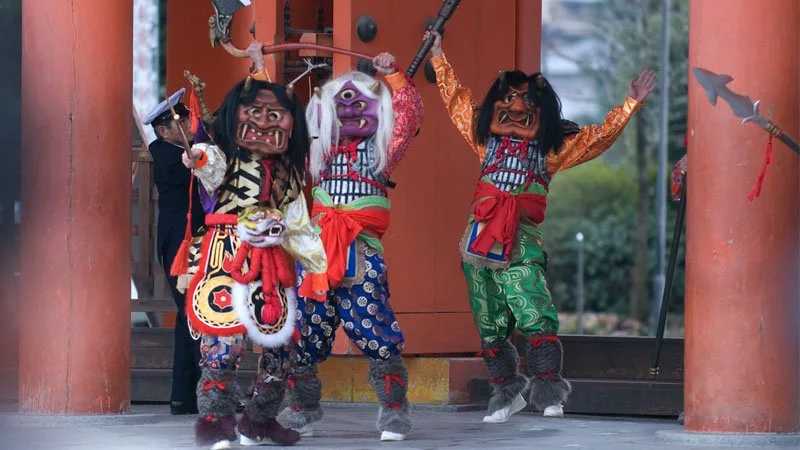
On that day, many families perform a ritual called mamemaki (豆まき), or bean throwing. Roasted soybeans are thrown at a person wearing an oni mask while people shout phrases meant to push bad spirits away and welcome luck in.
The best-known chant is Oni wa soto! Fuku wa uchi!, which means roughly “Out with the demons! In with good fortune!” The phrase is short, but it captures the whole mood of the festival.
Setsubun is closely tied to the beginning of spring, known as risshun. In older beliefs, the change of seasons was seen as a vulnerable moment, when illness, misfortune and harmful spirits could more easily enter daily life.
Where the bean-throwing ritual comes from
Like many old Japanese customs, Setsubun absorbed influences that came from China and were gradually reworked inside Japan. One of its older roots is a court ceremony known as tsuina or oniyarai, performed in the Heian period to drive away evil before the new season began.
Over time, the ritual became more familiar and domestic. Instead of remaining only in elite ceremonies, it turned into a household custom where family members reenact the expulsion of bad spirits through the symbolic act of throwing beans.
That is why the oni became such an important figure in Setsubun. The oni is not just a monster from folklore here, but a stand-in for bad luck, sickness, misfortune and whatever should be left behind before spring arrives.
Why soybeans are used
In Setsubun, roasted soybeans are believed to help purify the home and drive away harmful spirits. Beans are thrown at the oni figure and sometimes around the entrance of the house as a symbolic cleansing gesture.
There is also a food custom linked to the festival. Many people eat the same number of beans as their age, or one more than their age, as a wish for health and good fortune in the coming year.
Because soy is central to Japanese food culture, the festival also connects naturally with foods made from soybeans, such as tofu, natto and miso. If you want to explore that side more, take a look at these Japanese soy-based foods.
Other Setsubun customs
Another tradition often associated with the date is eating ehomaki, a thick sushi roll eaten whole without cutting it. The idea is that cutting it would symbolically cut off your luck, so people eat it in one piece while facing a lucky direction for the year.
Temples and shrines also hold their own Setsubun events. In many places, visitors gather to watch bean-throwing ceremonies, receive lucky items, and take part in a more public version of the same purification custom seen at home.
Even though Setsubun is celebrated across Japan, it is not a national holiday. Still, it remains one of those traditions that many people remember fondly because it combines folklore, food, family ritual and the arrival of a new season.
Why Setsubun still stands out
Setsubun is one of those festivals that says a lot about Japan in a very simple way. It turns the start of spring into something playful, symbolic and surprisingly memorable. A handful of beans, an oni mask and a short chant are enough to express the hope of leaving bad things behind and stepping into a luckier season.
If you want to see the ritual in action, this video shows a school version of mamemaki:


Community
Comments
0 comments
There are no published comments in this language yet.
Send comment