
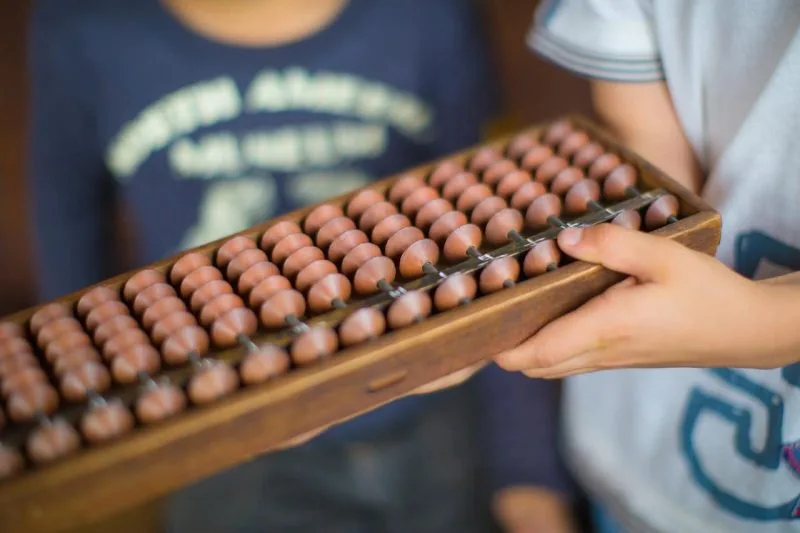
Some people think of the abacus as a children's tool, but in Japan the soroban has long been treated as a practical instrument for calculation and mental training. Even in the age of calculators and smartphones, it still carries a strong reputation for discipline, speed, and number sense.
Soroban (そろばん) is the Japanese abacus. It descends from the Chinese suanpan, which was introduced to Japan centuries ago and gradually refined into the form that became widely known there. What looks simple at first glance turns into a surprisingly deep technique once you start learning how the beads represent numbers and movement.
Abacus-like tools existed in several ancient civilizations, but the soroban became one of the most recognizable versions because of how efficiently it was adapted for calculation practice and education in Japan.
The word soroban is usually written as 算盤. The first kanji is linked to calculation, while the second refers to a tray or board. Together, the term points directly to its role as a tool for handling numbers.
How soroban is used in Japan
In Japan, soroban has been taught for generations as a way to strengthen arithmetic skills, concentration, and mental visualization. Some children start learning it very young, and advanced learners may continue into formal certification programs. In some office-related roles, soroban qualifications have also been valued as proof of speed and numerical accuracy.
Using a soroban can support the study of mathematics, but many people are drawn to it for another reason as well: the mental training. With practice, learners begin to visualize bead movements internally, which is why soroban is closely associated with rapid mental arithmetic.
Beyond addition and subtraction, skilled users can work with multiplication, division, decimals, time calculations, measurement conversion, and even square or cube roots. That is one reason the soroban continues to impress people who assume it is just an old classroom prop.
As people get better with the instrument, many start developing stronger mental calculation skills. In advanced practice, the goal is not only to move the beads quickly but to imagine them without even touching the device. This mental technique is often called anzan (暗算), or mental calculation.
That is why soroban is not just a counting device. For many dedicated learners, it becomes a long-term practice that sharpens speed, accuracy, and confidence with numbers.
Benefits of learning the Japanese abacus
People who study soroban often notice improvements in areas such as:
- Concentration, especially when working with numbers
- Memory and mental visualization
- Logical thinking
- Attention to detail
- Faster information processing
- Mental arithmetic skills
- Discipline and consistency
Of course, not every claim around soroban should be treated like magic. Still, it is easy to understand why it remains respected as a training method rather than just an old-fashioned tool.
How the soroban is built
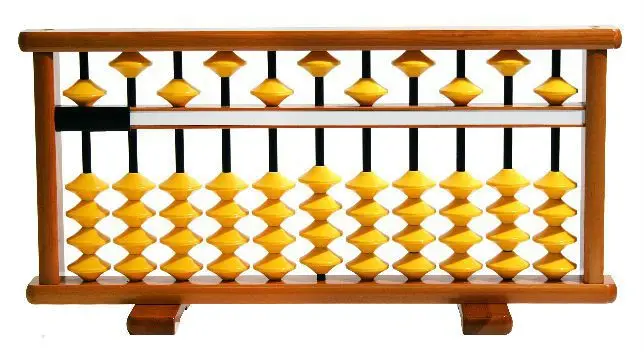
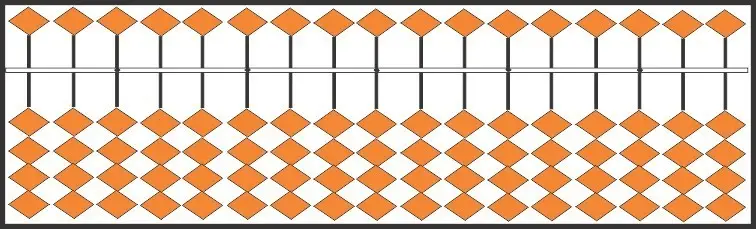
A soroban is made of vertical rods, and each column represents a place value such as units, tens, hundreds, and so on. Each column is divided into two sections. The upper section has one bead, while the lower section has four beads.
The single upper bead is called godama, because go means five. Each lower bead is called ichidama, because ichi means one. Together, these beads allow a column to represent values from 0 to 9 with efficient movements.
The frame is called waku, and the horizontal divider between the upper and lower beads is known as hari. The rods on which the beads slide are often referred to as keta.
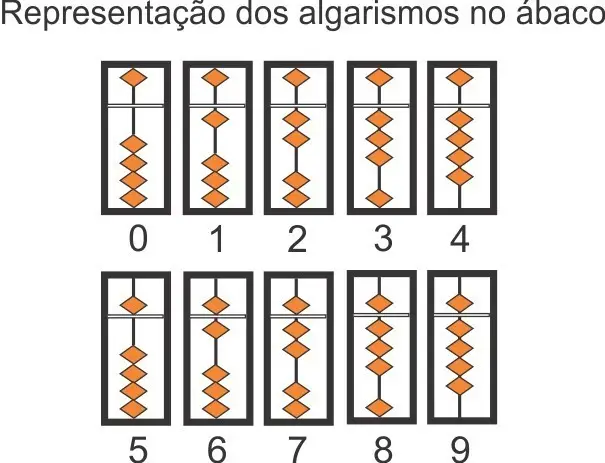
When the upper bead stays away from the bar and all lower beads are also away from it, the soroban is set to zero. Moving one lower bead toward the bar represents 1, then 2, 3, and 4. To represent 5, you move the upper bead toward the bar instead.
It sounds simple, but real speed only comes with technique. Once the basics are mastered, calculations become much more fluid than most beginners expect.
Why soroban still matters
The soroban is one of those traditional tools that still feels surprisingly alive. It connects arithmetic, memory, rhythm, and visual thinking in a way that calculators do not. That is probably why it continues to attract both children and adults, from curious beginners to highly trained competitors.
If you want to see soroban skill in action, this video gives a good idea of how fast experienced users can be:




Community
Comments
0 comments
There are no published comments in this language yet.
Send comment