
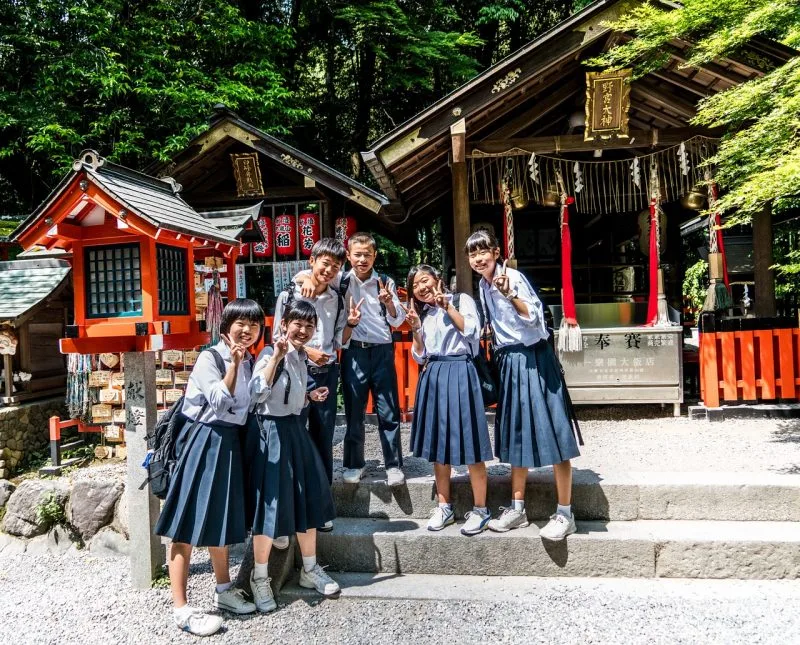
Few settings are as instantly recognizable in anime as the Japanese school. Classrooms, rooftop lunches, after-school clubs, sports festivals and graduation scenes appear so often that even people new to anime start recognizing the pattern quickly. It is one of those settings that feels ordinary inside Japan but iconic once it becomes part of global pop culture.
The reason it appears so much is not just habit. School life works because it combines familiarity, emotional intensity and strong narrative structure. It gives creators a place where relationships, insecurity, comedy, romance and even supernatural events can unfold without needing much setup.
School is a setting almost everyone understands
One obvious reason school life appears so often is practicality. Most viewers understand what school means at a basic level. Even when the details are different, the structure is easy to follow: classmates, teachers, clubs, exams, crushes, friendships, rivalries and graduation. That familiarity lets stories move quickly.
For Japanese audiences, school is a shared reference point. For international viewers, it feels familiar enough to follow but different enough to stay interesting. Uniforms, club culture, etiquette and school festivals all add a layer of cultural curiosity.
Youth is one of anime's favorite emotional zones
High school in particular is often treated as a special moment before adult life becomes heavier. In Japan, adulthood is commonly associated with stronger social expectations, long work hours and less personal freedom. School years can therefore be framed as the last space where identity still feels open and possibility still feels close.
That makes it the perfect stage for first love, friendship, insecurity, self-discovery and emotional growth. These themes travel easily across cultures because the emotional core is recognizable even when the school system itself is not.
Club culture gives stories built-in structure
Japanese schools put real emphasis on extracurricular clubs, or bukatsu. From a storytelling perspective, that is incredibly useful. Clubs create goals, hierarchies, team dynamics, rivalry and routine all at once.
| Element | Why it works in anime |
| School clubs | Built-in group dynamics |
| Festivals | Natural spectacle and tension |
| Exams | Easy conflict and pressure |
| Graduation | Clear emotional closure |
Because of that, a school setting can support comedy, sports drama, romance, slice-of-life and even fantasy without feeling forced. The framework is already there.
It also makes sense for the industry
From a production point of view, school settings are efficient. They are visually reusable, easy to establish and flexible enough to support long-running stories. A classroom, hallway, rooftop or club room can become an emotional anchor the audience returns to again and again.
Many anime are also adapted from manga or light novels aimed at teenagers and young adults, so school naturally fits the intended readership. That overlap between audience, source material and setting helps explain why the formula keeps returning.
School life can hold realism and fantasy at the same time
One of the smartest things about school-life anime is that it does not have to stay realistic. A school setting can support a quiet story about awkward confessions, or it can suddenly host spirits, time loops, hidden powers and alternate realities. Because the environment is familiar, even strange events feel more grounded.
That balance is part of what makes the setting so durable. It offers emotional safety while still leaving room for imagination.
It also became a window into Japan
For international audiences, school anime often works as a cultural entry point. People notice things like group responsibility, school cleanliness, club dedication, different student-teacher dynamics and the ritual side of daily life. Even when anime exaggerates reality, it still introduces viewers to recurring cultural patterns.
This is one reason school settings remain so attractive in anime fandom. They are not only relatable. They also teach viewers how Japanese media likes to frame youth, community and growth.
If you want to understand why those emotional dynamics hit so strongly, it also helps to look at how otaku culture and fandom developed, since school-life anime became one of the most important spaces where fandom identity grew.
Why it still works
Japanese school life remains popular in anime because it sits in a very useful intersection: it is relatable, flexible, emotionally charged and easy to build stories around. It can feel nostalgic to older viewers and immediately accessible to younger ones. It supports both realism and escapism without breaking either.
Final thoughts
School life in anime is not just a default background. It is one of the medium's most reliable storytelling engines. It gives creators a structured world where people can fall in love, make mistakes, compete, grow and imagine something bigger than daily routine.
As long as anime keeps returning to themes like identity, friendship and coming of age, the Japanese school will probably remain one of its strongest and most recognizable stages.




Community
Comments
0 comments
There are no published comments in this language yet.
Send comment