

Itadakimasu and Gochisousama Deshita are two Japanese expressions used during meals to thank for the food. What few people know is their real meaning and history, so let’s study these two words of the Japanese language in depth.
Itadakimasu [頂きます] is an expression used before meals that literally means “to receive“. It is used to show gratitude for the food and those involved. It is customary to bow the head and bring the hands together as in a prayer.
Gochisousama Deshita [御馳走様でした] is something similar to itadakimasu, but it is used after meals and can be literally translated as thank you for the meal. It is not necessary to say these two expressions out loud.
The History of Itadakimasu
The kanji used in the word Itadakimasu [頂] also means “top”, and the verb itadaku [頂く] originally means “to place something above the head”. A long time ago, people would place food above their heads before eating, especially when the food was provided by someone of higher social status. This gesture gave rise to the expression itadakimasu [いただきます].

As Japan has a Buddhist cultural background, it is not surprising that Itadakimasu is also related to the Buddhist principle of respecting all living beings.
Before meals, Itadakimasu is said as a thank you to the plants and animals that gave their lives for the meal you are about to consume. It also thanks everyone involved, from the hunter, farmer, the rice, God, and the one who prepared the meal.
The act of bringing the hands together and bowing the head is part of this Buddhist principle. The word Itadakimasu is part of daily Japanese life. Regardless of religion, it should be used just like a “thank you” to express gratitude for meals.

There is a Japanese saying that emphasizes gratitude to all the elements that make up the food:
- お 米一粒一粒には、七人の神様が住んでいる。
- O komehitotsubu hitotsubu ni wa, nana-ri no kamisama ga sunde iru;
- 7 Gods live in a single grain of rice;
This saying also emphasizes another custom of never leaving food on the plate. This is also related to the Buddhist philosophy that all life is sacred. Even eating with chopsticks has its rules.
Do all Japanese people say itadakimasu?
Some religions that do not want to have a relationship with Buddhism simply avoid bringing their hands together and bowing their heads, but they say itadakimasu and gochisousama deshita normally. However, not all Japanese people say itadakimasu nowadays.
Research reveals that about 64% of Japanese people put their hands together and say itadakimasu, while 28% just say it, 1% only bring their hands together, and 6% do absolutely nothing.
The custom of bringing the hands together and bowing the head came from the Buddhist sect Jodo-Shinshu, which has a higher concentration in Hiroshima and the South of the country. About 90% of the people in this region have the custom of bringing their hands together.
In Hokkaido and the North of Japan, this custom is much less common. It may happen that some Japanese people say the words itadakimasu and gochisousama deshita in a very low voice, as if they were embarrassed.

Meanings and uses of Itadakimasu
Everyone knows that words gain various meanings not related to their origin. Similarly, Itadakimasu can be understood with several other meanings.
When related to food items, it can be understood as: “Let’s eat”, “Bon appétit”, or “Thank you for the food.” Some even compare this word to the Christian tradition of saying grace before a meal.
Itadakimasu is used not only when eating a meal, but you can say it when accepting something or a gift from someone. Remember that the literal translation of the word means “I humbly receive“, so that makes total sense.
For example, if someone gives you a gift, or if you take something as a free sample in a store, you can use itadakimasu. Practically at any moment you receive something, you can use itadakimasu.
To get a better idea of when it is appropriate to use itadakimasu outside of food-related situations, you can watch some dorama or anime and pay attention to when itadakimasu is said.
There really aren’t all the moments when you will say itadakimasu; there are many ways to express gratitude in Japanese, and only with time will you learn the right way for each occasion.

What does Gochisousama Deshita mean?
While Itadakimasu thanks all those involved in the production of the food, Gochisousama Deshita usually emphasizes mainly the cooks or those who serve the food. It can be literally: “Thank you for the delicious meal!”
Let’s see the literal translation of the word Gochisousama Deshita [御馳走様でした]:
- Go – 御 – A respectful prefix, similar to the “お” of [お金], [お元気], etc;
- Chisou – 馳走 – Means delight, banquet, feast, pleasant meal, good food, and others;
- Sama – 様 – A very respectful and honorable suffix used with customers and even for kings and gods;
- Deshita – でした – Past tense conjugation, as if it were a “was“.
In the past, the word chiso [馳走] meant to run or to make all efforts. In ancient times, people would ride horses and run to gather food for guests.
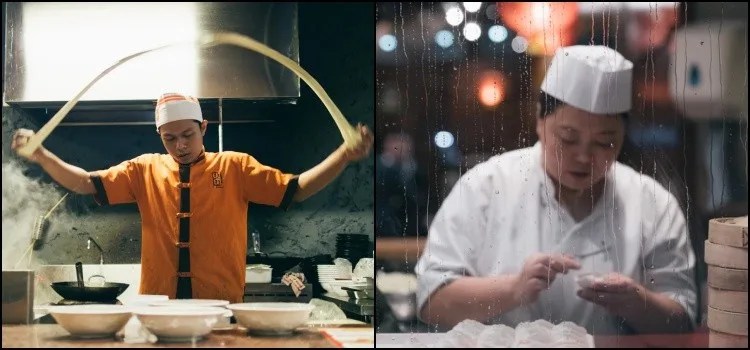
Even without involving horses, people also needed to run to prepare the meal for the guests. Soon this word began to include the meaning of inviting people to eat.
At the end of the Edo Period (1603-1868), the words GO [御] and SAMA [様] were added to show appreciation, so soon the Japanese began to use gochisousama after meals.
There is a great amount of work and effort from many people behind each meal we eat. Saying this in a restaurant strongly emphasizes that you enjoyed the food.
Gochisosama [御馳走様] does not need to be literally used after the meal. You can use it to thank for a meal from another day, some food you received, and things like that.
In a restaurant, gochisousama should be directed to the cook and not the people present at the table. So in certain restaurants, you can thank at the counter when you go to pay for your meal.
You can also add totemo oishikatta [とても美味しかった] it was very good, after the sentence gochisousama deshita. It can be a bit informal, but it indicates that you really enjoyed the meal.
This is further proof that Japanese culture and its language are full of politeness and respect. What do you think of these words? Do you use them? If you liked the article, share it and leave your comments!
Read also: The History of Football in Japan

Community
Comments
0 comments
There are no published comments in this language yet.
Send comment