

Have you heard of Japanese Light Novels? This word is very common when we talk about animes today, where the vast majority are based on and derived from light novel works rather than mangas as in the past.
In this article, we will deeply analyze the meaning of Light Novel, the differences between these books and other common literature, some curiosities, and recommendations for famous light novels.
What does Light Novel mean?
Light Novel [ライトノベル] comes from English and means light, clear, and quick novel. Light Novels are basically normal books, but they have illustrations on some pages and are divided into several volumes.
The term novel does not necessarily indicate that the book is a love story; for that, you would have to delve deeper into the meaning of the word Novel. Just as soap operas are not always romances.

The term “light reading” probably comes from the simplicity of Japanese novels. Even if the book has hundreds of pages and volumes, they are called light readings because of the straightforward way the author tells the story.
Generally, common books are complex readings that not every young person would be able to understand. The goal of Light Novels is to reach as wide an audience as possible with their ease of reading. Just like the books of Stephen King.
More information and characteristics of a Light Novel will be mentioned below when we discuss the differences between a Book and a Light Novel.
The Japanese also call Light Novels ranobe [ラノベ] or rainobe [ライノベ].
How did Light Novels originate?
Light Novels are initially published as serials, usually in magazines or on the internet, before being released and bound into books. Many of these works originated from blogs on the internet.
With the proliferation of the reading habit in Japan, light novels have grown into various forms of publication, from traditional serials in newspapers to literary magazines and even to smartphones.
The content of these light readings has been influenced by mangas and even popular films like Star Wars. Light novels can also be considered an evolution of pulp magazines.

In the 1970s, most Japanese pulp magazines, which used manga-style covers, began to include illustrations at the beginning of each story and articles about popular films, animes, and video games.
This led to practically every Light Novel having manga-style illustrations on its cover and in the middle of each chapter of the story. Generally, a volume has about 15 to 20 illustrations and even comes with a poster.
Differences between a book and a light novel
Light Novel is basically a book, and with many pages. Still, there are many differences between a common book or common literature and a light novel. Shall we analyze some of these differences?
Light Novels generally have 100 to 300 pages and are released in volumes. Famous Light Novels often have more than 20 volumes, being as extensive as a manga work.
A chapter of a Light Novel usually has around 5,000 to 7,000 words. A complete volume (book) typically has 40,000 words and is usually divided into 5 chapters of about 200 pages.
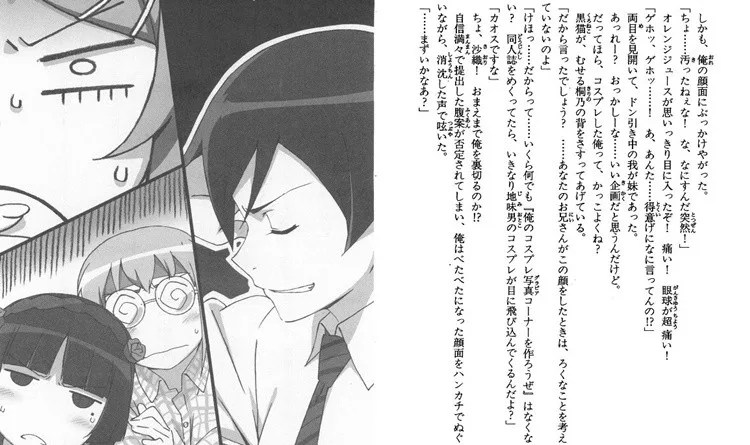
What most differentiates a Light Novel is its language, which generally has a vocabulary easily understood by teenagers and adults, full of slang, popular terms, and written in short paragraphs.
Light Novels use few ideograms or easy-to-understand ideograms, while other traditional Japanese books have complex ideograms, where some Japanese even need to resort to a dictionary.
Another factor that greatly differentiates Japanese Literature from a Light Novel is the stories; many of these books are aimed at a young audience, featuring fantastical stories, or about teenagers, school life, and even action and fighting.
It is complicated to explain the difference between books and light novels in Portuguese, as many of these differences are lost in the translation from Japanese to Portuguese.
Curiosities about Light Novels
Have you noticed that most Light Novels have giant titles? Exactly, many authors have jumped on the bandwagon of naming their books as if they were the synopsis of the story.
It is common to have books and animes with giant titles like “There’s No Way My Sister Could Be This Cute” or “We Still Don’t Know the Name of the Flower We Saw That Day” and this is just the beginning.
Most Light Novels released today follow this trend of long and funny names. We even wrote an article talking about the gigantic names of Light Novels and Animes.

Another interesting fact is that although Light Novels have few illustrations, they are also made in black and white. Only the cover and illustrations at the beginning of the book are colored and printed on strong paper.
Some examples of Light Novels that have been successful in Japan are: Sword Art Online, Toradora, Zero no Tsukaima, Accel World, Monogatari Series, and many others. A large part of the animes you know are adaptations of a Light Novel and not of a manga.
Light Novel in the West
Between 2000 and 2010, Light Novels were not very well known in the West. Their success came in 2013 when Yen Press created a commercial strategy to bring Light Novels to the West in English.
In Brazil, Light Novels took longer to reach the hands of Brazilians. One of the first Light Novels published in Brazil was No Game No Life, written by a Brazilian and popularized by its anime.
In fact, the first Light Novels translated into Portuguese were yaoi stories. The publisher NewPOP brought in 2010 the books Gravitation and Tarot Café, becoming popular for bringing alternative works.
The publisher also brought Madoka, No.6, Fate, Log Horizon, Re:Zero, Toradora, Zero no Tsukaima, and Shakugan no Shana. Thanks to this effort, in 2018 competing publishers also began to translate Light Novels.

Community
Comments
0 comments
There are no published comments in this language yet.
Send comment