

Wasabi (山葵) is a famous condiment used in Japanese cuisine in the form of paste. Made from a strong Japanese root called wasabi from the Brassicaceae family.
Wasabi is expensive because it is grown in cold water and in mountainous regions, mainly in the Amagi Highlands, on the Izu Peninsula, Shizuoka, Hotaka, and Nagano.
The wild Japanese horseradish seems to have been used as a medicinal plant and antidote for food poisoning, so it has been served with raw fish since the Nara Period between 710 and 793. Its first historical record was in the botanical dictionary, compiled in the Heian Period between 794-1185.
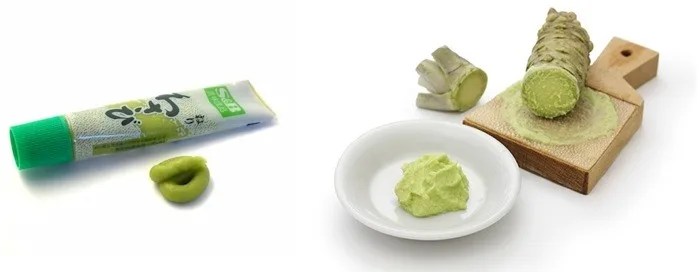
Wasabi in cuisine
Wasabi is used in various ways in cuisine. Firstly, the root can be consumed as paste, powder, or fresh along with its leaves. It has a slightly spicy flavor and gives a completely different sensation in the mouth.
Besides the traditional use with sushi and sashimi, wasabi can be used in recipes like ochazuke rice and some types of noodles. They often use wasabi powder to season other recipes like fried and roasted vegetables.
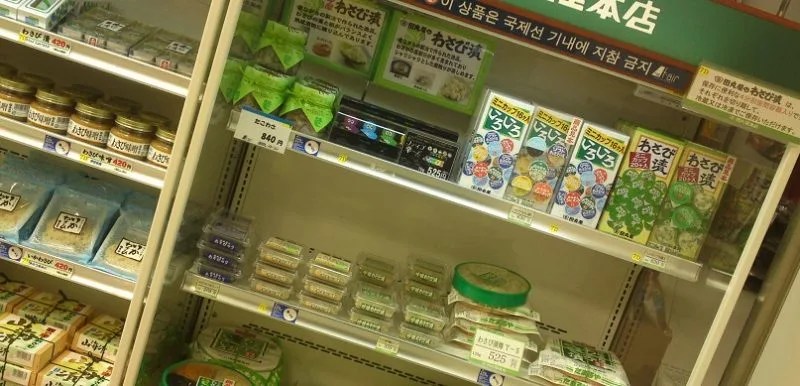
In Japan, some restaurants allow customers to grate their own wasabi root to eat it as fresh as possible. Japan is famous for inventing flavors in its products, so it is common to find ice creams, drinks, chocolates, snacks, popcorn, peas, and peanuts flavored with wasabi.
Unfortunately, the famous green paste we eat in sushi restaurants is not pure wasabi but a mixture of wasabi with coloring, mustard, and other ingredients.
To conclude and complement the article, we will leave a very fun video from our friends in Japan visiting the largest wasabi farm in Japan.

Community
Comments
0 comments
There are no published comments in this language yet.
Send comment