

The Japanese educational system is a reference worldwide. The country is home to numerous high-quality and renowned higher education institutions that are ranked among the best in the world.
Moreover, the Japanese state invests heavily in public policies focused on education and the encouragement of science, offering exchange programs and exclusive scholarships for foreigners.
With less competition than the United States and European countries, for example, Japan consolidates itself as an equally high-quality alternative and provides an even richer experience due to its millennia-old tradition and culture. Check out the main tips for studying in Japan and the key aspects of university life in the country.
Principles and values are instilled early in the Japanese, and the appreciation of education is an integral part of them. Children are enrolled in schools from a young age, and the country’s literacy rate is very close to 100%.
Additionally, ethics and morality are mandatory components of the school curriculum, bringing an important differential to their schools, which form respectful citizens concerned about society. These characteristics are reflected in the country’s higher education, known for having serious, demanding universities that encourage their students to achieve excellence.
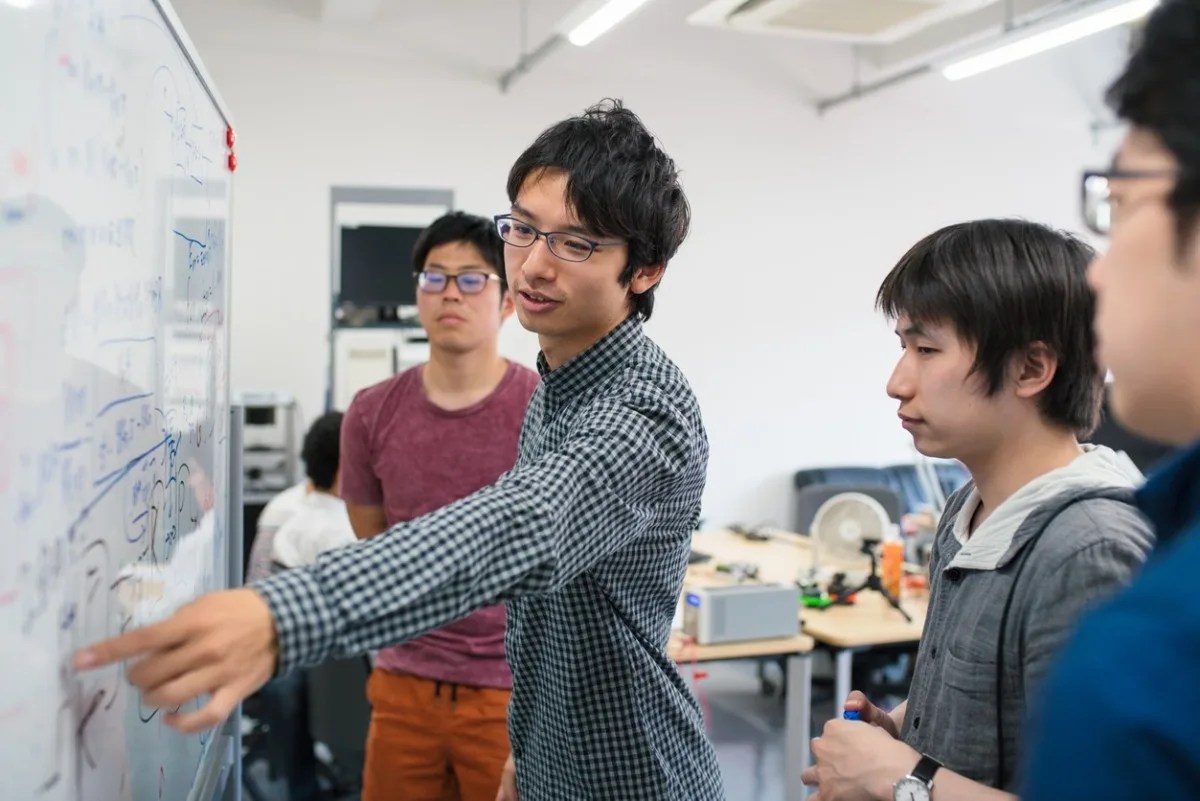
Exchange Programs in Japan
The quality of life, health, and safety in Japan are exemplary, which can be seen in indices such as life expectancy. Japanese citizens live on average 86 years, placing the country as a leader on the list of nations with the best life expectancy.
However, recent data shows that the country’s birth rate has been declining over the years, which could lead to an aging population. Keeping an eye on this information, the government has been dedicated to attracting young people to study and work in the country.
Thus, Japan has exchange programs and offers scholarships for foreigners who decide to study in the country. One of the goals is to receive at least 300,000 students from abroad. To achieve this, there are two major incentive projects, one offered by the Ministry of Education, Culture, Sports, Science and Technology (MEXT) and the other by the Japan Student Services Organization (JASSO).
To make universities more attractive to candidates from around the world, they have started to offer undergraduate courses (mostly 4 years in duration) and graduate programs, whether master’s (2 years) or doctoral (4 years), entirely taught in English. It is important to emphasize that in these cases, proving proficiency in English through TOEFL or IELTS tests, at the level required by the chosen institution, is essential.
Proficiency in Japanese is not always necessary or required to enter higher education in the country. Nevertheless, candidates are encouraged to study and learn at least a little of the language before participating in a selection process, as some institutions, like MEXT, administer Japanese tests and eliminate candidates who score zero.
Although undergraduate and graduate courses use the English language, universities offer Japanese language classes to students alongside their programs. In some cases, classes are daily and have an intense workload. This is a very productive way to deepen knowledge of the language and helps immersion in the country’s culture.
The scholarships offered by MEXT are extremely attractive. The courses participating in the program have full scholarships, round-trip airfare to Japan is paid by the organization, and the student receives a monthly amount to cover their living expenses during their studies, which can reach up to 120,000 yen (approximately 4,500 reais).
Most universities offer shared dormitories, where students share a room with one or two other people. They are also equipped with dining halls that provide meals included or at low cost.
Requirements to Study in Japan
The main document required by the Ministry of Education, Culture, Sports, Science and Technology is a motivation letter written by the candidate in Portuguese, of up to two pages. It should contain the reasons that led them to choose Japan as the destination for their studies, the desired course, why they wish to take it, and what their professional expectations and plans for the future are.
Additionally, it is necessary to present a letter of recommendation from the last institution attended, authenticated copies of the academic transcript, certificate of completion of high school or undergraduate degree, identity document, and certificates of proficiency in foreign languages (if any), a 3×4 photo, and a completed application form.
After the application, a selection exam is administered, where some competencies are evaluated, including English, Japanese, Mathematics, and, depending on the chosen course, Chemistry, Physics, and Biology.
On the other hand, JASSO scholarships have a different character, being private financing. To apply for a scholarship from the institution, the student must already have a connection with a Japanese university, either directly with a Japanese university or through international agreements established between the university in the home country and a Japanese institution.
Other requirements include proof of socioeconomic status, good academic performance, among others. The scholarships also provide monthly financial support, which can reach 80,000 yen (approximately 3,000 reais) per month.
Some JASSO initiatives offer contact with Japanese companies, which provide part-time jobs for students. This way, students can supplement their income to cover living expenses in the country while studying and practicing the language.
The main available positions are for market attendants, restaurants, and delivery services, with working hours compatible with studies. About 78% of students in Japan, at the undergraduate or graduate level, also work.
According to Quacquarelli Symonds (QS), a British institution that publishes and analyzes student data worldwide, Japan has two regions that stand out among students. In the ranking of the best cities in the world to study, published in 2019, Tokyo reached 2nd place, while the Kyoto-Osaka-Kobe region reached 18th place worldwide.
As mentioned earlier, the country’s educational system is a reference worldwide, and the appreciation of science and the development of technologies is an intrinsic part of Japanese culture. There are various types of programs available and numerous areas of prominence. The most promising fields are law courses or business courses such as economics and finance, as the country is one of the largest economies in the world and establishes trade agreements with other powers, and especially engineering fields in robotics, computing, and civil engineering.

Community
Comments
0 comments
There are no published comments in this language yet.
Send comment