

Japanese art has inspired and drawn the attention of the entire world. Art in Japan can be expressed in various ways, not only in artistic works but also in clothing, cuisine, architecture, and urban planning of cities.
Over the years, unique methods have been developed that continue to surprise people. In this article, we will talk a little about some types of Japanese arts. Although the article mentions 15, we will probably cite dozens of them.
Shodo – The Japanese art of calligraphy
Shodo [書道] is the art of Japanese calligraphy done with a brush. It is highly stylized and often almost illegible. The art evolved mainly in temples and has been greatly influenced by Japanese Buddhism.
Shodo works are often regarded more highly than a landscape painting. Most Japanese appreciate this art that takes years of dedication. Sometimes the art goes beyond limits, requiring the use of a broom to write.
Read more: Shodo – The art of Japanese calligraphy

Manga – Japanese drawings
Manga [漫画] are Japanese comic books. It is something highly valued in Japan and around the world, a drawing style that can be seen in both the mangas themselves and in books, games, and TV animations.
Manga emerged around 1760 and is currently responsible for almost all entertainment displayed in Japan; in addition to art, its stories and genres have no limits. Thousands of mangas with different stories are released weekly in Japan.
It’s not just in comic books; you will end up finding a scribbled wall or a school blackboard with manga-style art.
We also recommend reading:
- How to Identify a Good Manga?
- Japanese Art and Manga Courses at Domestika
- The 15 Longest Mangas That Exist

Origami – The art of folding paper
Origami [折り紙] is the Japanese art of folding paper to create decorative art. With origami, they create representations of certain beings or objects with geometric folds of a piece of paper, without cutting or gluing it.
Origami is a classic that all school children in Japan learn to make the crane (Tsuru). According to the myth, anyone who makes a thousand origami cranes is granted a wish. And there are people who do this:
We recommend reading:

Kirigami – The art of cutting paper
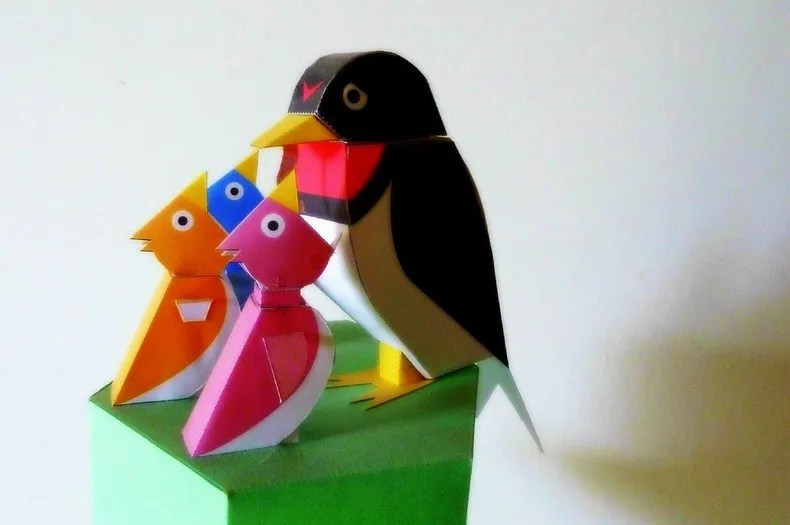
Kirigami [切り紙] (means cutting paper) is like origami, except that the paper can be cut to create more elaborate designs. Kirigami is made from a single piece of paper without gluing.
Amigurumi – The art of knitting
Amigurumi [あみぐるみ] is a Japanese technique for creating small dolls made of crochet or knitting. Despite the popularity of stuffed animals and dolls, the technique is also used for objects like household utensils and food with anthropomorphic characteristics.
Read also: Amigurumi Guide – Japanese Crochet Dolls

Temari – Hand Ball Art
Temari [手毬], meaning “hand ball,” is a popular art created from old silk kimonos. They are made for children to play with, and the exterior of the ball is made with quite detailed embroidery.
In the past, it was common for parents to place papers with wishes for their children in the center of the temari.

Art in the Rice Field
These are images made with rice plantings of various types. It is a relatively new tradition that began in the 1990s in Inakadate, a small town in the north that was looking for a way to boost the local economy.
The town has only 8,000 inhabitants, and more than 1,000 participate in planting this art. The success is such that it has led the art in the rice field to other cities.
Read also: Gohan – Learn about Japanese rice

Food Arts – Bento and Kaiseki
Creativity and aesthetics are part of Japanese cuisine. One of them is bento (lunch box), which is prepared with the utmost care, and ingredients are selected not only for their flavor and nutrition but also for their color and shape.
Japanese lunch boxes carry an artistic tone, showing that the appearance of meals is also important. Even if the Obento is not made to look like a work of art, they are often organized and usually feature some character.
The same thing happens with Kaiseki, known for its meticulous preparation and beautiful presentation. It is also one of the most expensive Japanese meals. These meals are often divided into up to 14 different types of dishes.
We recommend reading:

Japanese Martial Arts
In addition to traditional arts, Japan is also known for its numerous martial arts. We have even written an article solely discussing the 10 Japanese martial arts. Each has its distinct characteristics.
We can mention Judo, Kendo, Iaido (the art of the sword), Kyudo (the art of archery), Yabusame (target shooting on horseback), Aikido, Karate, Ninjutsu, and Koryu. In fact, by reading the article, you will find an extensive list of more than 100 different Japanese martial arts.
See more: The 10 Japanese Martial Arts + List

Ikebana – The Art of Flower Arrangements
Ikebana is an ancient art whose goal is to arrange flowers, leaves, and natural branches in full harmony with the vases, thus giving life to the flower. Ikebana [生け花] literally means “living flowers,” an art focused on flower arrangement.
The ikebana art is known for its focus on stems and leaves, rather than the flowers themselves. Thus creating a floral arrangement with linear, rhythmic, and colorful harmony. The art also has various sub-styles and different categories.
We recommend reading: Ikebana – The Japanese art of floral arrangements
Kintsugi – The art of healing vases
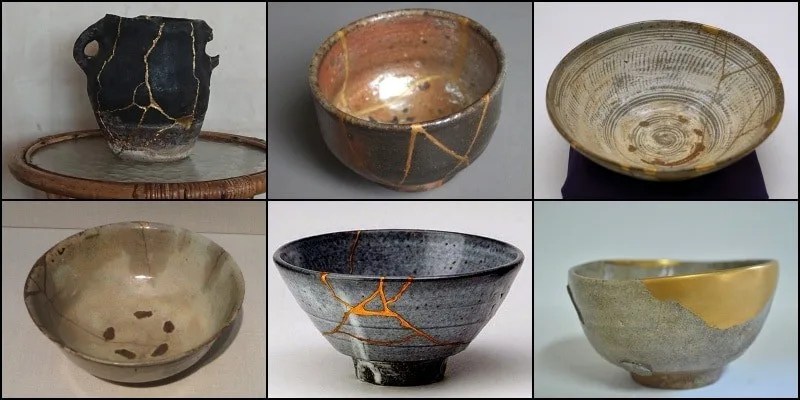
Kintsugi is known as the Japanese art of healing scars with gold. This art consists of restoring broken vases and ceramics with melted gold. Sometimes this restoration leaves the object as valuable as the original.
Laquered objects [joined, glued] are quite traditional in Japan; there are various techniques involving lacquer that likely gave rise to the technique. Kintsugi has become a philosophy that consists of accepting the imperfect and defective.
Read also: Kintsugi – The art of recovering from scars and imperfections
The Japanese Art in Theater – Kabuki and Bunraku
Japanese people have their own style of art when it comes to traditional theaters. We have the famous Kabuki, which consists of highly stylized performances, extravagant costumes, and sets where men usually dress as women.
We also have Bunraku, the only type of puppet theater that uses ornamentation. Bunraku is also the only type of puppet theater to use three puppeteers to operate a single puppet. Not to mention other forms of traditional theater.
We also recommend reading:

Chanoyu – The Japanese Art of Tea Drinking
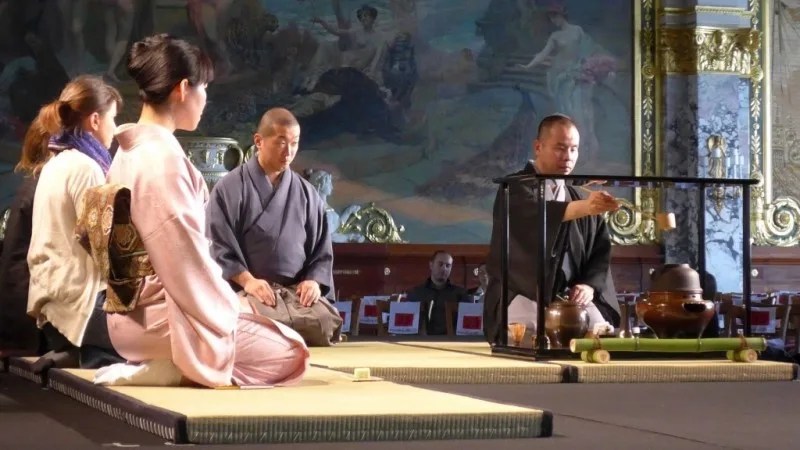
The Japanese tea ceremony is a traditional activity in which green tea “Matcha” [抹茶] is ceremonially prepared and served to guests in an environment of simplicity and goodwill, surrounded by peace, respect, harmony, and purity.
The practitioner of the tea ceremony needs to have knowledge of traditional arts, architecture, gardening, landscaping, and floral arts. Including the cultivation and varieties of tea, Japanese clothing (kimono), calligraphy, ceramics, etiquette, and incense.
Read also: Chanoyu – Japanese Tea Ceremony
Soroban – The Japanese Art of Calculation
You probably encountered an abacus when you were a child, but the Soroban is completely different. Some Japanese take the learning and handling of the abacus seriously, becoming faster than a calculator.
Soroban is not just a toy; it is a tool that many dedicate years of practice to achieve the skill called Anzan Soroban [暗算そろばん] or mental Soroban, allowing the person to perform gigantic calculations without the instrument.
Read also: Soroban – The art of calculating with a Japanese abacus

Haikai – The Art of Japanese Poetry
Haikai or Haiku is the art of saying the most with the least, capturing a moment of experience, an instant in which the simple suddenly reveals its inner nature and makes us look again at the observed, human nature, life…
It is a style of traditional poetry that consists of 17 Japanese syllables. Haiku values conciseness and objectivity; many poets were Zen Buddhists who expressed their thoughts in the form of myths, symbols, paradoxes, and poetic images.
Read more: Haikai – The small Japanese poems

If you want to know more about Japanese Art, read the numerous articles available on our site. Thank you very much for reading our article, share it and leave your comments.

Community
Comments
0 comments
There are no published comments in this language yet.
Send comment