

In this article, we will learn some curiosities about popular sports in Japan. Some interesting and curious facts that you probably didn’t know.
But just to be clear! Before jumping to conclusions, the article is not saying that it is always like this. These are just curiosities that can change over time, or that do not happen in all regions of Japan.
Sumo Wrestlers only eat twice a day
Sumo wrestlers only eat twice a day! Once right after finishing their morning training and then again at night, after finishing their afternoon training.
A typical meal includes the presence of chanko-nabe, containing large amounts of meat, fish, and vegetables. Their meals are consumed in such a way that the calories absorbed from their meals always exceed the caloric value lost during training, thus maintaining the same body weight.
Sumo Wrestlers do not wash their loincloths
The mawashi (loincloth) that sumo wrestlers wear is never washed. Instead, they are generally just hung to dry, for two reasons. One is to bring good luck and the other is because washing the mawashi weakens the fabric.
There is more than one type of Sumo
Sumo has always had a powerful grip in Japan since ancient times and there are many games that incorporate it. One of them is the game kamizumo (paper sumo), in which dolls of sumo wrestlers made of paper… are placed inside a circle drawn on the top of a cardboard box, after being in a proper position for the “start of the fight” it is enough to tap around the circle until one of the wrestlers leaves the marked area.
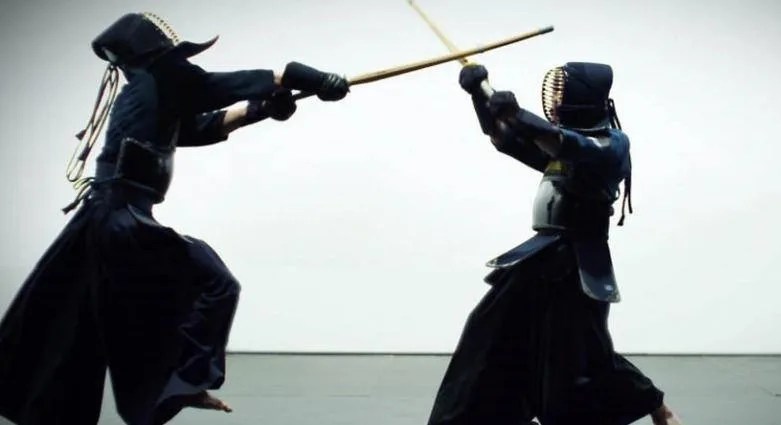
Victory poses are not allowed in Kendo
Kendo is a sport born in Japan and is considered of great importance. If a practitioner manages to score a point against their opponent and then immediately strikes a celebratory pose, the point they earned will be taken away for behaving in a disrespectful and insensitive manner towards an opponent. And also so that practitioners do not lose concentration and intensity of spirit, something that is crucial in Kendo.
Olympic Games for athletes over 60 years old
Every year, since 1988, senior athletes over 60 years old in Japan participate in a sports and culture event called “Nenrinpics,” named for the combination of nenrin, or “the rings of age of a tree,” with the word Olympics.
This sports festival lasts four days and involves a variety of events, including tennis, a marathon, Kendo (Japanese fencing), ping-pong, board games like go and shogi (Japanese chess) and haiku (Japanese poetry). Each prefecture in the country finds a way to host this event.
Professional baseball fans stick together during games
The biggest difference in Japanese professional baseball lies in how its spectators behave. Fans of each team unite as one, singing fight songs to the sound of trumpets and taiko (drums). They also release a huge number of balloons into the air, cheering for their teams with endless enthusiasm.
High school baseball players take home the dirt
Summer in Japan is the time for the national high school baseball championship known as “koshien,” which pits around 4,000 high school baseball teams from across the country against each other in a qualifying tournament to reach this sacred competition.
Although koshien features student athletes, all games are broadcast live throughout Japan. Those chosen to represent their cities carry heavy expectations and compete as if their lives depended on the outcome.
Players who lose this competition often cry and throw themselves on the ground regretting the outcome, and many say “We will be back!” This is done in an emotional tone that can make many spectators’ eyes fill with tears.

Community
Comments
0 comments
There are no published comments in this language yet.
Send comment