

Did you know that about 13% of the world’s active volcanoes are located in the Japanese archipelago? Japan has more than 118 volcanoes classified as active. This definition includes those that have erupted or shown signs of activity in the last 10,000 years. The presence of these volcanoes not only shapes the country’s landscape but also influences Japanese life and culture.
Currently, 47 volcanoes are continuously monitored by specialized authorities, with 13 of them in a state of high risk, potentially erupting at any moment. In this article, we will explore how these volcanoes affect life in Japan, the most dangerous ones, and a detailed list of the main volcanoes in the country.
The Impact of Volcanoes on Life in Japan
Volcanic activity in Japan is a double-edged sword. On one hand, volcanoes create fertile soils, supply hot springs (onsen), and are tourist attractions that boost the local economy. On the other hand, eruptions can cause significant damage, including mass evacuations, economic losses, and environmental impacts.
Moreover, volcanoes play a direct role in the formation of the frequent earthquakes in the country, as both are associated with the intense tectonic activity of the region. Despite the risks, the Japanese have learned to coexist with the volcanoes, developing advanced monitoring systems and emergency plans to protect the population.

The Most Dangerous Volcanoes in Japan
1. Mount Fuji (富士山 – Fujisan)
The Mount Fuji is one of the most recognized symbols of Japan, but its beauty hides a significant danger. It has erupted 16 times since 781, with the last eruption in 1708. Located near Tokyo, Fuji threatens about 35 million people in the event of a new eruption.

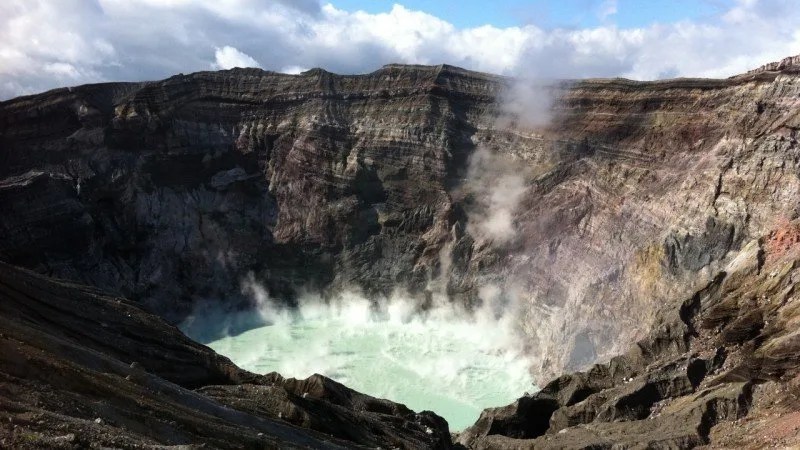
2. Mount Aso
With one of the largest volcanic calderas in the world, Mount Aso impresses with its magnitude. An eruption 90,800 years ago released 600 km³ of volcanic material, an event that, if repeated today, would have catastrophic consequences, not only in Japan but globally.
3. Sakurajima (桜島)
Sakurajima, once an island, is now a peninsula due to an eruption in 1914. Located near the city of Kagoshima, with over 600 thousand inhabitants, Sakurajima has been in continuous eruption since 1955, featuring frequent smaller explosions.

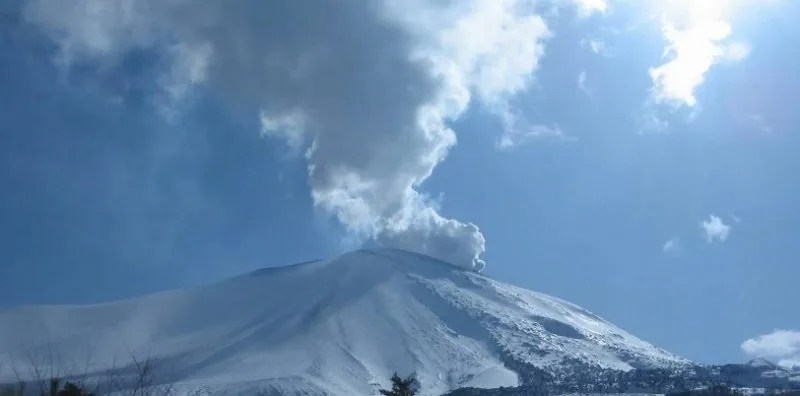
5. Mount Asama
Considered the most active volcano on Japan’s main island, Honshu, Mount Asama has a history of significant eruptions. Since 1783, it has been causing concern with frequent smaller explosions, being one of the most monitored volcanoes in the country.
4. Shinmoedake
Famous for being the secret base of a villain in a James Bond movie, Shinmoedake had notable eruptions in 2008, 2009, and 2011. Located in Kagoshima Prefecture, it is constantly monitored due to its destructive potential.
List of Volcanoes in Japan
To conclude, here is a list of most of the volcanoes in Japan along with their location and last eruption. The list is not 100% complete and detailed. I hope you enjoyed the article, share it with friends and leave your comments.
| Name | Location | Last Eruption |
| Abu (volcano) | Honshu | – |
| Akita-Komaga-Take | Honshu | 1971 |
| Akita-Yake-Yama | Honshu | 1997 |
| Akusekijima | Ryukyu Islands | – |
| Aogashima | Izu Peninsula | 1785 |
| Bayonnaise Rocks | Izu Peninsula | 1970 |
| Kikai Caldera | Ryukyu Islands | 2004 |
| Fukue-jima | Kyushu | 550 BC |
| Gajajima | Ryukyu Islands | – |
| Hachijō-jima | Izu Peninsula | 1707 |
| Hakkōda Mountains | Honshu | 1997 |
| Hijiori | Honshu | 8300 BC ± 1000 years |
| Hiuchi | Honshu | 1544 |
| Ibusuki Volcanic Field | Kyushu | 885 |
| Iriomote-jima | Ryukyu Islands | 1924 |
| Iwaki | Honshu | 1863 |
| Iwate | Honshu | 1919 |
| Izu-Tobu | Honshu | 1989 |
| Iōtorishima | Ryukyu Islands | 1968 |
| Kanpu | Honshu | 750 BC |
| Kogajajima | Ryukyu Islands | – |
| Kuchinoerabu-jima | Ryukyu Islands | 2015 |
| Kuchinoshima | – | – |
| Kurikoma | Honshu | 1950 |
| Kurose Hole | Izu Peninsula | – |
| Kōzu-shima | Izu Peninsula | 838 |
| Kuttara Lake | Hokkaido | – |
| Mashū Lake | Hokkaido | – |
| Shikotsu Lake | Hokkaido | Holocene |
| Megata | Honshu | 2050 BC |
| Mikura-jima | Izu Peninsula | 3450 BC |
| Miyake-jima | Izu Peninsula | 2010 |
| Mount Adatara | Honshu | 1990 |
| Mount Akagi | Honshu | – |
| Mount Asahi (Daisetsuzan) | Hokkaido | 1739 |
| Mount Asama | Honshu | 2009 |
| Mount Aso | Kyushu | 2016[1] |
| Mount Azuma | Honshu | 1977 |
| Mount Bandai | Honshu | 1888 |
| Mount Chōkai | Honshu | 1974 |
| Mount Fuji | Honshu | 1707 |
| Mount Hachimantai | Honshu | – |
| Mount Hakone | Honshu | 950 BC ± 100 years |
| Mount Haku | Honshu | 1659 |
| Mount Haruna | Honshu | 550 ± 10 years |
| Mount Iō (Shiretoko) | Hokkaido | 1936 |
| Mount Kirishima | Kyushu | 2011[2][3] |
| Mount Kuju | Kyushu | 1996 |
| Mount Kusatsu-Shirane | Honshu | 1989 |
| Mount Meakan | Hokkaido | 2008 |
| Mount Mutsuhiuchi | Honshu | Pleistocene |
| Mount Myōkō | Honshu | 2360 BC ± 150 years |
| Mount Nantai | Honshu | – |
| Mount Nasu | Honshu | 1963 |
| Mount Niigatayake | Honshu | 1998 |
| Mount Nikkō-Shirane | Honshu | 1890 |
| Mount Norikura | Honshu | 6870 BC ± 500 years |
| Mount Ontake | Honshu | 2014 |
| Mount Osore | Honshu | 1787 |
| Mount Rausu | Hokkaido | 1880 |
| Mount Rishiri | Hokkaido | 5830 BC |
| Mount Shiretoko | Hokkaido | 200000 BC |
| Mount Tate | Honshu | 1858 |
| Mount Tateshina | Honshu | – |
| Mount Tsurumi | Kyushu | 867 |
| Mount Unzen | Kyushu | 1996 |
| Mount Yake | Honshu | 1995 |
| Mount Yōtei | Hokkaido | 1050 BC |
| Mount Zaō | Honshu | 1940 |
| Myōjin-shō | Izu Peninsula | – |
| Narugo | Honshu | 837 |
| Nigorigawa | Hokkaido | Pleistocene |
| Nii-jima | Izu Peninsula | 886 |
| Nipesotsu-Maruyama Volcanic Group | Hokkaido | 1899 |
| Niseko | Hokkaido | 4050 BC |
| Numazawa | Honshu | 2980 BC ± 150 years |
| Oki-Dogo | Honshu | – |
| Omanago Group | Honshu | – |
| Oshima | Hokkaido | 1790 |
| Otake (Naka-no-shima) | Ryukyu Islands | 1949 |
| Sakura-jima | Kyushu | 2016 [4] |
| Sanbe Group | Honshu | 1760 BC ± 150 years |
| Shiga | Honshu | – |
| Shikaribetsu Volcanic Group | Hokkaido | Holocene |
| Shinmoedake | Kyushu | 2011 |
| Shiribetsu | Hokkaido | Holocene |
| Shōwa-shinzan | Hokkaido | 1945 |
| Sumiyoshi-Ike | Kyushu | 4550 BC |
| Suwanosejima | Ryukyu Islands | 2007 |
| Takahara | Honshu | 4570 BC |
| To-shima | Izu Peninsula | 4050 BC |
| Tori-shima | Izu Peninsula | 2002 |
| Towada | Honshu | 915 |
| Washiba-Kumontaira | Honshu | 4000 BC |
| Yokoate-jima | Ryukyu Islands | 1835 ± 30 years |
| Ōshima | Izu Peninsula | 1990 |

Community
Comments
0 comments
There are no published comments in this language yet.
Send comment