

In this article, you will have the privilege of consulting a list of Japanese words formed by four kanjis – the infamous “Yojijukugo” (四字熟語, よじじゅくご).
The number of Yojijukugo in the Japanese language is immense and it would be practically impossible to list all that exist in just one article.
With that in mind, we selected only those that we consider most important and those that tend to appear most frequently in animes, mangas, and Japanese texts.
Remember that if we have forgotten any important Yojijukugo, you can let us know through the comments or contact us via email.
NOTE: This dictionary will be expanded periodically.
Also read the article: The Longest Kanji and Words in the Japanese Language
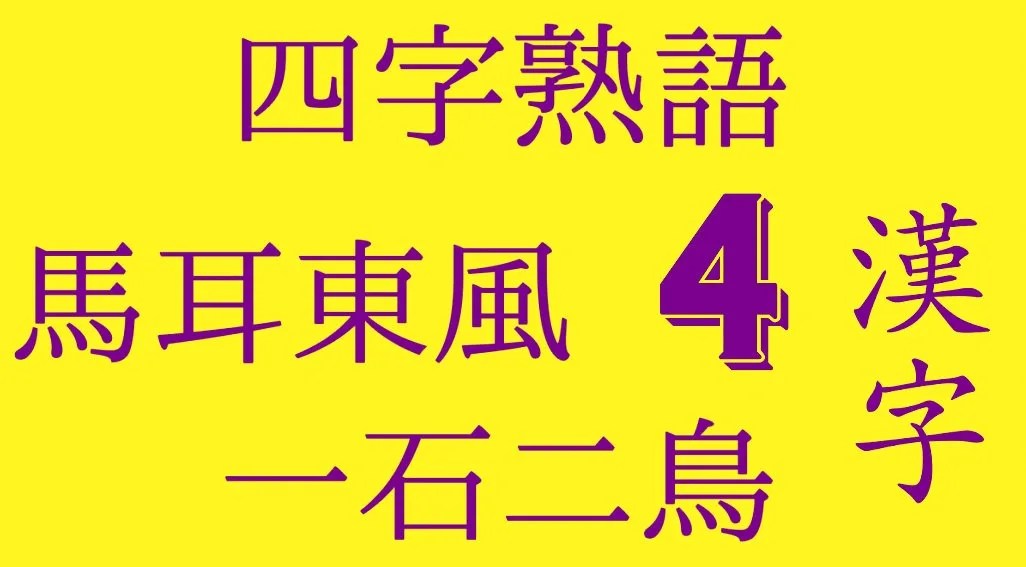
Yojijukugo Dictionary
- 全身全霊 (Zenshinzenrei) – With body and soul, complete devotion, total dedication, with maximum commitment.
- 海千山千 (Umisenyamasen) – Experienced person, represents the idea of something or someone who has a lot of experience. Literally: “a thousand seas and a thousand mountains”.
- 花鳥風月 (Kachoufuugetsu) – The beauties of nature.
- 風林火山 (Fuurinkazan) – Fast as the wind, calm as a forest, aggressive as fire, and firm as a mountain.
- 一期一会 (Ichigoichie) – A unique encounter in life (a unique moment). Denotes the importance of meeting someone.
- 賃貸住宅 (Chintaijuutaku) – Rental residences.
- 時期尚早 (Jikishousou) – Premature.
- 存在意義 (Sonzaiigi) – Reason for being, reason for existence, purpose of existence, meaning of being.
- 四字熟語 (Yojijukugo) – Word composed of 4 ideograms.
- 年中無休 (Nenjuumukyuu) – Open all year round, no rest throughout the year, does not close.
- 悪戦苦闘 (Akusenkutou) – Difficult and painful battle.
- 死活問題 (Shikatsumondai) – Question of life or death.
- 一言半句 (Ichigonhanku) – A simple word, not a word.
- 天上天下 (Tenjoutenge) – The whole universe. The sky and the earth.
- 一網打尽 (Ichimoudajin) – To finish/defeat/capture everyone at once.
- 疾風怒濤 (Shippuudotou) – Storms and violent waves.
- 以心伝心 (Ishindenshin) – Understanding something even without words, telepathy, tacit understanding.
- 先手必勝 (Sentehisshou) – The victory goes to the one who takes the first step.
- 異口同音 (Ikudouon) – In unison, in chorus, unanimously, by consensus.
- 一衣帯水 (Ichiitaisui) – Practically neighbors, very close.
- 一言居士 (Ichigenkoji) – Very critical person, someone who always criticizes everything, nitpicker.
- 一石二鳥 (Issekinichou) – Killing two birds with one stone.
- 自問自答 (Jimonjitou) – Monologue, talking to oneself, soliloquy.
- 一致団結 (Icchidanketsu) – Solidarity, being supportive of each other, cooperating, acting as a team for a common goal.
- 喜怒哀楽 (Kidoairaku) – The human emotions (joy, anger, sadness, and pleasure).
- 自画自賛 (Jigajisan) – To praise oneself, to approve oneself, to think highly of oneself, to be selfish.
- 十人十色 (Juunintoiro) – Many heads, many opinions, each to their own, everyone has their own opinion/way. Literally: “10 colors, 10 people”.
- 誠心誠意 (Seishinseii) – With all one’s heart, with all sincerity.
- 諸行無常 (Shogyoumujou) – Everything passes, nothing is permanent, everything follows its flow.
- 起死回生 (Kishikaisei) – Unexpected recovery, revival, sudden recovery, rising from rock bottom.
- 起承転結 (Kishoutenketsu) – Introduction, development, twist, conclusion.
- 弱肉強食 (Jakunikukyoushoku) – The law of the jungle, survival of the fittest, eye for an eye, tooth for a tooth.
- 古今東西 (Kokontouzai) – All times and places.
- 前代未聞 (Zendaimimon) – Unprecedented, unheard of in history, without any parallel in world history.
- 危機一髪 (Kikiippatsu) – At the critical moment, by a hair’s breadth.
- 針小棒大 (Shinshouboudai) – Exaggeration, to exaggerate, to make a mountain out of a molehill.
- 八方美人 (Happoubijin) – A person who is nice to everyone (but is not really like that), a fake person, someone who pretends to like everyone.
- 三日坊主 (Mikkabouzu) – A person who cannot stick to something for long.
- 自業自得 (Jigoujitoku) – You reap what you sow, you get what you deserve.
- 指名手配 (Shimeitehai) – Wanted by the law.
- 試行錯誤 (Shikousakugo) – Trial and error.
- 中途半端 (Chuutohanpa) – Halfway, incomplete, done poorly.
- 民間伝承 (Minkandenshou) – Folklore.
- 単刀直入 (Tantouchokunyuu) – Frank, straightforward, to the point.
- 青春時代 (Seishunjidai) – Youthful times, the flower of youth.
- 悪因悪果 (Akuinakka) – He who sows evil reaps evil.
- 安全第一 (Anzendaiichi) – Safety first.
- 不撓不屈 (Futoufukutsu)
- 唯唯諾諾 (Iidakudaku) – Submissive, obedient.
- 東西南北 (Touzainanboku) – The cardinal points (east, west, south, and north).
- 上下左右 (() – The four directions (up, down, left, and right).
- 相互作用 (Sougosayou) – Interaction.
- 勧善懲悪 (Kanzenchouaku) – Poetic justice, rewarding good and punishing evil.
- 拒絶反応 (Kyozetsuhannou) – Complete rejection, total disagreement.
- 正当防衛 (Seitoubouei) – Self-defense.
- 切磋琢磨 (Sessatakuma) – Mutual encouragement, constant effort (in studies), cultivating one’s character through hard study.
- 七転八起 (Shichitenhakki) – Fall seven times, stand up eight (represents the ups and downs of life and the need to always overcome even after a defeat).
- 天地無用 (Tenchimuyou) – Indicates that a box, package, or parcel should not be handled upside down.
- 独立自尊 (Dokuritsujison) – Independence and self-confidence (respecting oneself).
- 和魂洋才 (Wakonyousai) – Japanese spirit with Western learning (means that one should incorporate something from the West while maintaining the spirit and tradition of the East). A term commonly used by Japanese nationalists who feared modernization and excessive Western influence after the end of the country’s isolation and in the post-war Pacific period.
- 天真爛漫 (Tenshinranman) – Innocence, simplicity.
- 二人三脚 (Nininsankyaku) – Teamwork, working together towards a common goal. The term originally refers to a race sport where two people walk/run together with their feet tied.
- 年功序列 (Nenkoujoretsu) – Known as the “nenko system,” where an employee is promoted based on the time left until retirement within a company. Seniority by length of service.
- 四捨五入 (Shishagonyuu) – Rounding (a number). Rounding off.
- 森羅万象 (Shinrabanshou) – Everything, all things of nature, all creation.
- 利害関係 (Rigaikankei) – Mutual interests, interests, stakeholders.
- 満場一致 (Manjouicchi) – Unanimity.
- 大義名分 (Taigimeibun) – Pretext, justification, reason.
- 二者択一 (Nishatakuitsu) – Choice between two alternatives. Two options.
- 既成事実 (Kiseijijitsu) – Established fact, proven fact.
- 不言実行 (Fugenjikkou) – Doing instead of talking. Less talk and more action. Actions before words.
- 一喜一憂 (Ikkiichiyuu) – Oscillating between joy and concern.
- 言語道断 (Gongodoudan) – Absurd, scandalous, outrageous.
- 珍紛漢紛 (Chinpunkanpun) – Not understanding anything that is said, nonsense, meaningless talk, incomprehensible language.
- 気分転換 (Kibuntenkan) – Change of mood.
- 無我夢中 (Mugamuchuu) – To lose oneself completely and act unconsciously, to be completely mentally dominated and act without thinking.
- 馬耳東風 (Bajitoufuu) – Talking to no one, talking to a wall (indicates total indifference from the listener).
- 過小評価 (Kashouhyouka) – Underestimating something, undervaluation of something.
- 粉骨砕身 (Funkotsusaishin) – To give one’s best.
- 意思疎通 (Ishisotsuu) – Understanding each other, mutual understanding.
- 日進月歩 (Nisshingeppo) – Constant progress, rapid and steady advancement.
- 再三再四 (Saisansaishi) – Repeatedly.
- 本末転倒 (Honmatsutentou) – Confusing the trivial with the essential.
- 呉越同舟 (Goetsudoushuu) – When enemies unite for a task. Being in the same boat.
- 公序良俗 (Koujoryouzoku) – Social standards, public order and morals, values.
- 意識過剰 (Ishikikajou) – Pure imagination.
- 自暴自棄 (Jiboujiki) – Total despair.
- 臨機応変 (Rinkiouhen) – For specific purposes, adapted to the demands of the moment.
- 四苦八苦 (Shikuhakku) – Enormous suffering. A Buddhist term referring to the four sufferings: old age, illness, death, and romantic separation.
- 質実剛健 (Shitsujitsugouken) – Strong body and mind, sincerity, strong mind and body.
- 電光石火 (Denkousekka) – Extremely fast, in the blink of an eye, at lightning speed.
- 最後通牒 (Saigotsuuchou) – Ultimatum (conditions and final demands of a country in a war, for example).
- 初志貫徹 (Shoshikantetsu) – To realize the initial intention/goal, to achieve what was initially planned.
- 悠々自適 (Yuuyuujiteki) – To live peacefully and without worries (leisure with dignity).
- 三位一体 (Sanmiittai) – The Holy Trinity, three bodies.
- 清浄潔白 (Seijoukeppaku) – Pure heart and clean conscience.
- 温故知新 (Onkochishin) – To develop ideas based on the past and tradition.
- 臥薪嘗胆 (Gashinshoutan) – To endure hardships to achieve a goal, to suffer greatly to obtain something.
- 通過儀礼 (Tsuukagirei) – Rite of passage.
- 百鬼夜行 (Hyakkiyagyou) – A true pandemonium, many people plotting evil. Originally refers to something like “100 creatures walking the streets at night (spreading terror)” in a kind of nighttime parade.
- 新風満帆 (Shinpuumanpan) – “With the wind in the sails”. Something (or someone) that progresses in a completely favorable manner. Something that goes well, favorably and steadily, like the wind that fills the sail of a boat.
- 風林火山 (Fuurinkazan) – Literally means “wind, forest, fire, and mountain,” but the meaning would be something like “fast as the wind, silent as a forest, bold as fire, and immobile as a mountain”. Refers to an ancient military strategy from the time of Miyamoto Musashi.
- 意気消沈 (Ikishouchin) – Disappointment, to be disappointed. Discouragement, to be discouraged by something.
- 四苦八苦 (Shikkuhakku) – To be anguished, to be in a difficult situation, to be in deep suffering. Literally: “the 4 and 8 types of suffering” (a Buddhist concept).
So? Did you like the article? Then comment, like, and share with your friends!

Community
Comments
0 comments
There are no published comments in this language yet.
Send comment