

Japan is known worldwide for its stunning landscapes, which change with each season. While the cherry blossoms (sakura) steal the show in spring and the colorful leaves enchant in autumn, the Japanese summer has its own star: the hydrangeas (紫陽花 – Ajisai). These vibrant flowers fill temples, parks, and streets with a spectacle of colors, especially during the rainy season, known as tsuyu.
In Japan, the arrival of hydrangeas marks the beginning of a special period of contemplation. With a rich history and deep cultural meanings, these flowers represent more than beauty. They also carry unique symbolism, linked to change and the unpredictability of life. Let’s explore the universe of hydrangeas in Japan, from their origin and cultivation to the most impressive places to appreciate them.

The Hydrangea in Japan’s Rainy Season
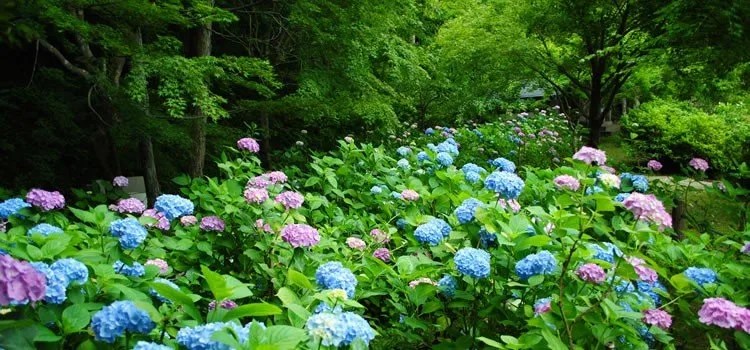
Hydrangeas are associated with tsuyu, the rainy season that occurs between June and July in Japan. During this period, the country transforms into a vibrant garden, with hydrangeas blooming in a myriad of shades. Although their original color is blue, the flowers can display colors ranging from pink, purple, and white, depending on the type of soil and cultivation methods.
Originating from Japan and China, hydrangeas have gained popularity worldwide but continue to be an important symbol of Japanese culture. They are cultivated in gardens, temples, and parks, and some regions even organize festivals dedicated to the flower, attracting visitors from all parts of the country.
Iconic Places to See Hydrangeas in Japan
For flower and photography lovers, Japan offers spectacular locations to appreciate hydrangeas:
Kamakura – Tokeiji and Meigetsuin Temples
Kamakura is one of the most sought-after destinations to see hydrangeas. The Meigetsuin Temple, also known as the “Temple of Hydrangeas,” is famous for its trails surrounded by thousands of these flowers. The Tokeiji Temple is another charming spot that combines the beauty of hydrangeas with the serenity of traditional temples.
Hasedera Temple in Nara
In addition to its impressive architecture, Hasedera Temple has gardens where hydrangeas bloom profusely, creating a spectacle of colors.
Hakone Gora Park in Kanagawa
Known for its beautiful gardens, the park offers a unique experience during tsuyu, with paths lined with perfectly cared-for hydrangeas.
Whether in large temples or small hidden gardens, hydrangeas are everywhere, offering moments of peace and contemplation.

Meanings and Symbolisms of Hydrangeas in Japan
In addition to their beauty, hydrangeas have deep symbolic meanings in Japanese culture. The word ajisai is composed of characters that mean “purple” (murasaki) and “bright sun” (yō), reflecting their vibrant appearance. Hydrangeas are also called 七変化 (nanahenge), or “seven transformations,” due to their ability to change color based on soil acidity.
Cultural Symbolism
Hydrangeas represent various feelings, such as:
- Devotion and stubbornness: Their dense and durable flowers reflect determination and commitment.
- Change and inconsistency: The change of colors symbolizes a mutable heart, making it a popular metaphor in Japanese poetry.
- Honor and dignity: Their large and vibrant flowers are also associated with qualities of respect and prestige.
Rejection by Samurai Warriors
Interestingly, during the feudal period, hydrangeas were avoided by samurai warriors. The constant change of their colors was seen as a sign of inconsistency, something undesirable in a code of honor based on firmness and loyalty.

Hydrangeas in Japanese Art and Literature
Hydrangeas also hold a special place in Japanese art and literature. Poets and artists throughout the centuries have used the flower as a symbol of the ephemeral nature and unpredictability of life. Traditional painting and haikus often highlight the connection between the vibrant colors of hydrangeas and the melancholic spirit of summer rains.
Colors and Poetry
The color changes of hydrangeas have inspired poetic verses, celebrating the beauty and fragility of life. “Just as the flower changes with the soil, the human heart also transforms with time,” say ancient Japanese proverbs. This symbolism is especially relevant in a culture that values transience, as exemplified in the concept of wabi-sabi.
Want to See the Hydrangeas?
Hydrangeas in Japan are much more than beautiful flowers. They represent the essence of Japanese nature, with their deep connection to the seasons and their ability to symbolize feelings and human transformations. If you are in Japan during the tsuyu, take some time to explore the temples and parks filled with hydrangeas – an experience that combines beauty, history, and reflection.
Take the opportunity to learn more about Japan through its rich natural diversity. Hydrangeas are just one of the many cultural treasures waiting for your discovery.

Community
Comments
0 comments
There are no published comments in this language yet.
Send comment