

Shinzo Abe was one of the most influential political leaders in Japan’s recent history. His name is marked not only by the record time he spent in office but also by the profound changes he promoted in the country’s politics, economy, and even international posture. Do you know the real extent of the legacy he left behind?
Right in the first weeks after his resignation, the political world and Japanese society were already discussing the lasting effects of his policies, nicknamed “Abenomics,” and his role in redefining Japan’s national security. There is no denying it: Shinzo Abe’s trajectory shaped a new phase in Japanese politics.
The political trajectory of Shinzo Abe
Shinzo Abe was born into a traditional Japanese political family, being the grandson of former Prime Minister Nobusuke Kishi. His entry into politics seemed inevitable, but it was his own merit that led him to become, in 2006, the youngest prime minister of Japan after World War II.
Although he resigned in 2007 due to health issues, Abe returned with full force in 2012. From then on, he initiated one of the most stable and long-lasting governments in Japan, consolidating his name as one of the country’s leading figures. His political skill was evident in how he managed to maintain popular support even while facing scandals and economic challenges.
By the way, have you ever stopped to think about how he managed to maintain leadership for so long in such an unstable parliamentary system like Japan’s? The answer lies in the combination of diplomatic skill, economic reforms, and personal charisma.

Abenomics: the economic plan that redefined Japan
Upon resuming office in 2012, Abe presented an ambitious economic package known as “Abenomics.” The proposal was simple in concept but bold in practice: to stimulate growth through three “arrows” — expansionary monetary policy, fiscal stimulus, and structural reforms.
The results were, at the very least, mixed. On one hand, he managed to contain the deflation that had haunted Japan for decades, as well as boost the labor market and increase women’s participation in the economy. On the other hand, the structural reforms fell short of expectations, and public debt continued to grow.
Even so, it cannot be denied that Abenomics changed the global perception of the Japanese economy. Countries and analysts began to look at Japan again as a relevant economic actor, a power that, despite its demographic challenges, is still capable of innovation and growth.
Security and foreign policy reform
One of the most controversial aspects of Shinzo Abe’s legacy was his role in security policy and international relations. He was responsible for the reinterpretation of Article 9 of the Japanese Constitution, which historically restricted Japan to maintaining only self-defense forces.
This change allowed the country to expand its military cooperation with allies, especially the United States, and strengthen its presence in territorial disputes in the East China Sea. It is not an exaggeration to say that Abe placed Japan in a new strategic position in Asia.
Interestingly, despite the internal criticisms accusing him of militarism, internationally Abe was seen as a pragmatic leader, seeking to ensure national security in the face of the advances of powers like China and North Korea. Do you think this change was necessary or too risky? It is a debate that continues to this day.
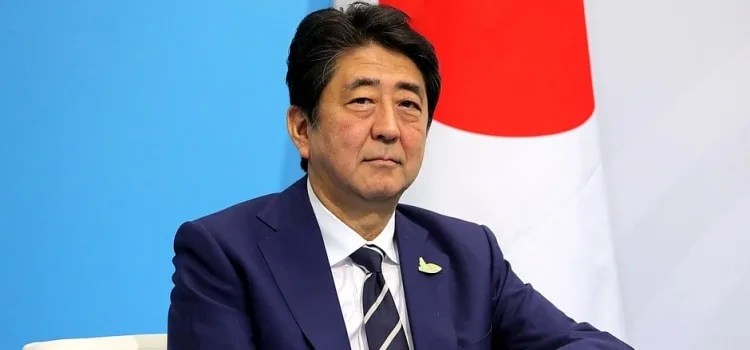
The cultural and social impact of Abe’s government
In addition to politics and the economy, Shinzo Abe also promoted important changes in Japanese society. His government sought to stimulate female participation in the labor market, under the slogan of “womenomics.” Although the advances were limited, there was a significant shift in the mindset of companies and the state regarding the role of women.
Another important point was the encouragement of international tourism. Abe facilitated visa issuance and invested in infrastructure to welcome visitors. As a result, Japan set successive records for tourist arrivals before the pandemic, strengthening sectors such as hospitality, gastronomy, and commerce.
And we cannot forget his symbolic role in organizing the Tokyo Olympic Games, originally scheduled for 2020. Abe actively worked to ensure that the event would be a milestone for revitalization for Japan, despite the challenges posed by the COVID-19 pandemic.
The political and personal legacy of Shinzo Abe
Shinzo Abe tragically passed away in July 2022, the victim of an attack that shocked not only Japan but the entire world. His death marked the end of a cycle but opened up a debate about his legacy. After all, what did Abe represent for Japan and the international scene?
His supporters see him as a visionary leader who broke paradigms and strengthened Japan’s position in the world. His critics, on the other hand, point to flaws in his reforms and a tendency to concentrate power, along with a nationalism that, at times, caused tension with neighboring countries.
Regardless of which side you choose, it is impossible to ignore the depth of the transformations he promoted. Shinzo Abe was more than a politician; he was an architect of a new era for Japan.

Community
Comments
0 comments
There are no published comments in this language yet.
Send comment