

In Japan, various stores and establishments offer a card called Pointo Kādo (ポイントカード) that most of the time generates points that can be exchanged for discounts or products at the time of purchase. There are thousands of point cards in Japan, and in this article, we will talk about everything related to them.
This article took a lot of work to create, so we ask in advance, if possible, to share it on social media through the sharing buttons. I hope you make good use of this Guide to Point Cards in Japan!
We believe this is the best Guide to Point Cards you will find in Portuguese. We have separated hundreds of cards for you to get to know, and we will talk in detail about each one of them.
The Mafia of Point Cards in Japan
To introduce the article, we have a video from my great friend Roberto Pedraca:
We will not only talk about point cards; after discussing all the popular ones, we will start looking at IC cards and other cards that offer point systems that are less known. What if you use a store and don’t know it has a card?
In this article, you will see detailed information about each card from Nanaco, T-point, Ponta, D-point, Waon, Rakuten, Tokyu Point, IC Card, JRE Card, OP Point Card, Izutsuya, Kips Card, Oki Doki, World Present, Line Point, W-Point, and other local cards.
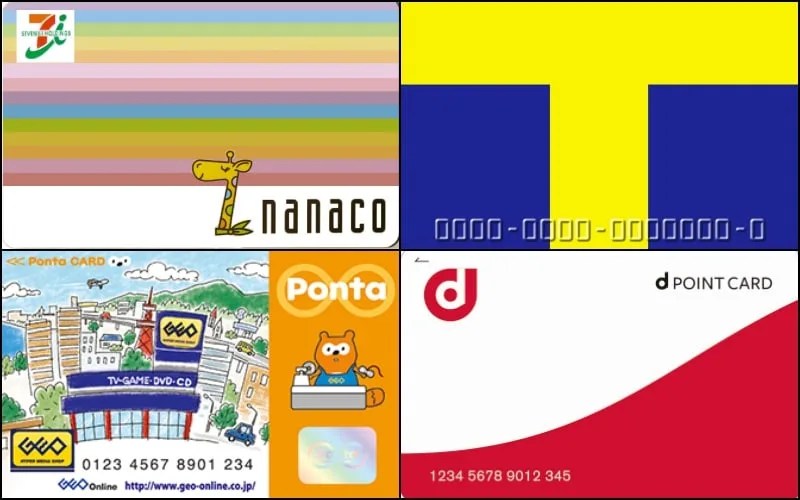
In Brazil, we are used to being invited to get the store’s credit card when we enter large establishments like Americanas or Riachuelo. In Japan, we are invited to get Pointo Kado, one of the main reasons why Japanese people carry large wallets full of cards of various colors.
Some stores offer their own point card or accept others that can be used in various different stores. Each card offers its own point system, but most of the time you earn 1 point for every 100 yen spent. Each point can be converted into approximately 1 yen at the time of purchasing or paying for something in the store.
There are stores that offer different cards that give a discount on the purchase of various products. There are thousands of point cards, making it difficult to detail the benefits they offer in this article. Even Internet Cafés or Manga Kissa have their own point cards.
How to get and use a Point Card?

Point cards can be purchased at partner stores, especially at convenience stores and usually cost around 300 yen. In some establishments, you need to register; there are places that provide or offer the card for free. These are just a few ways to get a pointo kado.
As mentioned, just use the point card at the time of purchase to accumulate or spend. Remember that you need to mention that you want to use the points, or maybe they will ask you; be careful not to respond incorrectly and they use the points. Some people simply use and earn points on every purchase without accumulating anything, as it amounts to the same.
There are campaigns and events that offer double points or free points, so it’s always good to keep an eye on your card’s website or store advertisements to not miss extra points or discounts, in addition to the possibility of using points to buy products at a much lower price. Normally, the discount seems low, but there are times when using the point card brings great advantages.
Remember that points usually have an expiration date; generally, you need to spend them within a year. Cards can come in different formats and designs, from something standard to anime and mascot drawings.
The History of Point Cards in Japan
There is a theory that the Kuga Kuremono store in the city of Kitakyushu started issuing the first cards or point systems in Japan in 1916, but the details are not precise. In 1928, Glico Esaki launched a campaign to exchange 20 vouchers for a free package of sweets.
In 1950, point systems began to be used in supermarkets like Green Stamp and Blue Chip, which operated with a stamp system. Over time, these stamp cards were expanded and transformed into electronic cards.
What is the purpose of Pointo Kado?
In Japan, point systems can be applied not only to dedicated point cards but also to credit cards, membership cards, affiliate cards, and stamp cards [台紙]. Let’s initially focus on dedicated point cards.
Point cards not only offer discounts; their main purpose is to make people dependent on the points and become addicted to going to the same stores to spend and accumulate points. Some stores and restaurants, in addition to using point cards, also provide discount coupons and use Line QR codes to attract people and do marketing.
Another reason stores use point cards is to create a profile and conduct research on the products sold and the customers making purchases. When you apply for your point card, you need to provide information such as age, gender, and other personal details. With this data, they create profiles and conduct marketing research to increase their sales and profits.
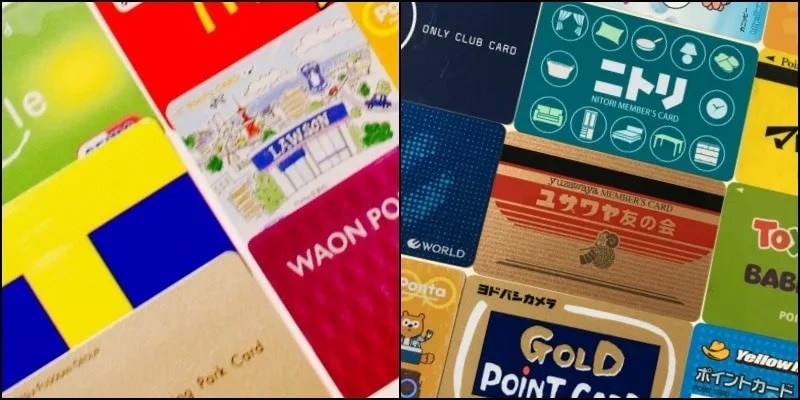
Some establishments like Manga Kissa require you to register, and you automatically earn your point kado, which also serves as an access card to the location. Other establishments often accept multiple point cards, offer extra discounts on specific days, or online discounts.
Point Cards are a way to help both customers and store franchises; I really miss point cards in Brazil, which have been replaced by credit cards with fees in most store franchises. Both in Brazil and Japan, it is common to have those cards that you stamp with each purchase to earn something when you complete the stamps.
Nanaco – Point Card from Seven Eleven
Nanaco – This card can be used at Seven Eleven, Dennys, Tsuruha, Ario, Ito-Yokado, Eibu Sogo, Akachan Honpo, Omni7, Bic Camera, Loft, Daiichi, Poppo, Famil, and York Mart. This card can be purchased at Seven Eleven for 300 yen.
Nanaco, created in 2007, is also an electronic and prepaid money card. Nanaco can be used in over 7,000 stores outside the company’s group, especially JCM affiliates. The card also has a digital version.
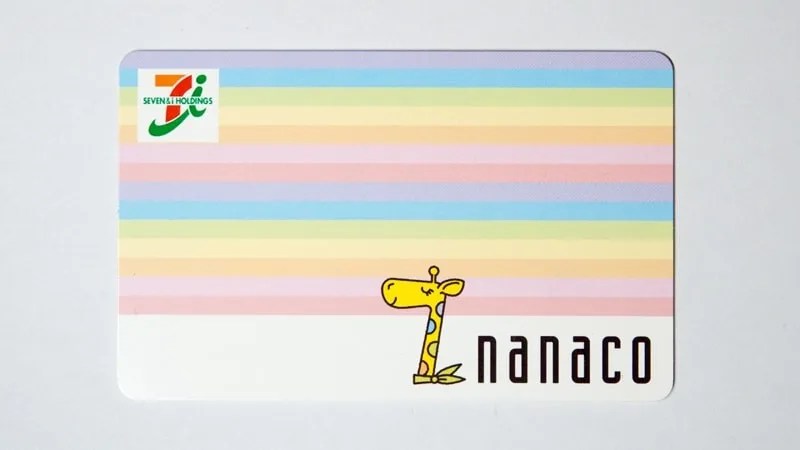
Nanaco cards are colorful like unicorns. Promotions like getting a free item when purchasing a certain quantity may be available at convenience stores like Seven Eleven. The card also offers many extra points.
The Nanaco format also has a post-payment function (in the QUICPay scheme), which has been available to IY Card (now renamed “Seven Card”) credit card holders since the summer of 2007.
Purchases with Nanaco earn points, which can later be used for more purchases. The cards use Sony’s FeliCa technology, which is also used in a wide variety of contactless smart cards, including Suica, Edy, and Pasmo. Services began on April 23, 2007, and the number of members was over 3.8 million by the end of June 2007.
Nanaco is one of the most popular point cards in Japan, but another quite popular one we will see on the next page is called T-Point. It is so popular that when shopping in a store, people ask if you have it.
T-Point – Point Card from Softbank and Family Mart
T-Point – This card can be used at Softbank, Family Mart, Isetan, Maruetsu, Welcia, Bamiyan, Tsutaya, Misumi, Asahiya, Yahoo, Eneos, and Yamato Kuroneko.
The T-POINT CARD is essential for shoppers. You can obtain one at TSUTAYA, the CD and movie rental store, or at any other T-POINT alliance partner. With it, you can even pay for AirBNB.
T-Point cards and stores that accept T-Points are easily distinguished by a blue logo with a yellow T. If you prefer something original, there are a variety of T-Point card designs, ranging from Pokémon to the Otousan mascot and even popular music groups.

You earn 1 point for every 100 yen spent at T-Point partners. If you are a Softbank customer, you automatically earn 10 Softbank points for every 100 yen spent when using Yahoo! Shopping.
Softbank customers can also earn and use T-Points on their monthly bills and are also eligible for special T-Point discounts. When shopping at a location that accepts T-Points, pay close attention to your receipt.
Shop enough, and you will be rewarded with a free rental of a Tsutaya DVD or a coupon for bonus points redeemable at a different partner store. You can earn T-Points even if you are abroad.
With Neo Moba, you can also use your T points to buy stocks. Cardholders will earn 2% points for shopping at Family Mart, which is four times the normal point rate at other stores.
Ponta – Point Card from Lawson
Ponta – Can be used at Lawson, Shell, KFC, Takashimaya, Sega, JAL, Pizza Hut, Kojima, and others. If Lawson is your preferred convenience store, get a Ponta card!
In addition to earning 1 point for every 100 yen spent at participating retailers, Ponta points can be exchanged for items or discount coupons at Lawson. Although the possibility of redeeming points for coupons is not new, Lawson stands out because you can get more value for your points.
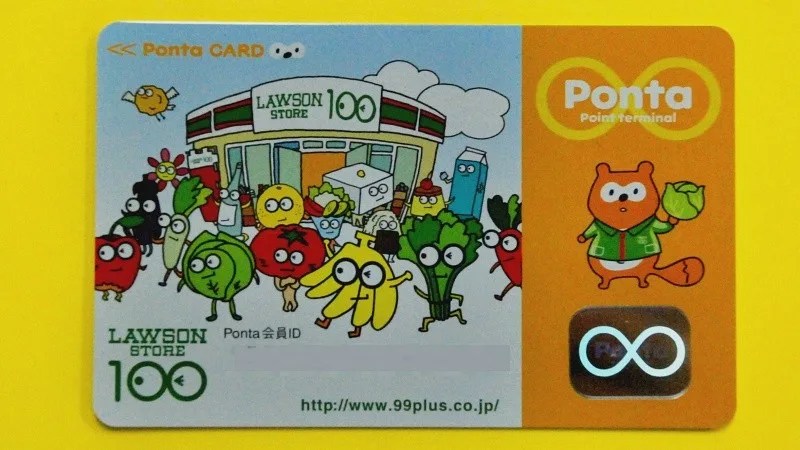
While an item priced at 173 yen will cost 173 points, you can get the latest drinks, snacks, and alcoholic beverages at Lawson for just 70-90 points! Just check the list of seasonal promotions on the official website.
Ponta cards are great for frequent travelers within Japan – you will earn points when renting a car or making reservations through Jalan. At Lawson, you can earn Ponta points with a return rate of 4% with Lawson Ponta Plus.
You can exchange Ponta points for JAL miles where 2P equals 1 mile. Or exchange your JAL miles for Ponta points where 1000 miles equal 500 Ponta. If it’s more than 10,000 miles, the exchange is more valuable where 1000 miles turn into 1000 points.
D Point – Point Card from Docomo
D Pointt – Can be used at Docomo, Lawson, Family Mart, Lotteria, McDonald’s, KFC, Dotour, Takashimaya, Matsuzakaya. You can earn and use D-points in various ways, including in stores and when shopping online.
D points started in December 2015. Docomo users benefit greatly from being holders of D point cards. You will receive coupons and various other special bonuses according to your stage.
The stages are determined by the amount of points you earn over a 6-month period. For example, every 1,000 yen spent on your monthly user fee earns extra points according to your stage.
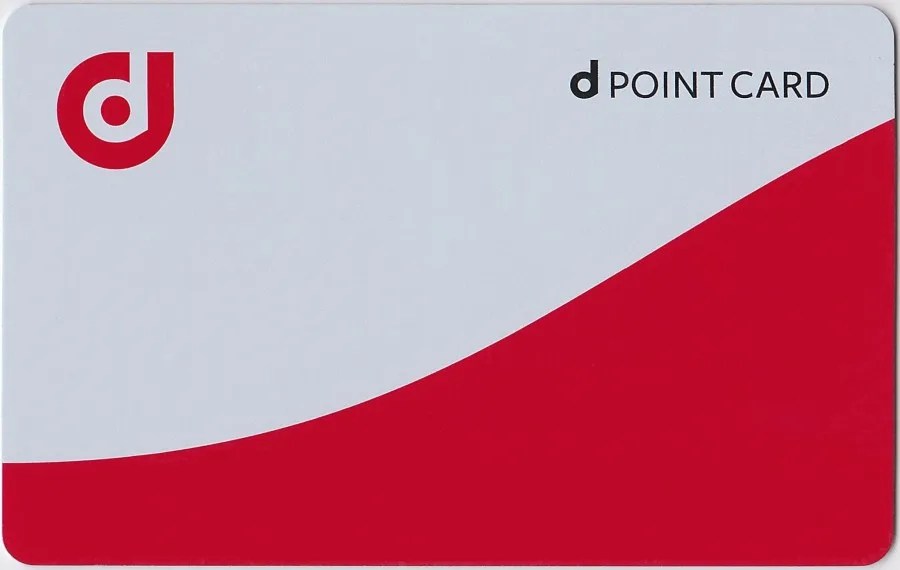
Those in the “regular” stage will earn a bonus of 10 points for every 1,000 yen spent, while those in the “gold” stage accumulate 100 points for every 1,000 yen spent. The D point scheme is affiliated with Docomo, but you do not need to be a Docomo user to register.
If you shop at Lawson using your D card, you will receive a 3% discount and a 2% reduction in points. Besides Lawson, it can be stored and used at Family Mart. Docomo users can also use their points on Amazon.
Other stores that accept D-Point include Fit Care, Poperu, Tsubaki, Super ABC, HoneyRoa, Izutsuya, Lotte Duty Free, Tamaya, and many more. There are thousands of stores, bookstores, stationery stores, food shops, cafes, candy stores, restaurants, bars, and others.
Waon – Point Card from AEON and Ministop
Waon – AEON malls, JAL, Ministop, Carrefour, Yamato Kuroneko, and others. It was born in June 2016, being mandatory in men’s clothing chains and gas stations, as well as in every store of the Aeon Group.
If you have never seen a Waon card before, you have probably heard it – the card emits a very cute “waon” sound after each successful transaction or charge! This sound is the Japanese onomatopoeia for a dog.
One of the advantages of Waon is the ability to exchange points for “electronic money,” further increasing the possibility of using points in any store in Japan.
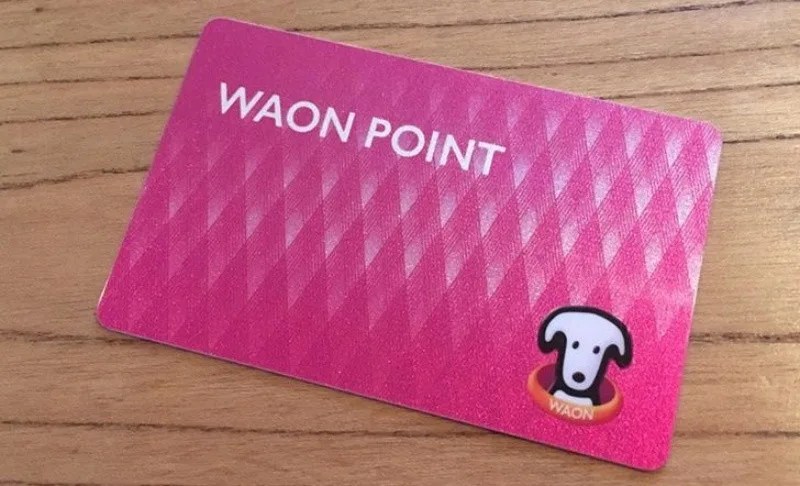
The Waon Point Card is distributed for free at each store of the Aeon Group. In addition to this card, you can purchase a more robust one for 300 yen and also use AEON credit cards to accumulate points.
Some Japanese municipalities even sell Waon cards with panoramic views, making them a perfect souvenir for you or friends. You earn 1 point for every 200 yen spent or charged on a Waon card.
Waon cards are accepted in various supermarkets of the Aeon group, such as Aeon Malls, Daiei, and My Basket. If your weekly store is Daiei, My Basket, or Aeon, you will definitely want this in your wallet.
Rakuten/Edy – Point card from Rakuten
Rakuten/Edy is accepted at Rakuten group stores, Mos Burger, Lawson, McDonald’s, ANA, and others. If you often shop online, consider creating a Rakuten account and signing up for the Rakuten/Edy card.
The Rakuten point card service started in 2014 as a way to allow customers to redeem points earned while shopping online at physical stores.
You will earn 1 point for every 100 yen spent. When paying with a Rakuten card, you will earn 1 additional point. Finally, when paying with Rakuten Edy, an additional point can be earned for every 200 yen spent.
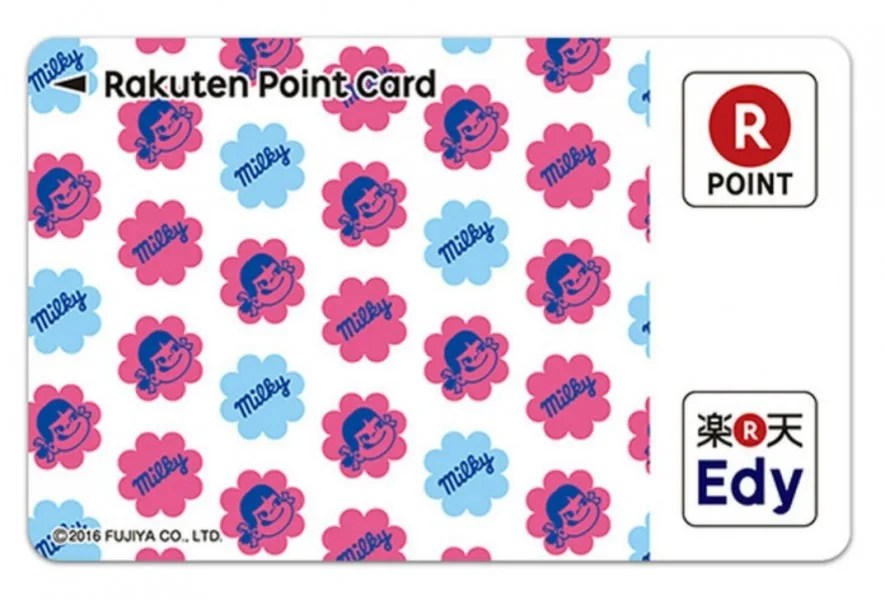
One tip is to accumulate points during Rakuten’s shopping period called Kaimono Marason, where your bonus points increase for each store you use during the period. For example, shop at 3 different stores and earn 3 points for every 100 yen spent. Shop at 6 stores and earn 6 points for every 100 yen spent.
Rakuten Super Points can be converted into Edy Points, and Edy Points can be converted into Rakuten Points. The card can also be found in stores for the price of 300 yen like most other point cards.
Sunkus is a little-known convenience store chain in Japan, where you can save and earn points with the Rakuten card or use the Circle +K Sunkus Card. Unfortunately, this system has been replaced by T-Point.
Tokyu Card
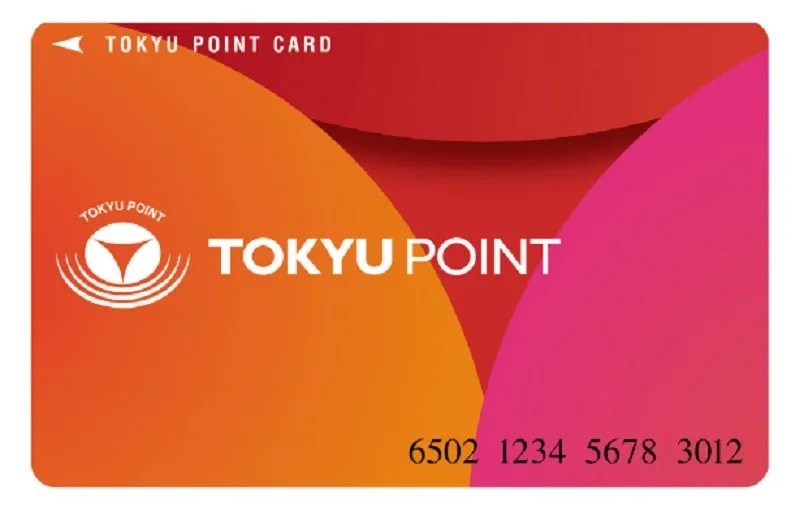
If you have a TOKYU CARD, you can accumulate points at TOKYU POINT member stores, including the Tokyu Group stores near you. This card is not just a point card but also a credit card.
You can use the accumulated TOKYU POINT as electronic money, charging PASMO in units of 10 yen at Tokyu Line ticket vending machines where 1 point equals 1 yen.
You can become a Tokyu Point Member to earn points or use the credit card to accumulate points every month; you also earn points by registering for various services.
You can use the card on trains, planes, JAL, station stores, convenience stores, rise, 109 Shibuya, Hikarie, Terrace, and Tokyu stores.
Local Point Cards
Some establishments and local supermarkets have their own exclusive point cards, similar to some Brazilian store chains that offer store credit cards. They usually have their own discounts and scoring.
Repica Point-Plus is a company responsible for distributing a large part of these customized point cards to local pages. The Point-Plus is used in many supermarkets, restaurants, and retailers.
Some points of these local cards are applied with stamps. Generally, coffee shops like Starbucks and Doutor use their own card to accumulate and reward with free coffee. This type of points system of buying 6 and getting 1 is also common in Brazil.
Companies like this allow various cafes, restaurants, supermarkets, and other frequently used stores close to consumers’ lives to have their own point and electronic money cards.

IC Card – Prepaid Card
Although this is not a point card, it is an essential accessory for anyone in Japan, especially in large cities like Tokyo and Osaka. This card is generally used on trains and subways and provides significant savings.
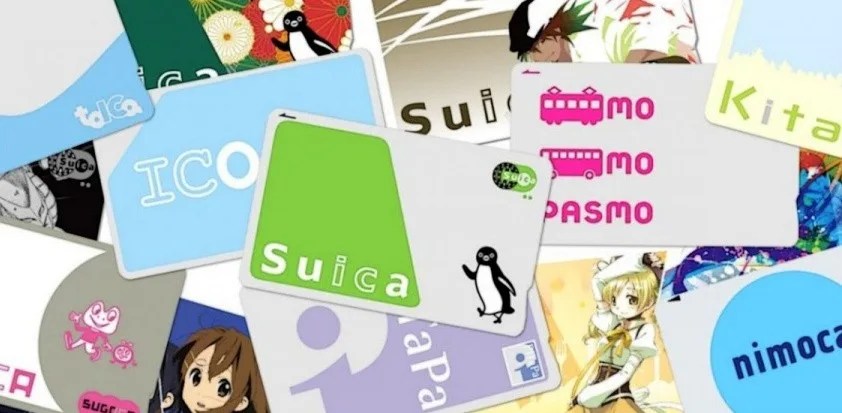
The type of card varies depending on the area; for example, Suica or PASMO in Kanto, Kitaca in Hokkaido, ICOCA in Osaka, nimoca (only in Japanese) in Kyushu, and so on.
There are many benefits to having a prepaid IC card. It prevents you from having to buy an individual train ticket every time you take one, and you can also use it to pay quickly at convenience stores, certain shops, city buses, and even vending machines. For the urban traveler, this card is a must.
One of the most famous is Suica, with the number of locations accepting Suica exceeding 940,000 stores. In the following pages, we will see some cards that can be used to exchange for points on Suica.
JRE Card and JRT POINT
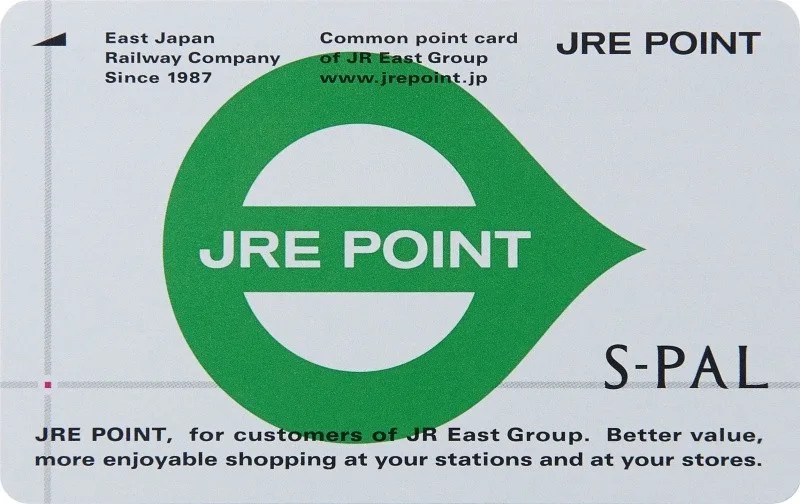
Train companies also offer their own point system. By registering the “Suica” on the JRE POINT WEB site, you can earn JRE POINTs using services like the conventional JR East lines and Shinkansen.
You can also save money by shopping at JRE POINT member stores online or physically. Generally, these are the commercial buildings of the JR East Group, such as “New Days” and “BOOK EXPRESS” from Ekinaka, or “ecute” and “NEWoMan”.
Other places to exchange and earn points are the stores in JR East station buildings, such as Atre, Lasca, and Ecute. You earn one point for every 200 yen spent; in other locations, you can earn 1 point for every 100 yen spent.
The JRE POINT card is attached to the JR East credit card “View Card,” which you can obtain for free at the “stores mentioned above.” You can exchange your JRE Points for balance on Suica, which can be used in over 900,000 stores.
OP Point Card – Card from Odakyu
The OP card (Odakyu point card) is used for shopping, leisure, transportation, school, and much more. With it, you accumulate and spend points at various locations along the Odakyu line (Shinjuku, Hakone, and Enoshima).
This is a point card used only at Odakyu Point Service member stores. The card has no membership fee and accumulates 10% of the amount spent in points. You can receive exclusive services and discounts by presenting the OP card.
Choose the card that best fits your lifestyle, including credit cards, point cards, and family membership cards. You need to register your card at Odakyu department stores or at the information desk.
Some of the places where you receive special treatment or discounts are Fukurai Suzume, Meet Geisha, Kita Kamakura Museum, Nishiyama Museum, special restaurants, and other tourist spots.

The Odakyu Point Card offers perks at some ranches, sake factories, museums, cinemas, cultural facilities, amusement parks, hot springs, historical sites, vehicles, gardens, and more.
You earn points on the Romance Car, when eating at Hokuo bakery, when buying a bag at department stores. One point equals one yen. You receive about 10% of the spending in points on your OP Card.
Izutsuya With Club Card
Izutsuya chain stores generally accept D-Point, but they also have their own membership card called With Club Card. With it, you can accumulate 1 point for every 100 yen spent.
Points can also be earned for payments made with Izutsuya gift vouchers and others. If you accumulate 1,000 points, you can redeem them for 1,000 yen in point tickets that can be used at each Izutsuya Group store.
Anyone over 16 years old can join the point card. There is a version with a credit card and one without a credit card. When acquiring the card, you already earn 100 points. There is no annual membership fee for the point card.
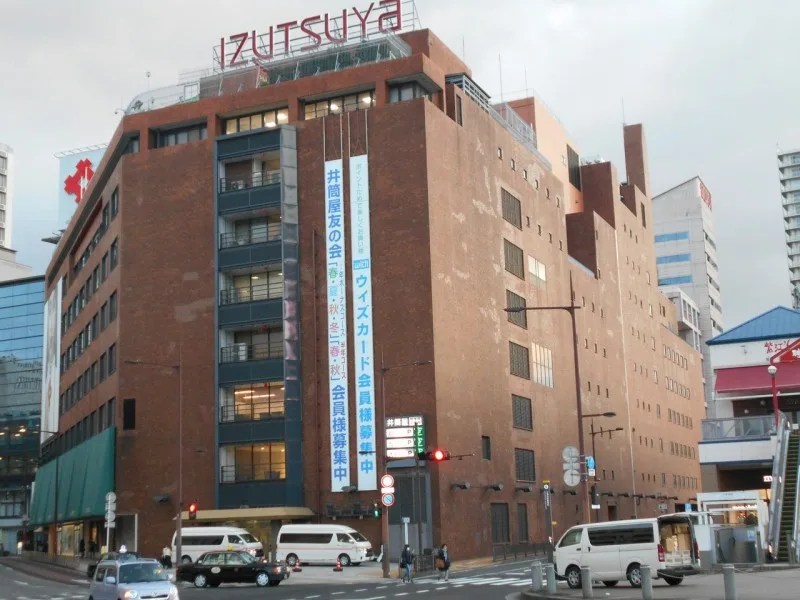
Izutsuya has chains of restaurants, supermarkets, cosmetics, and clothing stores as if it were a shopping mall. On the official website, it is possible to buy food, cosmetics, and seasonal products.
The main physical stores are located in Yamaguchi, Oita, Fukuoka, and Ogura, so if you live near this region, the Izutsuya card is for you. Its main headquarters is located in Ogura Kita-ku, Kitakyushu city.
Kips Card – Kintetsu Group
KIPS is a card that is available for accumulating points, either as prepaid or as a credit card. These cards allow you to accumulate KIPS points quickly. With this card, you shop at KINSHO and Harves supermarkets.
You earn about 1 point for every 200 yen spent; some stores may score differently. The KIPS card works at Kintetsu department stores and other partner KIPS stores. The card can be found for 100 yen.
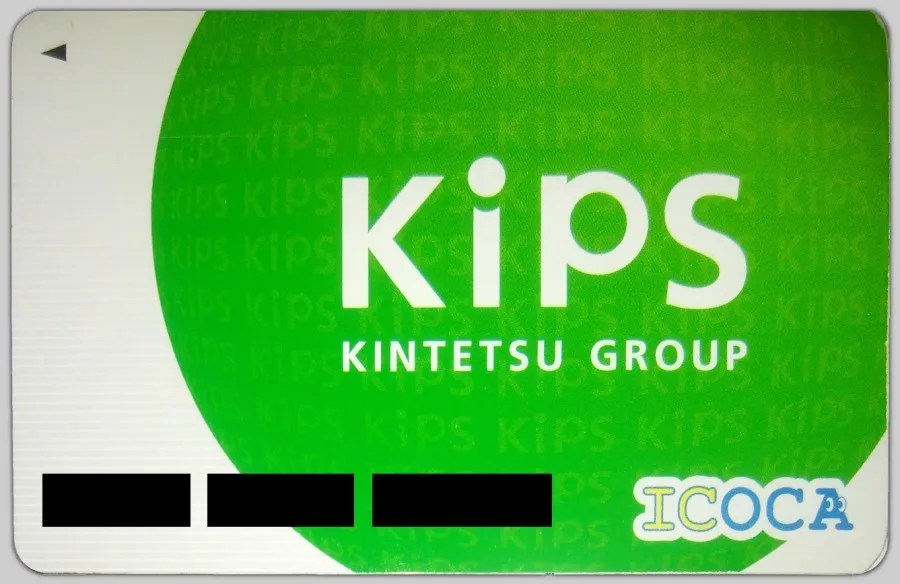
Kintetsu is a corporate group known mainly for the train lines that surround Osaka, Nagoya, Kobe, Nara, and Kyoto. KIPS also has a card available with the ICOCA function to work at train stations.
Some clothing stores that work with KIPS include Abeno, Yamato Saidaiji, Yamato Yagi, Time’s Place Namba, Time’s Place Kyoto, and other stores within these locations. It is possible to spend and accumulate points in hotels and ryokans like Miyako Hotel and Miyako Resorts.
You can use it in some restaurants and stores at Namba, Uehonmachi, Saidaiji, Nara, Kyoto, Nagoya stations, and Kintetsu stations. You can even use it in cinemas, clubs, golf clubs, and even at a driving school in Nara.
Oki Doki from JCB
1 point will be accumulated for every 1,000 yen spent on the JCB card each month. There are various uses, such as exchanging for products and making purchases. There are about 400 participating online stores!
The Oki Doki Land is a special points website where you can earn double Oki Doki points at any time, just by passing through. You can also shop at a JCB ORIGINAL SERIES partner to earn more points.
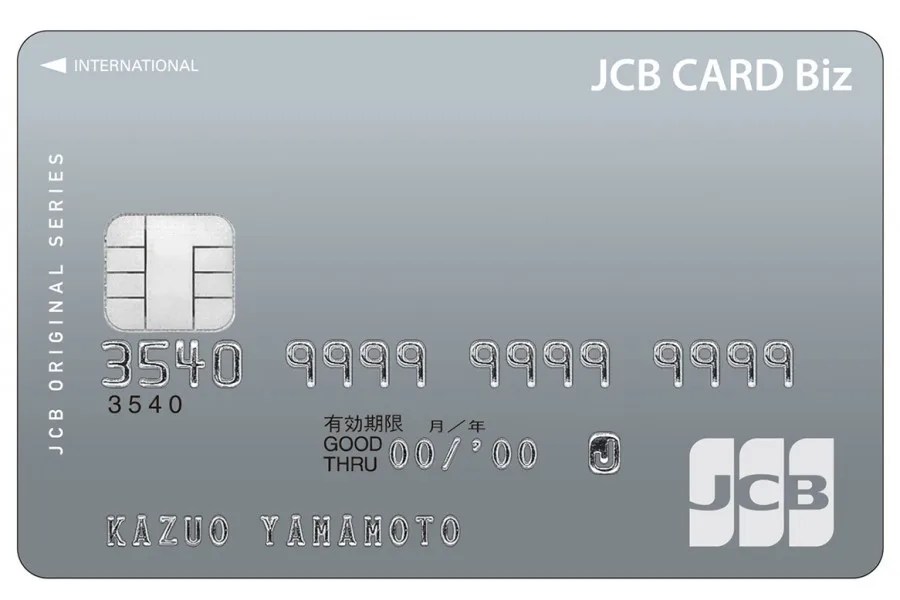
If you register a JCB card that collects Oki Doki points on your Amazon payment card, you can select Oki Doki points as one of the payment methods. Each point equals 3.5 yen.
“JCB STAR MEMBERS” is a special membership service for those who use a JCB card for a certain amount or more in a year. By applying member benefits, you can increase your Oki Doki points by up to 70%.
Other benefits for those who use the JCB card include earning miles, partner points, and exchanging points for cash. Benefits may vary depending on the card used. You can use your Oki Doki Points to pay your card bill, where 1P will equal 3 yen.
World Present Points – SMBC
World Present is the name of the points program from SMBC bank. It is a credit card point system from the bank. With it, you can pay your bills, convert points into cash, shop at partner stores, and also shop on Amazon.
One point will be given for every 1,000 yen spent. The exchange can be made through Vpass (Internet) and Smart Dial 24 (call). You can even request a shopping catalog by phone.
Unfortunately, points will not be granted for purchasing transportation passes, purchasing limited express tickets, and purchasing green Suica tickets using Mobile Suica and Apple Pay Suica.
The validity period of points from a corporate card is two years from the month of point acquisition, regardless of the type of card. After the expiration date, it will automatically expire, and you will not be able to use the expired points.
I don’t think it’s a good option if you’re looking for a card with a point system. If you already have a bank account and credit card with SMBC, then it makes sense to join World Present from Sumitomo Mitsui Banking Corporation.
Line Point – Line App
Line Points can be used to purchase digital items for the app, such as sticker packs, use as balance in Line games and partners, or simply generate QR Code coupons that can be used in establishments.
By participating in the Line Club, you can accumulate points in various services and locations. Points can be earned and used in services like Pokeo, Lacore, Line Shopping, Line Travel, and Line CONOMI. You also save if you use Line Pay.
You can also use the points on LINE Manga, LINE LIVE, LINE Divination, LINE MUSIC, LINE Friends, LINE Gift, and LINE Mobile. In addition to the point systems, LINE has a 4-level ranking system that includes regular, silver, gold, and platinum.

W-Point – Watari
The W point card is a common local point card system operated by Watari Co., Ltd. The accumulated points can be exchanged for cash and products at partner stores and online stores.
In addition to the regular points given when you use the service, we will show you a card with an internally issued electronic money function that provides charging points when you load it.
Watari also creates customized point cards for other stores, including stamp cards. There are thousands of other Japanese point cards, but these are the most recommended. If you remember others, just leave them in the comments.
What do you think of this point system in Japan? Do you use it? Would you like to have this system in Brazil? Thank you for reading this article, and I hope you enjoyed the tips. If you liked it, leave your comments and share the article on social media.

Community
Comments
0 comments
There are no published comments in this language yet.
Send comment