

In Japan, the act of matching clothes with friends, partners, or family is much more than a matter of style. This practice, called Osoroi (お揃い), is an expression of unity, intimacy, and group harmony. Unlike in the West, where wearing matching outfits can be considered embarrassing, in Japan it is seen as a demonstration of closeness and even fun.
The word Osoroi derives from the verb sorou (そろう), which means “to become complete” or “to equalize.” In practice, the Osoroi code goes beyond fashion: it is a cultural representation of how the Japanese value the collective and belonging. This article explores the origins, meanings, and popularity of this fascinating trend.

The Origin and Meaning of Osoroi
The Osoroi is more than just a simple fashion style; it is a practice that reflects deep cultural values. In Japan, collectivity and harmony are fundamental virtues. From school days, Japanese children learn to wear uniforms, which symbolize equality and belonging. Thus, the idea of dressing similarly or identically to someone fits perfectly into this context.
Cultural Influence
The book The Japanese Mind, by Osamu Ikeno and Roger J. Davies, discusses how Japanese society prioritizes group harmony over individuality. This “group consciousness” manifests in practices like Osoroi, where dressing similarly expresses the emotional connection between people. In the context of couples, friends, and even families, the Osoroi is a visual gesture that symbolizes loyalty, solidarity, and closeness.
Adaptation to Social Media
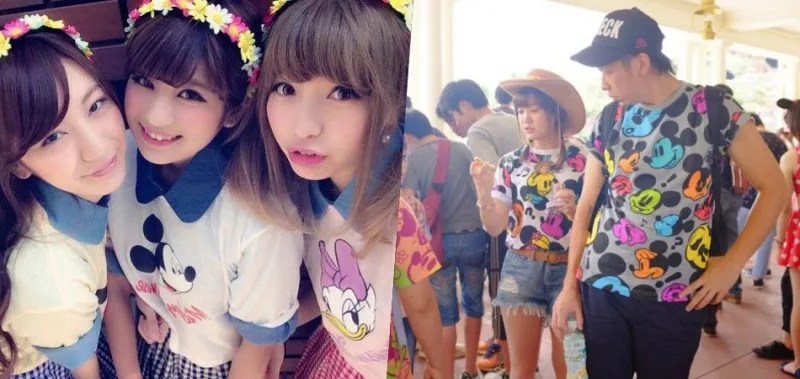
In addition to its cultural basis, the practice has gained popularity in the digital environment. Young and adult Japanese people embrace Osoroi to take harmonious and attractive photos, especially in tourist spots like the Tokyo Disneyland or DisneySea. These colorful and synchronized images stand out on social media, strengthening the trend.
How Osoroi Is Practiced
The Osoroi does not require special events to be adopted. Many practitioners incorporate the practice into everyday activities, such as going to the mall or beach outings. The flexibility in style is a strong point: combinations can range from identical clothing to pieces with similar patterns or colors.
Fashion Among Youth
The Osoroi is especially popular among young people, with greater adherence among girls. The practice is seen as a form of fun, in addition to expressing emotional connection. Many couples also use Osoroi as a way to demonstrate love and affinity, making it a modern alternative to Western romantic traditions.
Groups and Family
Entire families also participate in the trend, especially on special occasions or trips. This reinforces the idea of unity and creates visual memories that are often immortalized in album photos.
Japanese Fashion and the Collective
In Japan, the concept of dressing as a group dates back to the tradition of school uniforms. The uniformity of clothing has always been linked to the idea of creating group identity, and Osoroi continues this tradition in a creative and modern way.

Osoroi in Comparison to the West
While in Japan the Osoroi is a celebrated practice, in the West reactions can be mixed. Many people find it embarrassing to wear matching clothes with others, especially adults. However, events like themed parties or family games are exceptions.
In Japan, familiarity with school uniforms may explain the receptiveness to the idea of coordinated clothing. This practice transcends the simple act of dressing, becoming a form of visual communication.
Would You Wear Osoroi?
The Osoroi challenges the cultural norms of the West, encouraging a lighter and more fun approach to fashion. Participating in this practice can be a unique experience, especially when visiting Japan.

Community
Comments
0 comments
There are no published comments in this language yet.
Send comment