

Mokkan [木簡] are wooden strips with writings found by archaeologists in Japan. These plaques were used to convey messages before paper, also used in countries like China and Korea.
One of the characteristics of Mokkan is that it can be scraped, rewritten, and reused. Its writing was done with a brush and ink, but it can also be found in other forms such as scraped.
Today, the Japanese still have the habit of writing things on wood in temples, drawing their fortune or making a promise, but it does not indicate a relationship with Mokkan, as it became extinct with the advent of paper.
We also recommend reading:
- The Kingdom of Wa and Ancient Japan
- Japanese Garden – Guide to Traditional Gardens of Japan
- Japanese Stationery – Vocabulary and Curiosities
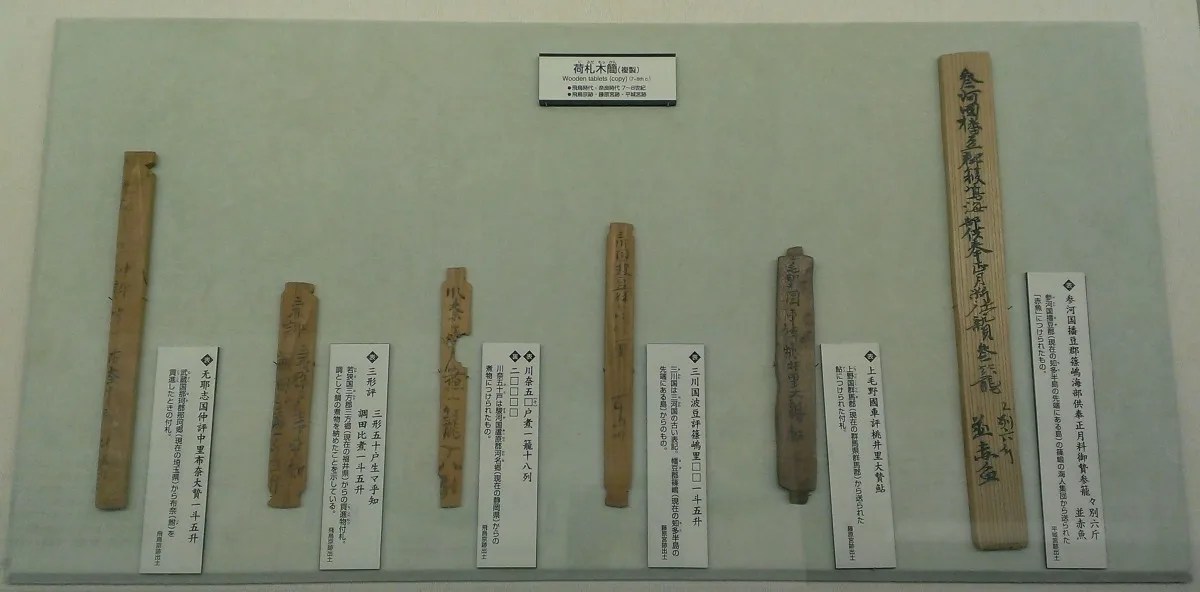
Curiosities about Mokkan
Most of the wooden tablets found in Japan date from the 7th to the 8th century. Mokkan was used until the 10th century, when writing materials were limited.
More than 150,000 Mokkan have been recovered, of which a large part was written in ancient Chinese and Japanese, thus showing the blending and evolution of the languages.
They can be found throughout Japan, mainly around the ancient capitals Nara and Fujiwara. They were used for informal purposes, shipments, memorandums, documents, official records, and other types of messages.

There are several types of Mokkan, they are basically any type of message, including curses, calligraphy, poetry, waka poems, and others. Mokkan can also have different formats, although there are differences in the name.
Mokkan looks like strips of paper, with upper cuts at the ends, even forming a sword tip. We recommend reading: Katana – The Legendary Swords of Japan

Community
Comments
0 comments
There are no published comments in this language yet.
Send comment