

When studying Japanese, we come across the word delicious, which is oishii [美味しい], but is it the only word to express that something is delicious in Japanese? In this article, we have separated some alternatives to the word oishii for you to say that something is tasty and delicious in Japanese.
What does Oishii mean?
First, we must understand what oishii [美味しい] really means. This word is composed of the ideogram bi (美) which refers to beauty, something lovely and beautiful. And also the ideogram aji (味) which refers to flavor and taste. So we are literally saying that the flavor is beautiful.
The first alternative we will mention is exactly the same as oishii [美味] but pronounced differently. The word oishii can also be pronounced as bimi [美味], which are the Chinese readings of this ideogram and does not refer to an adjective like oishii, but rather a noun.
It is obvious that we will not use a random noun; we should add this noun in a sentence like “Bimi naru [美味なる]” which indicates that something has become delicious, in the sense of becoming delicious. We can also add where this food is served to refer to the food from a certain place being tasty.

Umai [うまい] – Tasty and delicious
This expression umai [うまい] is quite popular, but casual and a bit more specific. Besides referring to something tasty, it may be that you are trying to say that something is really appetizing and flavorful. A great option that truly expresses the feeling you have for the food while you are with friends.
The great confusion lies in the origin of its writing, which is somewhat confusing and indeterminable. According to the dictionary, it can be written as [上手い] but also means splendid, promising, skillful, and clever. It’s as if we are praising not only the food but also the one who made it.
There is another word pronounced umai [甘い] related to flavor that literally means sweet, sugary, and sweet-sour. Some end up using this expression in cooking to refer to a tasty flavor, but it is not recommended (unless something is literally sweet or sweet-sour). Read our article about flavors in Japanese.
Apparently, the original ideogram of umai is [旨] but has fallen out of use, where nowadays it is usually written only in hiragana. This ideogram literally gives the idea of something delicious, tasty, and a specialty. Over time, it has literally been replaced by [上手い]. Curiously, the ideograms [上手] give the idea that something was handmade.
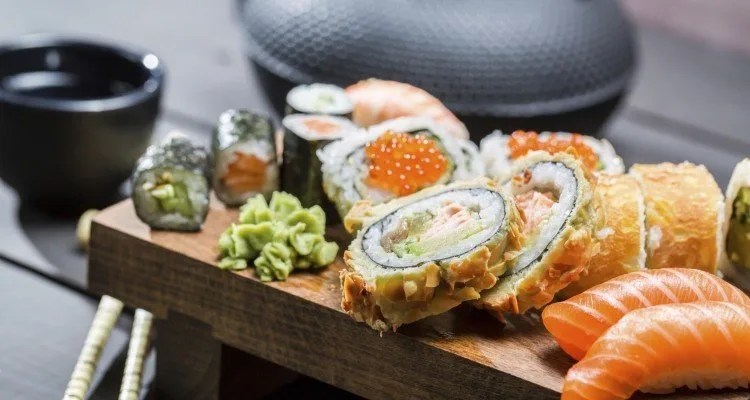
Zeppin [絶品] – Wonderful
The word zeppin (絶品) gives the idea of a masterpiece, a refined item, perfection, or something unique. The word is composed of the ideogram [絶] which means to interrupt and beyond, and the ideogram [品] which means something refined, worthy, and is also used as a counter in cooking.
In TV shows and advertisements, it is common to find expressions like zeppin gormet [絶品グルメ] or zeppin desu [絶品です] that can be used both casually and formally. Just don’t use it randomly because this word is really saying that it is one of the most delicious and tasty things you have ever eaten in your life.
Besides using these simple words like oishii, umai, and zeppin, you can engage in more dialogue and explain how the flavor of the food is or why it is so tasty. You can express it in a few words and finish with aji (味) which means flavor.

Other ways to express tasty in Japanese
Some people use common expressions of surprise like saikou [最高] which means the best, wonderful, and supreme. Some girls tend to say shiawase (幸せ) which means happy, because they are really happy to eat a delicious dish.
Some say that the food is so good that they are addicted to it, saying: Kuse ni naru (癖になる). The word kuse [癖] literally means habit, tendency, and addiction. There is also a reverse version of umai pronounced maiyu [まいゆ] which literally means the same thing.
Some tend to use the expression Hoppe ga Ochiru [ほっぺが落ちる] which literally means cheeks falling. This expression indicates that the food is so good that your cheek has surrendered, was defeated, and fell.

To conclude, we will leave other words related to delicious and tasty, but that are not commonly used today or in all situations.
Responsive Table: Scroll the table sideways with your finger >>
| Portuguese | Japanese | Romaji |
| Splendid (Used when satisfied); | 結構 | kekkou |
| Delicious or gourmet food | 美食 | Bishoku |
| Delicious flavor, excellent flavor | 風味絶佳 | Fuumizekka |
| Delicious flavor | 佳味 | Kami |
| Uncommon and delicious meal | 珍膳 | Chinzen |
| Uncommon and delicious meal | 珍肴 | Chinkou |
| Was delicious | 牛負けた | Ushimaketa |
| Good taste | 好味 | Koumi |
Checklist – 15 Ways to say tasty in Japanese
Now that we have reached the end of the article, it’s time to count the number of ways to say that a food is tasty:
- Oshii;
- Umai;
- Zeppin;
- Saikou
- Shiawase
- Kuse ni naru
- Maiyu
- Hoppe ga Ochiru
- Kekkou
- Bishoku
- Fuumizekka
- Kami
- Chinzen
- Chinkou
- Ushimaketa
- Koumi

Community
Comments
0 comments
There are no published comments in this language yet.
Send comment