

Did you know that Japanese people eat beans straight from the pod? Edamame is a vegetable widely consumed in some countries on the Asian continent, especially Japan. In this article, we will see some curiosities, varieties, benefits, and preparation.
Edamame is a green pod of soybean or black bean, and it is widely consumed, whether blanched, steamed, or microwaved. They are usually mixed with a little salt and served as an appetizer or as a starter.
In this article, we will learn more about this vegetable, its growth process, its preparation methods, and why you should consider making edamame part of your meals?
We recommend reading:
- Moyashi – Bean Sprouts – Cheap and Nutritious
- Yokan – Japanese Seaweed Jelly Recipe
- Amanatto – The Bean Candy
The Growth of Edamame
The name edamame (枝豆) means “bean branch.” Its name likely refers to the fact that it is harvested with its branches.
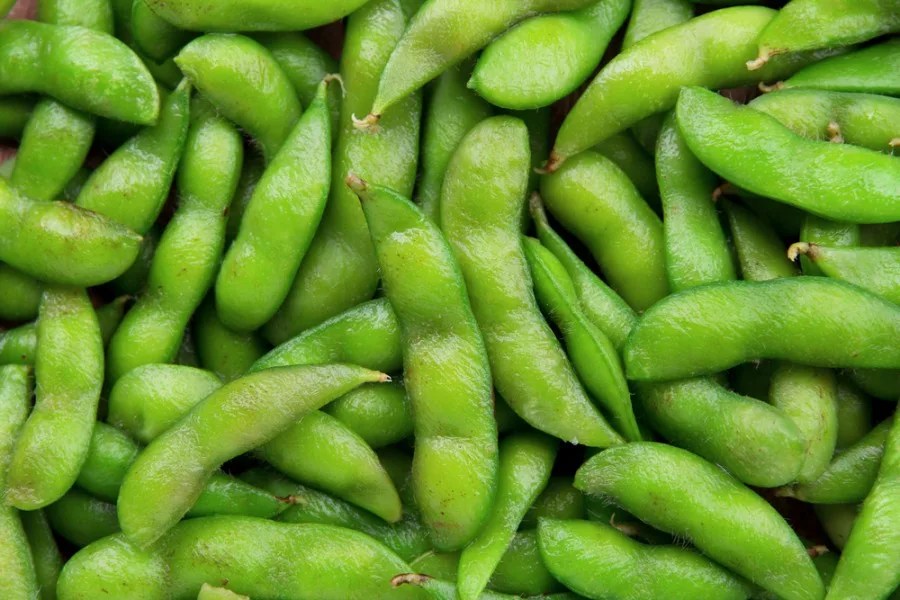
Its pod has a similar appearance to that of a pea, but they are tougher and have fine hairs on their outer part. Normally, the pods contain 2 to 3 seeds.
It has a season from June to August, and it is harvested while still in an immature phase, meaning it has not matured to the point of becoming mature soybeans.
Each main stem of the edamame can produce about 100 fruits. However, about 70% to 80% of the flowers on the stem will fall off, resulting in only about 30% to 20% of the flowers producing fruits.
The green pods surround the fruits, thus serving as protection for the fruit. Another function of the pods is to perform photosynthesis so that the fruits grow strong and healthy.
Varieties of Edamame
There are several types of edamame as there are no restrictions on any line of soybean seeds; yellow soybeans, green soybeans, tea soybeans, and black soybeans are available.
This variety allows for various colors of seed coats, which can be divided into four types: yellow, green, brown, and black.
Some of these are “Tamba Black Soybean“, a specialty of the Japanese region of Tamba. The main characteristic of “Tamba Black Soybean” is the size of its grains, which weigh three times more than regular soybeans.
“Dadacha Bean”, native to the Shirayama district, near the city of Tsuruoka, Yamagata Prefecture. It is a species characterized by brown hairs that grow on the pods.
“Koito Native” is a soybean native to Chiba Prefecture. It has this name because it is a high-quality soybean primarily grown in the Koito River basin in Kimitsu. It is a late-maturing variety.
The vegetable is produced throughout Japan, but the most popular is produced in the city of Noda, which is in Chiba Prefecture, one of the largest producers of edamame in the country. The cultivation of green soybeans began in the city of Noda around 1950.

Ways to Preserve Edamame
A characteristic of edamame is that after its harvest, it begins to lose sugar content and flavor over time. Therefore, it is not recommended to store it raw.
The best thing to do is to eat it on the day of purchase. Another option is to store it in the refrigerator wrapped in newspaper or plastic wrap to prevent it from drying out.
However, if you intend to store it for a few more days, it is recommended to boil it, then place it in the freezer in a container such as a storage plastic bag.
How to Prepare Edamame
As mentioned, the vegetable tends to lose its flavor quickly, so it is important to boil it quickly after purchase.
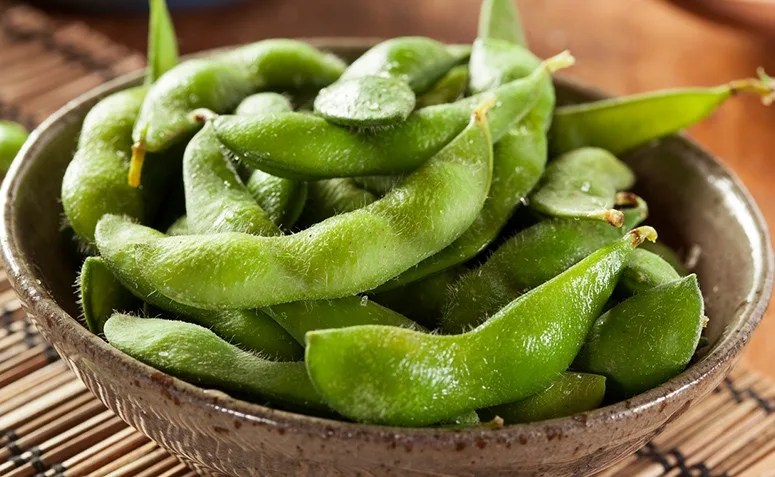
Before that, cut the edamame branches and wash them well with water. Then you should remove the hairs from the pod’s shell; one way to do this is by sprinkling salt on top and rubbing them (processed products will likely come without hairs).
After cleaning the edamame, the cooking process is quite simple: boil the water and add the pods, cook them until they are tender (about 5 minutes), drain the pods, and rinse them with cold water.
After that, they will be ready and can be served as a side dish or as appetizers for alcoholic beverages.
We recommend reading: Sake – Everything about the Japanese rice drink
In addition to this simple recipe, there are many other ways to prepare edamame, such as tempura, jelly, or sweets in general. You can find many other combinations and preparation methods on YouTube.

The Benefits of Edamame
Edamame has many advantages, such as easy preparation and handling, but its main advantage is the health benefits; it contains many nutrients: such as proteins, potassium, calcium, vitamins, minerals, and fibers.
Among them, we can find vitamin K and folic acid, which are more abundant in the green pod than in mature soybeans. The amount of folic acid found in 100g of the green pod meets almost 80% of the recommended daily intake.
This vegetable is truly impressive, and its consumption brings many benefits; we can list at least 5 benefits for your health.
- It helps regulate your mood. The pods contain folic acid, which can help alleviate depression and regulate serotonin and dopamine hormones in the brain. They regulate mood, appetite, and sleep quality.
- Increases muscle mass. Edamame is an excellent source of high-quality proteins and amino acids. A cup of 155 grams contains about 18.5 grams of plant protein.
- Helps control appetite. The green pod is a low glycemic index food and has a low carbohydrate content, thus helping to regulate hunger.
- Helps reduce edema. The high potassium content of edamame can help remove excess sodium from the body, thus helping to reduce fluid retention.
- Helps reduce cholesterol. The Food and Drug Administration (FDA) recognizes that soy protein can help prevent heart disease and hyperlipidemia.
The green pod is a favorite snack for many people. Due to its flavor, high nutritional value, and high protein properties, they are loved by people who want to lose weight or simply take care of their health. Did you enjoy learning about this vegetable?

Community
Comments
0 comments
There are no published comments in this language yet.
Send comment