

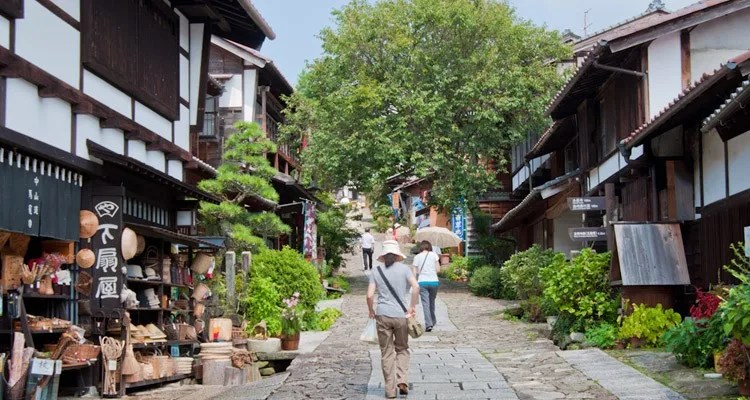
Among the mountains of Gifu Prefecture in Japan lies Magome, a charming village that seems to have come out of a samurai tale. Part of the ancient Nakasendo route, which connected Kyoto to Edo (now Tokyo) during the Edo period, Magome preserves the historical atmosphere of centuries past. This destination, with its stone streets, traditional houses, and stunning landscapes, offers an authentic experience of feudal Japan.
Magome is not just a place of scenic beauty; it is also a living testament to Japanese history, with its connections to the travelers, merchants, and samurais who passed through. In this article, we will explore the history, attractions, and tips for visiting this enchanting village.
The History of Magome
Magome was one of the juku (resting stations) on the Nakasendo route, which was used for foot travel during the Edo period (1603-1868). These stations served as strategic stops to rest, eat, or change horses. Additionally, they were an important point for samurais, who traveled between Kyoto and Edo to fulfill their duties in the sankin-kōtai (alternate attendance system of daimyo).
The name “Magome” literally means “basket of horse,” a reference to the transportation of goods and people at the time. The village thrived as a commercial and cultural center, but with the modernization of Japan, many ancient routes lost their relevance. In recent decades, significant efforts have been made to preserve the appearance and history of Magome, making it an essential tourist destination.
What to Do in Magome
Magome is a place where the past and present meet harmoniously. Here are some activities and points of interest that make this village special:
1. Walk Along the Main Street
The main street of Magome is paved with stones and lined with restored wooden buildings that hark back to the Edo period. The shops sell local products, such as traditional sweets, handicrafts, and souvenirs. Cafés and restaurants serve regional delights, such as gohei-mochi, a grilled rice cake with sweet miso sauce.
2. Magome History and Culture Museum
This small museum offers a detailed insight into the history of the village and the Nakasendo route. Artifacts, old maps, and interactive displays help visitors understand the lives of travelers and samurais who used the route.
3. Magome-Tsumago Trail
One of the most popular activities is the hike between Magome and Tsumago, another historic village on the Nakasendo route. The trail, about 8 km long, passes through cedar forests, streams, and rural landscapes. The route is well-marked and offers a unique opportunity to experience feudal Japan in an immersive way.
4. Eisho-ji Temple
Located on the outskirts of the village, Eisho-ji Temple is a tranquil place for reflection. Its simple architecture and serene garden are perfect examples of Japanese aesthetics, valuing harmony with nature.
5. Panoramic View of Mount Ena
For landscape lovers, the view of Mount Ena from Magome is a must-see. On clear days, the contrast between the green mountains and the blue sky creates a postcard-worthy scene.

Tips for Visiting Magome
Visiting Magome requires a bit of planning, but the experience is worth the effort. Here are some useful tips to make the most of your visit:
- Arrival and Transportation: Magome is not accessible by direct train. The closest is Nakatsugawa station, from where you can take a bus to the village. Another option is to rent a car for greater flexibility.
- Best Time to Visit: Spring and autumn are ideal, with cherry blossoms blooming in April and autumn leaves turning red in November. Summer offers vibrant green landscapes, and winter gives the village a special charm covered in snow.
- Comfortable Footwear: The stone streets can be slippery, especially on rainy days. Wear appropriate walking shoes.
- Accommodation: Consider spending the night in a traditional inn (ryokan) for a complete experience, including typical meals and hot baths.
Why Visit Magome?
Magome is not just a historic village; it is a window into a Japan that many only know through films and books. Its preserved streets, the tranquil pace of life, and proximity to nature create a unique atmosphere. For history enthusiasts, it is a place where you can walk the same paths that samurais and merchants trod centuries ago.
Whether to admire traditional architecture, explore the trails, or simply enjoy the serenity of a place untouched by time, Magome is a destination that enchants and inspires. By visiting, you not only learn about the past but also feel the timeless essence of Japan.
Getting to Know the City
The famous writer Shimazaki Toson was born in Magome in 1872. In his novel Yoakemae, he describes life in the area during the early years of the Meiji Restoration. Toson was born in the main inn of the city, known as Honjin. Today, the inn serves as a memorial to the artist. We also have Tsuchimaya Shiryokan, a small restaurant and souvenir shop that features a small museum focused on Toson.
Wakihonjin was another inn in the city that has now become a museum. Inside, there are exhibitions related to the history of Magome as a post-Nakasendo town. Shimizuya Shiryokan is another museum that has wall scrolls, ceramics, clothing, and other goods that belonged to the residents of Magome.
To learn more about this small village, check out the video from our friend Santana Fonseca:

Community
Comments
0 comments
There are no published comments in this language yet.
Send comment