

Knowing South Korea is one of those trips that stay in your memory forever. It could be because of the K-pop tsunami, the hyperconnected vibe of Seoul, or the millennia-old temples that resist in the midst of urban chaos – the country surprises you. It doesn’t matter if you go as a tourist, student, or for work: adapting to the South Korean lifestyle requires much more than just a passport and a packed suitcase.
Traveling to Korea is not just about changing time zones. It’s diving into a universe of social codes, exhilarating rhythms, and a different way of seeing the world. And believe me: you will feel this in your skin right from the first days. Everything works differently there – from the way to greet to the unwritten rules about how to dress on the street.
It’s not about “culture shock.” It’s about arriving prepared. And this preparation starts here, now.
Cultural Differences You Really Need to Know
First golden rule: respect what you don’t yet understand. Koreans have very specific social codes, and trying to fit Western logic into them will only create discomfort – especially if you want to build good relationships there.
Did you know that in Korea your age can be different from what your passport says?
Korean Age: A Unique Counting
There, the nine months in the mother’s womb count as the first year of life. In other words: when born, the baby is already 1 year old! And there’s more: everyone ages together on New Year’s Day (January 1st). Surreal, right?
A baby born in December? The following January, they will officially be “2 years old” – even with just one month of life. This system still shapes social relationships, even though it is a bit more flexible today.
And this leads us to another crucial point…
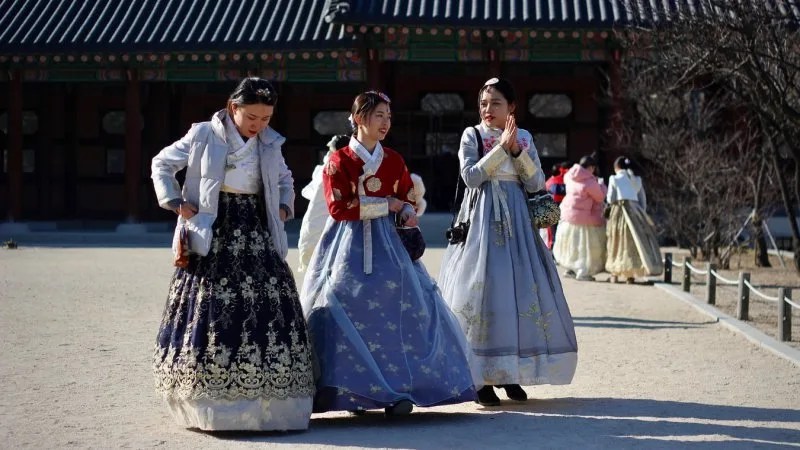
Hierarchy and Respect: When Every Word Counts
In Korea, asking for someone’s age is not curiosity – it’s a practical necessity. It defines how you speak, behave, and even how you bow your head when greeting. Korean has levels of speech that change radically depending on the hierarchy between people.
Keep an eye on terms like:
- Oppa: women calling older men (brothers, boyfriends, close friends)
- Unnie: the equivalent among women
- Hyung: man speaking to an older man (close friend)
- Noona: man speaking to an older woman
- Ssi/Nim: formal address for strangers or superiors
Got the address wrong? Even unintentionally, it can lead to an instant cold shoulder. This hierarchy is taken seriously – and knowing how to navigate it is social survival.

Beauty, Aesthetics, and the Cult of Appearance
Seoul didn’t become the world capital of plastic surgery by chance. The obsession with appearance permeates everything – from the stores in Gangnam to job interviews. Men and women follow complex skincare routines (10 steps are not a myth!), and men’s makeup is absolutely normal.
Many young people receive aesthetic procedures as graduation gifts – rhinoplasty or “double eyelids” are popular. And the best part: this is not a taboo. It’s a social investment.
Oh, and forget about tanning! Sun protection is taken to extremes: umbrellas in summer, long sleeves at 35°C, and whitening products on every shelf. The beauty ideal there is porcelain skin – very different from the Western standard.
Relationships: Where Signals Speak Louder
Be careful with gestures that seem innocent. In Korean culture, accepting a second date can be interpreted as serious interest – without needing declarations.
If you go out more than once with the same person, many Koreans already consider that you are dating. And meeting the parents? That only happens when marriage is a real possibility. Ambiguity doesn’t work there.
In other words: if someone invites you out again, think twice. It could be the beginning of a commitment you didn’t plan.
Religion and Beliefs: Silent Coexistence
Although almost half of the population identifies as non-religious, the country has deep Buddhist roots and a rising Christianity – especially Protestantism.
Buddhist temples like Jogyesa in Seoul are vibrant cultural centers, while mega-churches like Yoido Full Gospel Church attract thousands. But here’s the catch: no one is evangelizing you on the street. Mutual respect is the norm, and religious symbols rarely cause friction.
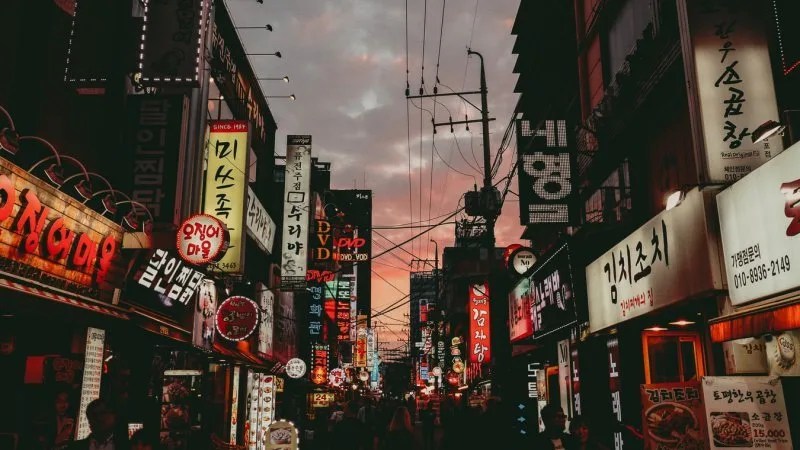
Everyday Etiquette: Small Gestures, Big Impact
Some habits may seem like details, but they make all the difference in Korea. Mastering them avoids disapproving looks and helps build bridges with locals:
Shoulders showing? Only in Itaewon!
Miniskirts are common, but low necklines and sleeveless tops are still frowned upon outside tourist areas. Foreigners have some leeway, but if you look Asian, be prepared for judgment.
Shoes? Leave them at the door!
Entering homes with shoes on is a serious offense. Take off your shoes before the entrance hall – many homes offer slippers for visitors.
Two hands = pure education
When handing over a business card, gift, or even money, use both hands. It’s a sign of respect. Doing it with one hand seems arrogant.
Don’t fill your own glass!
At dinners, wait for others to serve your drink. Reciprocity is key: be attentive to serve others as well.
Traveling is Exchange: Arrive with an Open Heart
South Korea is not a destination for those who only want checklists and photos. It’s a country where culture pulses at every corner – and where your behavior can open doors or burn bridges permanently.
Going there requires more than a charged phone. It requires attentive eyes, patience to unravel codes, and a willingness to learn. But if you accept the challenge, the reward is immense: intense experiences, a cuisine that explodes with flavors, and a new way of seeing the world. Is it hard work? Yes. Is it worth it? Every second.

Community
Comments
0 comments
There are no published comments in this language yet.
Send comment