

The Kappa is one of the most emblematic creatures of Japanese folklore, emerging from ancient legends that mix fear and admiration. Nowadays, it appears in both horror stories and more friendly representations in anime and games. But what makes the Kappa so fascinating? This article explores the origins, characteristics, and influence of this iconic creature in Japanese culture.
What is a Kappa? The Origin of the Mythical Aquatic Youkai
The Kappa (河童) is one of the most well-known youkai in Japan, and its fame is fueled by a mix of fear and respect. The term “youkai” refers to supernatural creatures that can be both mischievous and dangerous. The word “Kappa” means “river child,” reflecting the creature’s preferred habitat: rivers, lakes, and swamps.
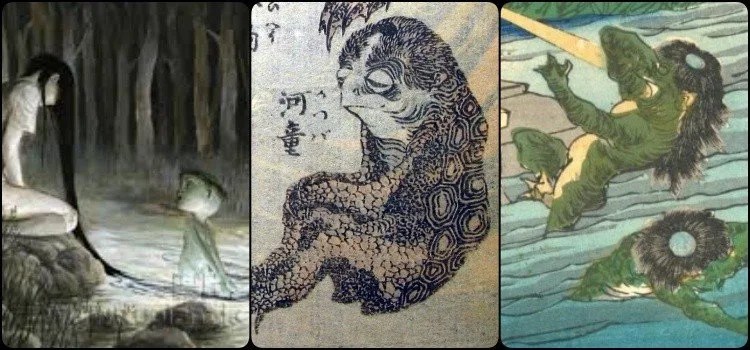
Appearance and Physical Structure
Kappa have a curious and unmistakable appearance, resulting from a mix of traits from different aquatic animals. In various descriptions, they are often depicted with slimy, greenish skin, reminiscent of fish scales or the texture of an amphibian. Additionally, the Kappa has facial features similar to those of a frog or monkey, and a turtle shell on its back. One of the most fascinating characteristics is the hole on top of its head, always filled with water. This water is the source of its strength and power, and keeping it intact is crucial for its survival.
Popular culture still describes the Kappa as an extremely strong creature, capable of dragging even horses to the bottom of rivers. The reason? In the more macabre stories, Kappa attack to suck the organs of their victims, especially through the anus, a terrifying image that still permeates popular imagination.

The Dual Nature of Kappa: From Dangerous to Playful
Despite its frightening history, Kappa are also known for their playful and respectful side. Many stories recount that these youkai can be cheerful and even honest in certain situations. They have a peculiar taste for physical challenges, especially in sumo wrestling, a sport highly appreciated in Japan.
Defeating a Kappa with Respect
There is a curious way to defeat a Kappa: courtesy. If a human bows before a Kappa, the creature, being extremely respectful, will return the greeting. By doing this, the water in its cranial dish spills out, weakening the Kappa and leaving it vulnerable. This peculiarity is used as a metaphor in many stories about the importance of respecting traditions and rules.
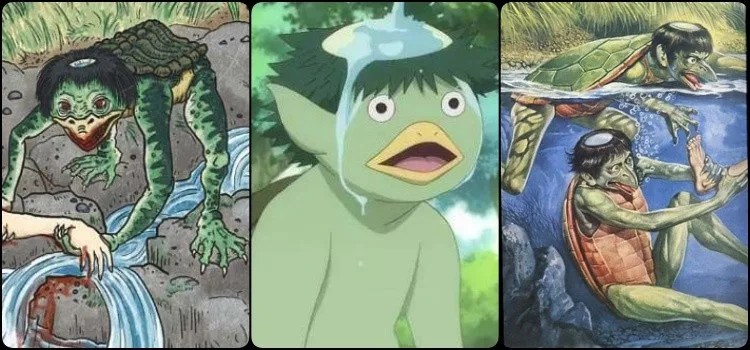
The Relationship with Vegetables, Especially Cucumbers
Kappa have a strange affinity for cucumbers, to the point that this vegetable becomes an essential part of the offerings made to appease them. In some regions, it is common to write a child’s name on a cucumber and throw it into the river as a form of protection, believing that this will ward off the Kappa. Legends also warn children not to swim in rivers after eating cucumbers, to avoid attracting the creature. Cucumbers are so associated with Kappa that cucumber sushi is known as “Kappa Maki” in Japan.
In addition to cucumbers, Kappa are known for their connection to medicine. Some legends tell that they shared valuable medical secrets with humans, benefiting many families of famous doctors.

Kappa in Pop Culture: From Villains to Cute Mascots
The Kappa has transcended Japanese folklore and become a prominent figure in modern culture. Today, it appears in a variety of media, often depicted in a friendly or even comical manner. Many companies use the image of the Kappa to promote environmental preservation messages, leveraging its connection to rivers and nature.
References in Animes, Mangas, and Games
The Kappa has left its mark on animes, mangas, and even video games. Some examples include:
- Naruto: The three-tailed bijuu, Isobu, is based on a Kappa, with its shell and aquatic behavior.
- Pokémon: Psyduck, Lombre, and Golduck are some of the creatures inspired by the Kappa, highlighting its aquatic aspect and peculiarities.
- Digimon: Sagomon and Shawjamon are Digimon clearly influenced by the figure of the Kappa.
- Super Mario: The Koopas, the iconic enemies of Mario, derive from the image of the Kappa, with their characteristic turtle shell.
The Kappa also makes appearances in games like Harvest Moon, where a friendly version of the creature is found in a lake, offering help to the player. It is remarkable how this creature has transformed over the centuries, from a fearsome being to an almost harmless and fun mascot.

Conclusion: The Kappa Between Myth and Modernity
The Kappa is a living representation of how folklore can evolve over time, reflecting the fears and fascinations of each generation. From its days as a fearsome inhabitant of the waters, dragging victims to the depths, to its modern version, which loves cucumbers and participates in sumo wrestling, the Kappa continues to be an important figure in Japanese imagination. Whether as a symbol of respect for nature or a reminder of ancient legends, it has certainly captured the imagination of people of all ages.

Community
Comments
0 comments
There are no published comments in this language yet.
Send comment