

That Japan is a unique country, everyone already knows! But did you also know that the most expensive fruits in the world are found in Japan? And square watermelon?! Have you seen it? Japan has that too.
The difference with these fruits lies in the Japanese tradition of giving fruits as gifts and their complex and rigorous cultivation. They have the concept of “perfect fruits.” So you will always see them shiny, with few seeds, and quite large.
Let’s start by talking about the square watermelon, which is undoubtedly quite different.
The Square Watermelon of Japan
The watermelon or “suika” (西瓜) is a very popular fruit in the Japanese summer. It is common to see people playing with watermelon on the beaches. This game is called suikawari (スイカ割り). Basically, someone blindfolded tries to smash the watermelon with a bat. But something that also draws a lot of attention is the various shapes of watermelon cultivated in Japan, ranging from round, triangular, and even heart-shaped.
The square watermelon has existed for over forty years in Japan, but its expansion around the world has only been about fifteen years. It originated from farmers in Shikoku (currently where the most square watermelons are produced), but mainly from farmer Takashi Yamashita.
The idea of shaping the watermelon this way was because round fruits, especially when larger, take up more space on shelves and can roll and fall. This shape makes storage easier.

To achieve these shapes, the common watermelon is placed inside a glass box during its growth phase. However, this causes it to lose some of the sugar present in this fruit, making it a decorative product since it has a longer storage period compared to a common watermelon.
The price of a square watermelon can vary greatly, but the average is over 13,000 yen. The fruit is sold in expensive department stores and supermarkets in Tokyo and Osaka.
Due to the ease of changing the fruit’s shape, other shapes have recently emerged in Japan, such as triangular, heart, and even scarecrow head.
The heart-shaped watermelon emerged for more festive occasions like Valentine’s Day and Mother’s Day. But since it is a more unique shape, it costs at least about 3,000 yen more than the square one.
The Cultivation and Trade of Square Watermelon
A cultivation technique was developed by the Japanese. During the growth phase, the fruit is placed in a type of mold, usually made of glass. Thus, they are forced to grow and take the desired shape. This technique took years of practice and testing, even with other fruits, like melon. In Brazil, square watermelons have been produced for a few years. Even though it is a risky bet, producers say that the reception of this new product exceeded expectations.
Due to these changes in the fruit’s nature, some changes in the essence of the watermelon are noticeable. In the pursuit of perfection, square watermelons often lose their sweet flavor. This led to an increase in the trade of square watermelons for decorative purposes. They can be preserved for about a year and a half. Thus, it became a luxury item in a sophisticated gift.

The Various Shapes of Japanese Watermelon
But of course, the Japanese wouldn’t be satisfied with just producing square-shaped watermelons. Over time, various shapes have emerged, some of which are quite different. The heart-shaped ones took 3 years to achieve the perfect shape. And these are sold starting at 250 dollars.
There are also watermelons in triangular or pyramid shapes. There are also watermelons called “Godzilla eggs” (you can imagine that these are quite large), which even come in a special box. Watermelons are sold in the shape and decoration of dynamite and in the shape of a gourd. And the most unusual is the “suika jinmen” or “human face watermelon”, which costs 50,000 yen or more.
The Most Expensive Japanese Fruits in the World
Japan is known for having extremely expensive fruits, but it is worth noting that this is not the case for all fruits, but rather for special fruits that we will see in the list below.
We also recommend reading our article on the prices of fruits and vegetables in Japanese markets to have a realistic understanding of prices and not a generalized idea due to the most expensive fruits in Japan.
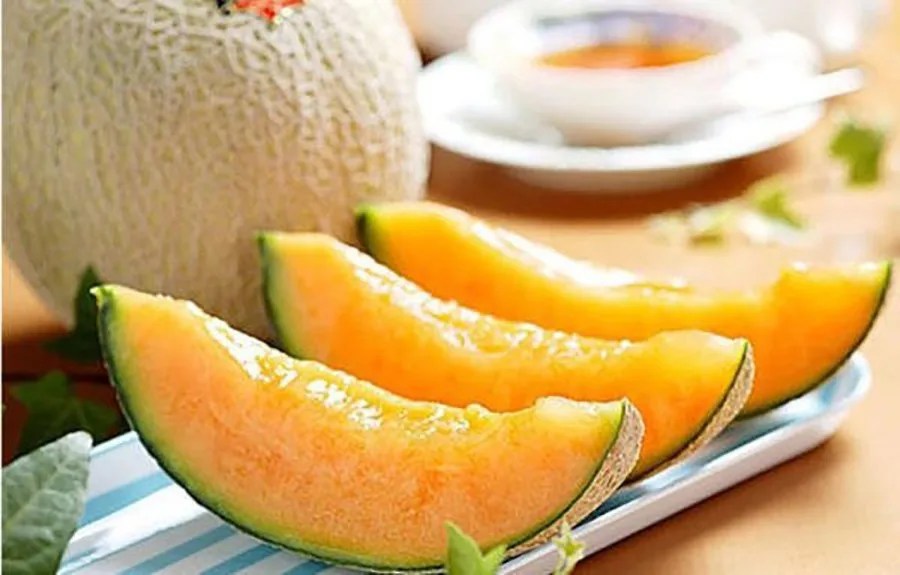
1 – Yubari Melon
This melon looks like a work of art! Besides being perfectly round, it has a design that resembles an ancient marble. This fruit is cultivated in Hokkaido. It costs an average of 300 dollars, but it has been auctioned for 27,000 dollars.
The melon is very sweet and has a very thin skin, making the fruit not only beautiful but also very tasty.
When it was bought for 27,000 dollars, the bid was made by a company to celebrate a positive year.
2 – Tuby Roman Grapes
These grapes are from Ishikawa and attract attention just by their size, which is about that of a ping pong ball, weighing around 20 grams. They are the most expensive grapes in the world.
The Roman grape, besides being very beautiful, is quite sweet and tasty. A bunch averages 65 dollars.
In 2016, a bunch of these grapes was bought for 10,900 dollars.

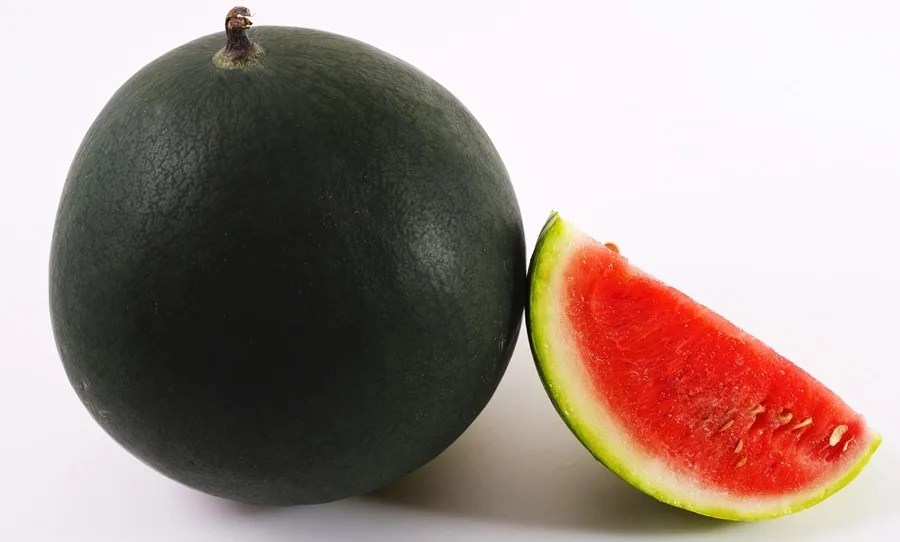
3 – Densuke Black Watermelon
This watermelon is from Hokkaido and stands out for being perfectly round, black, shiny, and without stripes on the skin, and very smooth. The flavor is quite sweet and costs an average of 250 dollars. But it has been sold for 6,100 dollars.
Its production throughout the year is quite limited in Hokkaido, with only 100 watermelons produced. Since it is very special, it is usually requested for weddings and must be ordered in advance.
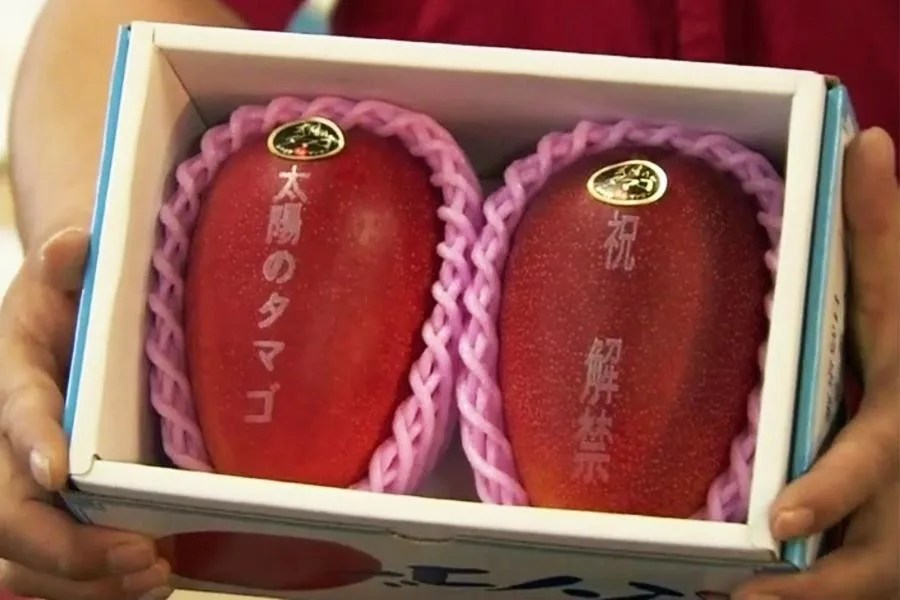
4 – Tayou-No-Tamago Mango
These mangoes are tastier than the common ones we know, being sweeter, softer, and larger in size. They are perfect in shape and standardized.
These mangoes weigh 350 grams and have been sold for 3,662 for a box with two Tamago units.
5 – Square Watermelon
The watermelon we have been talking about throughout this article is also usually quite expensive.

6 – Senbikiya Queen Strawberry
These strawberries may seem ordinary at first glance, but like the others, they are rigorously harvested to select the most perfect ones.
A dozen of these strawberries costs 69 dollars and can be found in the luxury fruit salon Sembikiya in Tokyo.

7 – Sekai Ichi Apples
These apples look like something out of a movie, they are so large and shiny. They can weigh up to 2 kilograms. And the belief is that they should only be eaten on special occasions.
Each of these apples costs 21 dollars.

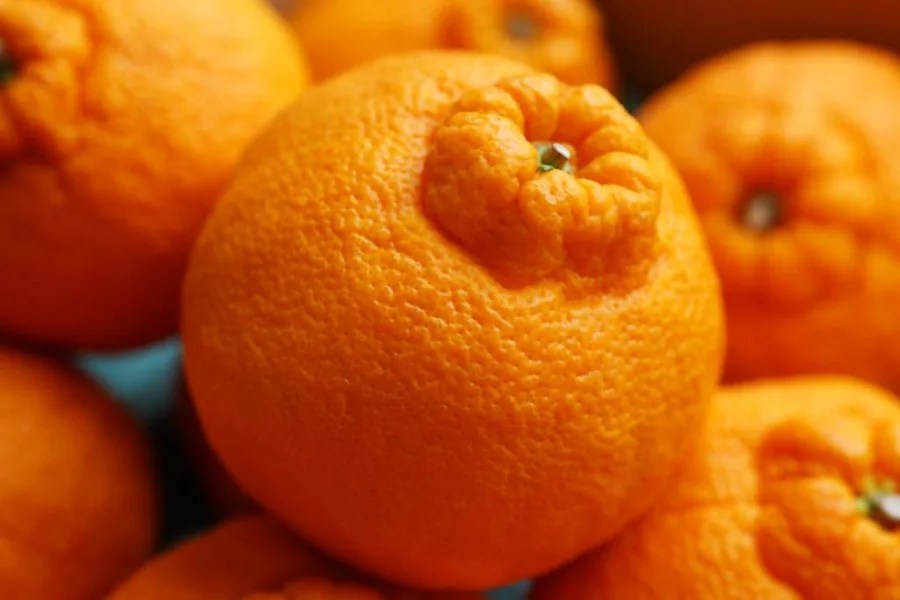
8 – Decopom
Decopom is a mix of orange and tangerine. They are believed to be the most delicious citrus fruits in the world. Their flavor is a mix of sweet, slightly sour, and fine segments.
The unit of Decopom costs 13 dollars. We also recommend reading our article discussing fruits and vegetables in the Japanese language.
Diversity of Japanese Fruits in Anime
It is impossible to watch an anime and not see that fruits are always present in their menus. Watermelon, being one of the most consumed fruits in Japan and considered the fruit of summer, is more present.
In the anime called Love Hina, there is a character named Mustumi holding a square watermelon with great ease, highlighting this aspect of ease due to its shape.

Which of these fruits are you curious to try? Did you like the article? Are you interested in any of these watermelons and fruits? Leave your comments and share with friends.

Community
Comments
0 comments
There are no published comments in this language yet.
Send comment