

The Japanese soft power is one of the most fascinating cases of how a country can influence the world without resorting to military force or direct imposition. Instead of weapons or economic pressures, Japan has won hearts and minds with culture, aesthetics, narratives, and values that cross borders. From sushi to anime, through minimalist design and life philosophy, this influence is so present that often you consume Japanese culture without even realizing it.
But this strategy did not arise out of nowhere. After the Second World War, Japan needed to rebuild its image and regain international trust. Instead of trying to impose itself politically, it bet on something more subtle: exporting what it had that was most unique and inspiring. Pop culture, ancient traditions, and technological innovation became the country’s “business card.”

What is soft power and how does Japan use it?
The term soft power was popularized by political scientist Joseph Nye and means “the power to attract and persuade without coercion.” In the Japanese case, this happens through:
- Pop culture: anime, manga, games, and J-pop have created a huge global audience.
- Cuisine: dishes like sushi, ramen, and matcha are consumed on almost every continent.
- Aesthetics and design: from architectural minimalism to the kawaii of packaging.
- Traditions and philosophy: values like discipline, respect, and harmony influence positive perceptions of the country.
This combination creates not only interest in Japan but also a type of emotional affinity. That’s why, even in political matters, the country’s image is often positive in international surveys.
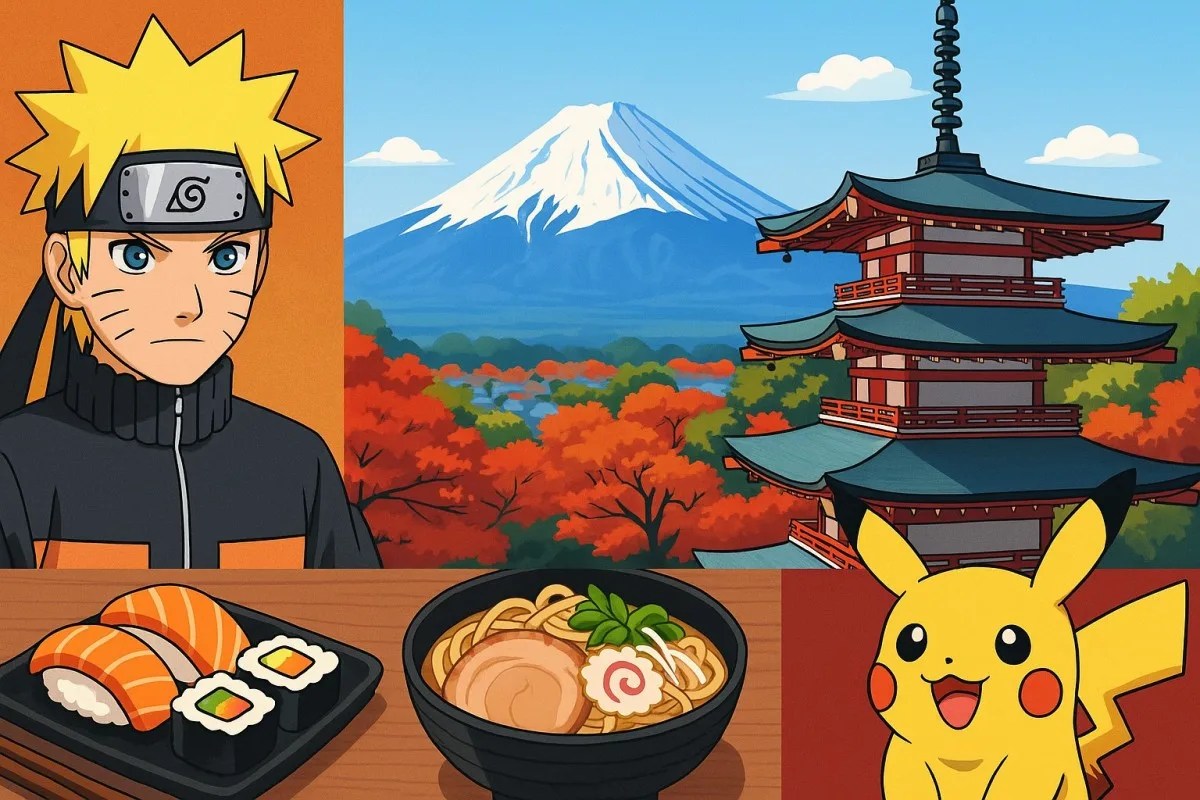
Anime, manga, and games: the spearhead
If you think of Japan, images of Dragon Ball, Pokémon or Naruto probably come to mind. These cultural products are not just entertainment — they serve as “ambassadors” of the country. When someone becomes enchanted by a Japanese story, they end up absorbing expressions, historical references, and even values.
The same goes for games. Franchises like Final Fantasy, The Legend of Zelda and Mario not only dominate sales but also shape the collective imagination. This generates a direct association: creative technology, exciting narratives, and production quality = Japan.
Cuisine as cultural diplomacy
The washoku (traditional Japanese cuisine) was declared an Intangible Cultural Heritage of Humanity by UNESCO in 2013. It’s not just about flavor — it’s about identity. Eating sushi in New York or ramen in Paris is, indirectly, coming into contact with a part of Japan.
Moreover, Japanese brands of beverages, sweets, and food utensils have spread around the world, reinforcing the imagery of quality and attention to detail.

Tradition and innovation side by side
Japan achieves something rare: preserving ancient traditions while leading technological advances. It is possible to find an 8th-century Buddhist temple just a few minutes from a high-speed train station (shinkansen).
This coexistence of the old and the new is also part of soft power. The tourist who visits Japan sees not only futuristic technology but a country that respects and values its history. This harmony generates respect and admiration — two valuable currencies in the international arena.
The impact of Japanese soft power on the global stage
Thanks to this cultural influence, Japan does not need aggressive diplomacy to be relevant. Cultural and technological products serve as bridges for dialogue and cooperation.
The result is a country that, despite its relatively small size and limited natural resources, occupies a central position in global conversations about innovation, culture, and lifestyle. In strategic terms, this is one of the most efficient and sustainable ways to exercise power.
Suggested references:
- Nye, Joseph S. Soft Power: The Means to Success in World Politics. PublicAffairs, 2004.
- McGray, Douglas. “Japan’s Gross National Cool.” Foreign Policy, 2002.
- UNESCO – Washoku, traditional dietary cultures of the Japanese.

Community
Comments
0 comments
There are no published comments in this language yet.
Send comment