

What do you think when you hear about pop culture? Popular culture is an expression that characterizes a set of cultural elements specific to the society of a nation or region. These can be related to dance, music, movies, festivities, food, and others.
And these cultural expressions transcend the borders of the country, becoming known worldwide thanks to the media that can provide us with information from anywhere in the world.
This text will show more about how pop culture emerged in Japan and how it became so popular.

The first steps of Japanese pop culture
After peace was restored following World War II, Japan and its culture began to be viewed differently.
Previously, Japan was more associated with samurais, katanas, kimonos, bonsais, cherry blossoms, and these characteristics ceased to be the only connections with Japan.
During the reconstruction of post-war Japan, comic books, known worldwide as manga, began to emerge and gain popularity among themselves.
In these mangas, the highlights were the physical characteristics of characters such as large eyes and spiky hair. The stories also had a more distinctive touch compared to North American superhero comics.
Movies and cartoons also emerged from mangas that showcased more of this people’s culture.

But they began to gain their space because of TV in the second half of the twentieth century, as until then this was something experienced only among the Japanese themselves.
The export of Japanese productions for television broadcasting began in the 1960s. But interestingly, this did not happen with the aim of becoming popular or successful; on the contrary, there were many Japanese who did not support this type of entertainment.
With the arrival of these productions, other nationalities associated the physical characteristics of comic book characters with the Japanese, even though they did not resemble real-life people, but it was possible to identify that the production was made by them.
Mangas began to grow even in the 1970s with Japanese society and gained space in Germany, Italy, Spain, and the USA.
In the 1990s, with the internet becoming more accessible along with television, it was the starting point for the birth of the Otaku community.
Then it became common for other nations to adopt habits that were previously common to the Japanese, such as eating Japanese food, using chopsticks, seeing words written in Japanese on signs and prints, among other forms of cultural manifestations.

The power of Japanese pop culture
In the last twenty years, interest in Japanese culture has grown significantly. Previously, subjects like this were only addressed by the academic community for study, but it has become a pop phenomenon.
Japanese pop culture influences fashion, aesthetics, music, movies, comics, and many others. Who has never wanted to wear those school uniforms or hero armors? Or have that cool colored hair?
Previously, pop culture was something more Americanized; the Japanese went from being consumers to exporters of pop culture.
People all over the world began to want a bit of Japanese culture with them and consequently started acquiring mangas, animes, games, movies, doramas, and many other Japanese animations.
It was even possible to find clothes to try to look like the characters.

The importance of global fans
As already mentioned, this entire success was not intentional; it was a surprise even for the Japanese themselves to see their products and creations going to various places. And there are many fans who make a point of consuming as much as possible regarding Japan.
But today the situation is more favorable for that. Today we have all the technology at our disposal without the concern of having to go to Japan to get to know the culture there. Although a trip to Japan would be cooler than seeing it on screen, huh!
The USA and Europe led the interest in these Japanese creations, so thanks to these strong influences, we could see classic animes like Saint Seiya, Dragon Ball, Inuyasha, and others on open TV. Do you remember watching any of these in your childhood?
And all of this was already possible in the 1990s! And from 2010 onwards, it improved even more. Several official mangas came to Brazil as well, and many open TV channels had dedicated time slots just for anime.
Long live the television market!! Without it, this process of getting to know Japanese culture would not be available to all interested people.
There are Japanese bands with shows in various countries, and this whole process has been gradual but decisive for having people consume this market outside Japan.
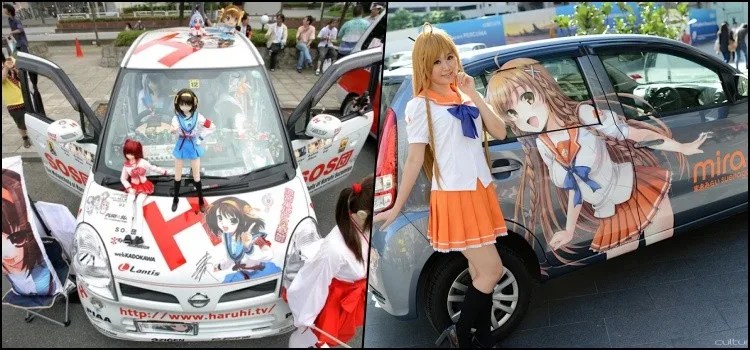
Pop culture today
If in the 1970s Japanese pop culture began to crawl, nowadays it is bigger than we can imagine.
With the conveniences we have today, we can dive even deeper into this culture to better understand each aspect it has.
Currently, we can order Japanese products from anywhere just by using our cell phones. And for those who are not very fond of ordering things online, there are also physical stores for Japanese products.
If you want to speak their language, it is possible to take online courses to learn as well as in-person classes.
By subscribing to streaming platforms, you will hardly not find some dorama, anime, or documentary about Japan.
In at least ten countries, animes are very popular. And as incredible as it may seem, Japan is not among those with the highest audience for this content.
You can eat Japanese food by going to the mall wherever you are and pay whatever price is most accessible to you. Here in Brazil alone, the average number of Japanese restaurants already exceeds one thousand five hundred.
There are even content creators solely about Japan, like Suki Desu, YouTube channels, and traditional books.
And of course, the good and classic mangas that have both physical and electronic versions that can also be ordered online.
What catches your attention the most about Japanese pop culture?

Community
Comments
0 comments
There are no published comments in this language yet.
Send comment