

Over the years, Japan stands out with its alternative fashion style widely spread in regions like Harajuku. The main one is called Visual Kei, which has generated a lot of alternatives. In this Guide, we will talk about all styles of Japanese fashion.
Many of the styles explained in this article are subcultures, with many styles ending with the ideogram [系], which literally means something like lineage, group, and system that generally corresponds to a certain period of style and fashion.
Harajuku – The Neighborhood of Fashion and Styles in Japan
Harajuku (原宿) is a large urban center where you will find stores with the latest fashion trends, maid cafés, and the coolest and strangest fact is that you will encounter people dressed in cosplay, lolita, decora, otakus, and much more.
Harajuku is a sub-neighborhood of Shibuya and one of the most diversified centers in Tokyo; there you can be in character or as an ordinary person, it is the place where you will feel free to be yourself.
This area is known as a meeting point for teenagers and is the location of the Laforet department store, which works with most famous young fashion brands. Harajuku is famous for the countless fashion stores of all kinds, especially urban fashion.
Harajuku is the stage for the emergence of various Japanese fashions, such as Visual Kei, which was one of the major influencers for the growth of the urban center. We have already written an article talking about this neighborhood; you can read it by clicking here.
Lolita Fashion and Style
One of the most popular and prominent is Lolita fashion, but we won’t delve into it much in this article because we already have a giant article discussing everything about Lolita and related terms. If you want to read it, access: Do you know what Lolita, Loli, and Lolicon mean?
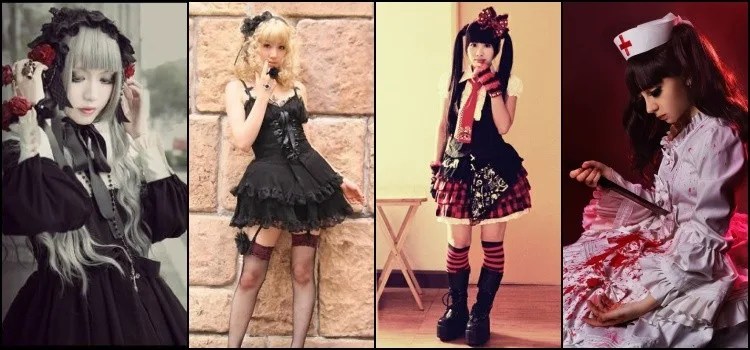
Lolita is a term that defines a Japanese style/fashion, where doll-like clothing is typically worn, inspired by Kawaii culture. These clothes sometimes involve nostalgia from other times and historical periods (Victorian or Rococo) or simply from one’s own childhood.
There are various types of styles and sub-styles of loli, among these styles we have: Sweet Lolita, Classical Lolita, Country Lolita, Hime Lolita, Shiro Lolita, Casual Lolita, Gothic Lolita, Kuro Lolita, Guro Lolita, Punk Lolita, Deco Lolita, Ero Lolita, Sailor Lolita, and Qi Lolita.
Visual Kei – History and Curiosities
The Visual Kei or Visual Rock is a musical and visual movement that mixes various styles of rock with hybrid Punk/Gothic characteristics that became popular in Japan in various J-Pop and J-Rock groups.
This style was influenced by J-Rock bands like Devil Kitty and Mar Luna. In addition to Rock, Metal, and Punk, Visual Kei music mixes classical music instruments like violins, pianos, and organs.
In Japanese, bizuaaru kei [ビジュアル系] carries the ideogram [系] which means style, system, group, and lineage, commonly used as a suffix to refer to groups and styles of Japanese fashion circulating in Tokyo.
In other words, it is a movement among Japanese musicians that involves elaborate costumes, colorful hair, striking makeup, unusual hairstyles, extravagant performances, and a somewhat androgynous aesthetic.
History of Visual Kei
The visual kei movement emerged in the mid-60s/70s but peaked with the emergence of some bands like Buck-Tick, Kamaitachi, and Color in the 80s and continues today in the Japanese music scene.
It took dedication and time to win over the Japanese audience, as they are quite reserved in some aspects, but this goal was achieved, and even today visual kei is part of Eastern culture.
Famous bands like MALICE MIZER, Moi dix Mois, Luna Sea, and Versailles were influenced by the Visual Kei movement. Even solo singers adopt the style with flashy haircuts and clothing.

Visual Kei can be considered a copy of the gothic/punk style that exists in the West, but over time the style took on different forms and characteristics, making it something unique and modest, not solely based on black.
Visual Kei can be considered a fashion, but the term is more suitable for the style and the music in question, which are linked to the rock, punk, gothic, metal, and heavy metal genres.
Visual Kei in the West
Visual kei and J-pop are mainly heard by non-Asians in the West, gaining more popularity between 1990 and 2000, and nowadays reaching countless fans, being spread by fans on the internet and in some cases, through anime soundtracks.
The success was so tremendous that some production companies began to invest in shows and agencies, making the style popular and attractive to the point of being confused as just J-Pop.

Visual Kei in Brazil
In Brazil, there are many fans of visual kei who, in addition to visual rock, are also interested in other forms of Japanese rock. In 2006, the event J’s Fest II (Japan Song Fest II) attracted 1,500 visitors to Circo Voador in Rio de Janeiro, who enjoyed, among other attractions, national bands inspired by visual kei and j-rock artists. Various similar events occur frequently in different regions of the country.
Visual kei or J-Pop is present in the lives of otakus, lovers of Japanese culture, or style enthusiasts, not that this is a rule or a fact.
Decora Fashion – Understanding the Style
The decora visual can be characterized by the use of patterned pieces and bags, hair clips, sparkles in makeup, toys hanging around the neck, countless necklaces, bracelets, and many colorful socks, all worn at the same time, giving total freedom of choices and varieties for the wearer.
Where Decora Fashion Originated
The word Decora comes from “Decoration,” as this is the concept of the style, along with a lot of authenticity, creativity, and motivation. It is also known as the FRUiTS style, thanks to the magazine of the same name where many photos of these unique individuals circulating in Harajuku are published.
The exact location where the style originated is uncertain, but I (the author) believe it to be in Harajuku, around the years 1990 and 1995, as it is a large urban center known for containing various tribes.
Subdivisions of the Decora Style
Child decora: are those who wear clothing, accessories, among others, from anime and otaku culture, leaving a more childish mark.
Pink decora: As the name suggests, the predominant color is pink, with variations in shades of pink, and red and white may also be accepted in the outfit.
Colorful decora: There are no color restrictions in this category, featuring colorful hair and extravagant clothing; what matters is that there are no restrictions.
Dark decora: Black is the main color, with variations with white, which can be characterized as a punk style of decora fashion.
Lolita decora or Lolicora: is a mix of lolita with decora. The lolitas are already nature-filled with accessories just like the decora. The lolicoras are triple that.

Some Characteristics of Decora
- Those who follow the fashion usually walk in groups of 2 to 3 people, often coordinating accessories;
- There are also boys who are followers;
- Girls are typically between 13 and 17 years old;
- The look is made to attract attention, something that the fashion followers desire;
- Some even wear 3 socks at the same time, all colorful and decorated;
- The Kawaii and childish aspect;
- Accessories often feature anime characters, making the style cuter;
- The prevailing color is pink, not always;
- The decora style does not follow any standard, so the more one abuses the look, the better;
- Little makeup;
How is Decora Accepted in Society?
Decora fashion is quite popular in Japan, more precisely on the streets of Harajuku and otaku entertainment venues, usually targeting a completely female audience, with exceptions.
Japan is a very diverse and liberal country, so Decora is just another style among many others; in Harajuku, you will find people in cosplay styles, Lolita, among many others, so there is no reason to have prejudice there; of course, there may be in separate groups, but other than that, there are no problems.
The only thing that cannot be done is to use this style for shopping, job interviews, among others; Japan is quite reserved when it comes to everyday life, so what prevails is common sense.
Gyaru – Independent Style
Gyaru [ギャル] is a Japanese fashion style that originated from a brand of jeans called “Gurls.” This word originated from the English “girl” and the slang “gals” used to refer to pretty girls.
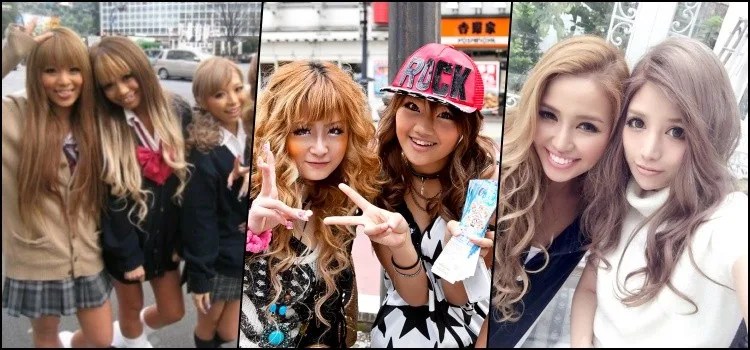
Girls of the Gyaru style often mix colors, patterns, sparkles, and all kinds of fashion, bringing a unique and bold style to the Eastern standard. They often undergo tanning, completely change their hair, and wear thousands of exotic accessories.
Gyaru also usually has very bleached or dyed hair in dark brown to blonde tones and decorated nails. The makeup consists of dark eyeliner and false eyelashes used to make the eyes appear larger.
The clothing pieces of the gals differ depending on which gyaru style the girl chooses. They rolled up the skirts to make them shorter, have their own slang, and frequent specific places. They also pose with their tongues out when taking photos.
Fairy Kei
Fairy Kei is a style that will satisfy anyone who loves cute things, especially for those who say, “Aaaaawn, how Kawaii…,” as the fashion is mainly composed of cute items, such as pastel colors, fluorescent pink, polka dots, and a lot of nostalgia; Fairy Kei is a style inspired by the pop cuteness of the 80s!
The website Style Arena states that the fashion began around 2007 when Sebastian Masudea, founder of the store “6% DOKI DOKI,” decided to start producing collections based on expressions like: “Sensational and lovely,” “not only cute but also happy,” and “feeling of unreality.”
Other stores began to invest in the fashion, thus forming Fairy Kei. The exact origin of the name is not known, but it is clear that the name comes from the fact that the clothes are delicate and lucid; after all, Fairy Style is a name that does justice to the fashion.
Cult Party Kei
Something that often happens in Japanese fashion is that the name of the fashion was inspired by a brand, like Dolly Kei fashion, for example. Of course, over time, the fashion will create its own aesthetic, thus gaining recognition.
In the case of Cult Party Kei, even the name was taken from the Virgin Mary store, which was previously called Cult Party. The concept and focus of the brand is “Eternal Girl that creates the world.”
Cult Party Kei is a bit more recent than other fashions, like Mori Girl and Dolly Kei, sometimes being confused with these styles, but one of the main differences is that Cult Party is more oriented towards pop culture, while the others are more vintage-oriented.
The clothes usually have a lighter and synthetic aspect, having a bit of a thrift store vibe, as most stores representing the fashion have this format.
Customizations on pieces to make them original and unique are also always welcome. The mix of Lolita accessories, Fairy Kei, along with various pop accessories enriches the style.

Seifuku Kei
The fashion style focuses precisely on Japanese school uniforms; for us Brazilians, this admiration for school uniforms may seem quite unusual, as we do not have this custom here.
The most curious thing is to know how this fashion has become popular among students.
The uniform of Japanese schools is one of the symbols of the country and is recognized anywhere in the world. However, it is not always liked by students; for us, it is not hard to understand why, so many feel the urge to upgrade their own uniform or want to have a much prettier one.
Furthermore, over time, some schools are removing the concept that uniforms are mandatory, thus, the fashion has an influence from those who do not need to wear it but want to experiment and wear it. It also comes from those former students who miss their school days.

Dolly Kei
Dolly Kei emerged around the year 2010. Like Lolita style, Dolly Kei has a touch of thrift fashion, focusing a bit on vintage and fantasy films. One of the reference stores for the fashion is the Grimoire store, created by Naoaki Tobe and Hitomi Nomura.
As in drawings, references are necessary. The main references of the fashion are in films and books, such as Alice in Wonderland, Harry Potter, and Narnia. The focus is also on typical folk, gypsy clothing, with plenty of embroidery, furs, and heavy materials like leather and suede. The important thing is to bring a typical memory of a more medieval and rustic European era.
And of course, Japanese culture can give a unique and attractive touch to the style, maintaining a certain harmony. Unlike some fashions, Dolly Kei brings a certain reminder of Eastern European culture. Dolly Kei is a style that plays with the various layers and textures available.

Mori Girl
The Mori Girl style is recent; the fashion was made for those who thought like the creator of Mori Girl, Choco. Choco spread her thoughts through a community she created on Mixi (equivalent to our Orkut, but Japanese). Choco’s thought was of “a girl out of the forest.”
The fashion brings a desire for comfortable clothing that demonstrates romanticism and a countryside style. Perhaps to escape a bit from the reality of the big city.
This fashion is also for those who have a more solitary lifestyle, who enjoy reading books and like to have coffee and tea in a lot of tranquility.
The fashion has captivated many other girls, spreading through the streets of Tokyo. Like many other fashions, Mori Girl has not fallen behind and gained popularity to the level of having its own magazines, clothing brands, and events.
With influences from some other fashions, the Mori style brings loose floral dresses. Other accessories, like layers of coats, vests, scarves, knitted and/or plush hats, socks, and various shoes. The colors are usually used in combination with nature to keep the focus more attractive. The fabrics are better if handmade, with light and delicate textures.
Despite having the word “Girl” in the name, boys are also interested in the fashion. As always, fitting into the style, wearing sarouel-style pants, vests, coats, scarves, handmade hats, and dreads in their hair. Remember that it is not necessary to be so rigid in fashion.
In a Mori Girls community, a girl said, “You don’t have to be so afraid of making mistakes.” This is because it is a natural fashion, where nature is part of it, and the ideal is to have a style that does not stray too far from the standards.

Otome Kei
Otome Kei is a more casual and reserved style that alludes to dresses from the 60s. Otome Kei is an extremely feminine and delicate casual style. Currently, it has some brands, such as MILK, Axes Femme, and Temple Cute.
The fashion, in terms of style, resembles Japanese kawaii culture, being similar to Lolita style, but do not confuse the two, as otome kei has cheerful and colorful colors, just like the sub-genre Sweet Lolita.
The shape does not have to be necessarily accentuated. There are also some dresses that fall below the bust, with discreet accessories that match the outfit being worn. Hair is also essential, as well as berets, hats, tiaras, ribbons… Remember to maintain harmony.
Some confuse Otome Kei fashion with the sub-style Casual Lolita, as both have a similar look at first glance. Otome Kei, therefore, is a much more informal style than Casual Lolita, although well-coordinated.
Casual Lolita is indeed more formal, as it requires pieces made for Lolita fashion, with various combinations or more exclusive and unique forms.

Alternative Metamorphosis – Shironuri Fashion
It is an aesthetic subculture. It emerged on the streets of Harajuku and gained popularity in 2012, attracting new followers. A living sculpture, like a blank canvas, facial expressions are completely hidden, allowing for “redesigning” them.
Shironuri [白塗り] is a Japanese makeup style, with traditional origins in the makeup of Maiko and Geisha artists and Kabuki theater. The term itself literally means “Painted White.”
Its main characteristic is super long eyelashes and the use of Circle Lens that complement the outfit. Some crystals can be found at the height of the cheekbones, very subtly.
Since the Meiji Era (1868-1912), Japanese arts have been influenced by Fine Arts from the West. Currently, with globalization and new technologies, Japanese arts have begun a new transformation: They have taken all their cultural baggage and reinvented themselves, molding themselves by foreign influences.

Its fashion influences are: Vintage Fashion, Kawaii, Gothic, Horror, Nature, Anime, Decora, Masquerade, Rave Culture, Cyber, and many other sources.
The Shironuri style has become quite democratic; there are no rules (except for the faces painted white and subtly adorned) and is constantly being reinvented; the painting refers to different artistic contexts: You are the creator of your art.
Black is the most classic color in the hair of Shironuri, and it is the natural tone of most of the Japanese population; however, colorful and striking tones giving a high contrast are quite common. They usually wear very full wigs, either straight or curly. They are usually long.
Minori

Community
Comments
0 comments
There are no published comments in this language yet.
Send comment