

Japan is one of the most peaceful and polite countries in the world. The result of this is mainly in the way parents educate their children in Japan. In this article, we will understand how Japanese parents manage to raise their children to be obedient and not cause disgrace in society like a large part of the youth in the world.
First of all, I want to make it clear that each parent has different ways of educating their children. Not to mention that not all children in Japan are calm and well-behaved. On the contrary, they are just quiet, but over the years they also suffer bad influences and make wrong choices.
Children in Japan are a reflection of their parents
Japanese society emphasizes good manners and behavior. From an early age, Japanese people are rooted in thinking of respect, politeness, and education as something mandatory and not just as something good. This can be seen in the countless ways to apologize or thank in the Japanese language.
As children tend to imitate their parents and other adults, naturally, children end up receiving this positive influence and have a good education and respect. Besides the parents, schools and the environment in which they are raised also contribute to the results of having good behavior.

In Japanese society, if a child misbehaves, literally everyone around will look at them with dark looks and will definitely blame their parents for such behavior. Parents will feel a lot of shame and will punish their children in particular.
The Japanese Attachment Method
As already mentioned, parents rarely call their child’s attention in public. Many Western parents tend to shout and fight with their child when they do something wrong. Although it seems effective, it is not the best thing to do.
Violent disciplinary techniques only worsen the situation, harming the relationship between parents and children, generating only more violence. The intolerance to failure and disobedience in Japan plays an important role in the success of discipline.

The key to success is raising children with attachment. It is enough to be present, loving, and affectionate, especially in the early years of life. Unfortunately, not all Japanese people are like this… There are many absent Japanese parents in their children’s lives.
Some Japanese parents work so much that many Japanese teenagers grow up alone at home, straying from their discipline. Some are even responsible thanks to the rigidity of society, but many face problems.
Despite love and a positive attitude preventing children from throwing tantrums and doing wrong things, this can end up spoiling them. For this, Japanese parents tend to teach their children the value of things. Showing attachment does not mean giving total freedom to children.
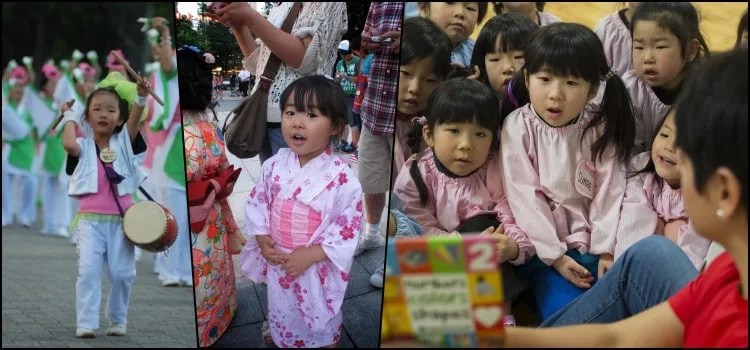
Some people claim that they rarely see a baby crying in Japan. This happens because Japan is full of breastfeeding areas and exclusive places for parents to take care of their children.
Some Japanese parents do not get angry or shout when a child starts to scream. They simply remain calm and keep up appearances. A child usually calms down very quickly; perhaps unconsciously, the child learns that crying does not help to get something.
Teach your children good examples and limits
In reality, freedom is another thing that spoils children. Many parents in Brazil give total freedom to their children; see the disgrace that has become. Children need to know their limits and learn to have patience and understand that the world does not revolve around them.
Selfishness is the main reason for disobedience and disgrace among youth today. We can teach children based on love and humility if we are humble. There is no reason to try to make our children nice if we are the devil.
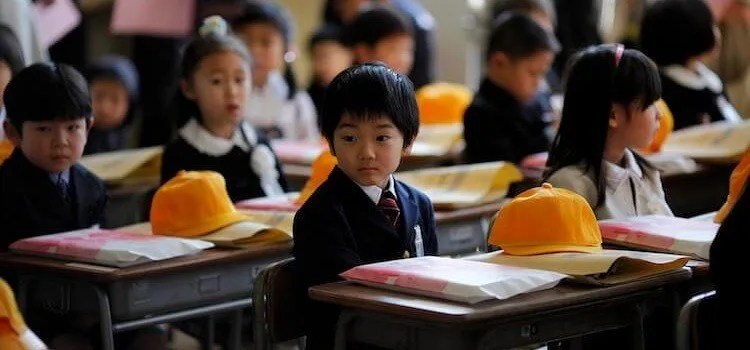
Parents must set good examples for their children. That is why in Japan everyone has a bright future, thanks to the efforts and examples that parents give to their children. Unfortunately, this has been decreasing more and more, in all parts of the world.
Raising children is not an easy task. Just like in Japanese culture, parents try to do this in a group and with a lot of persistence. Trying to act on their own way never works.
How do Japanese parents educate their children?
To summarize well how parents educate their children in Japan, we can say that it involves initial indulgence that consists of a willingness to forgive faults or mistakes. All of this is accompanied by gentle modeling.
Parents do not do all the work alone, as they also receive broad support from a society that respects and values authority, self-control, and discipline. The Japanese do not use miraculous techniques; it is just these aspects.

Just as Japanese parents and most of the population do not express their emotions of anger or say what they think, children end up acquiring this skill, creating the impression that they are saintly and well-behaved people.
Although most Japanese parents show affection in the early years of life, the work and distance between parents and some youth become evident, creating children who are a problem for society, especially close to high school.
This way of educating children is not perfect, but it is quite effective. I hope this article has explained the subject well in a simple way. If you want to see more examples of how children in Japan are educated, we recommend the links below:

Community
Comments
0 comments
There are no published comments in this language yet.
Send comment