

Prejudice, xenophobia, and racism are things that exist anywhere or in any country in the world. It doesn’t matter the nationality, religion, color, culture, traditions, and lifestyle; people will always go through frustrating situations. How do they happen in Japan?
Talking about this is delicate, as the Japanese are known for their politeness, hospitality, and being traditional. In this article, I will try to address various points regarding prejudice or racism in Japan.
[trp_language language=”pt_BR”]
We also recommend watching our video about racism and prejudice in Japan and following our channel:
[/trp_language]
What is xenophobia, racism, and prejudice?
Before we start talking about the subject, we need to explain the meaning and see the differences between xenophobia, racism, and prejudice. Below is a brief description of the subject:
- Prejudice is a hostile feeling, assumed as a consequence of the hasty generalization of a personal experience or imposed by the environment; intolerance. It is a critical opinion, a discriminatory attitude towards people, cultures, places, or traditions;
- Racism is a belief and idea based on the hierarchy of races and ethnicities, where people consider themselves superior or pure;
- Xenophobia is the distrust, fear, or antipathy towards what is unusual or comes from outside the country;
Unfortunately, people end up confusing the cultural behavior of the Japanese with prejudice. They also end up generalizing isolated cases and saying that Japanese people are prejudiced.
Japanese people have gained this reputation, even though they are victims of prejudice and jokes here in Brazil. Prejudice exists everywhere; saying that a people is prejudiced is actually like saying: I am prejudiced.

Are the Japanese prejudiced?
There are prejudiced Japanese just as there are prejudiced Brazilians. Even if you encounter a prejudiced or racist person, you will end up becoming an attraction, precisely because you are different.
Those who really know Japan know that it is famous for its hospitality, education, and respect for others. Being a foreigner in Japan can end up being a more than positive experience.
The big problem is that the Japanese are shy; many will end up staring at you. You just need to take the initiative to talk to them, especially if you know Japanese; you will discover how good Japanese people are as friends.
Although Japan is a country crazy about new and different things, unfortunately, many Japanese are traditional and like the standard. For some, when something is different, they end up avoiding and even excluding it.
This does not mean that they do not like foreigners; this form of prejudice happens among themselves. Some overly traditional and closed-minded Japanese treat differently people who do not have a higher education, unemployed, otakus, people with tattoos, etc.
We can notice this through occurrences of ijime (bullying) in schools. Sometimes a person can be left without a decent job for the rest of their life just for one mistake made. Some companies or people take things and the lifestyle of some very seriously.
On the other hand, most Japanese do not care at all, which is why Japan is a country full of craziness and strange things, because most do not care about your lifestyle. Most Japanese do not usually get involved in the lives of others nor let others get involved.

Confusions about prejudice in Japan
Most of these cases can end up being envy. Even girls with large breasts suffer prejudice from other girls who are flat… Thus, we conclude that there is no standard to be accepted by certain types of people in society.
The best thing to do is to ignore this type of person. If the Japanese themselves suffer this type of prejudice, it is normal to expect that it can happen to us. It is worth remembering that sometimes some insults may not even be intentional.
Just as we make silly jokes with other Brazilians and they do not take it seriously, a Japanese person may take it seriously and feel hurt. The opposite also happens; sometimes you may hear something or be treated in a way that makes you feel hurt.
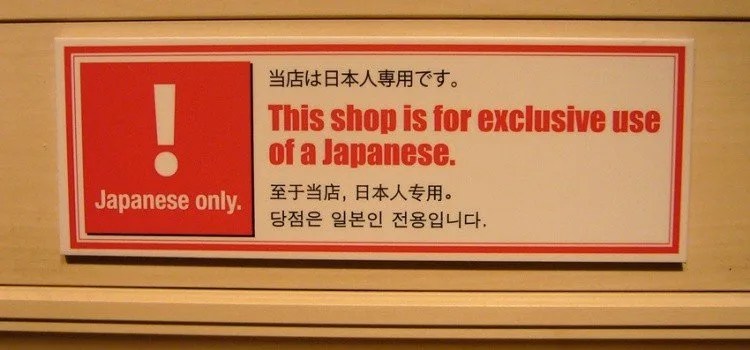
Another thing that makes people think that Japanese are racist is the simple fact that Japan is quite strict about allowing foreigners to live there. Japan has even rejected entries of refugees. Japan feels insecure with foreigners, thanks to the numerous incidents that happen.
Some people on trains end up not sitting near foreigners; some do so out of fear of not being able to communicate. Others tend to talk among themselves, and you may end up hearing the word gaijin (abbreviation for foreigner).
Personally, I think it’s normal; when I see a foreigner here, I say he is a foreigner, without fear or shame of anything. In Japan, it is rare, but you can find people who hate Westerners for various reasons beyond cultural ones, such as what happened in the war, nuclear bomb, etc.
On the other hand, you find various trends that have emerged from the West. Japan is still in a long process of Westernization. It is worth noting that foreigners without descent suffer less prejudice than descendants.
Crossing the limits of prejudice
Another thing that raises many questions regarding xenophobia is the fact that some places separate or prohibit the entry of foreigners. And some foreigners cannot access certain types of services and activities.
Exclusivity in some things can exist in any country; the best thing to do is to rise above it. Some Brazilians have done this and succeeded in Japan. Many Brazilians have left factory jobs and started their own businesses.
Many others learn the culture and language and manage to get a job and lifestyle that even Japanese people have not been able to achieve. Ricardo Cruz is another example; he became a singer in a Japanese band, showing that there are no limits to success in Japan.
So, chase your dreams and be successful! Don’t worry about stupid things like the prejudice of some envious people. Generally, the people I hear complaining about the Japanese are not exactly perfect.

Brazilians and prejudice against Asians
Brazilians tend to complain about prejudice, but in an exaggerated way. Some Brazilians even claim that they suffer more prejudice from other Brazilians living in Japan than from Japanese people.
Unfortunately, this is understandable, given that when a Brazilian commits a crime or offense, they end up appearing on TV, tarnishing the name of all Brazilians.
This has generated a bad reputation for Brazilians. Even in some stores, Japanese people are cautious when encountering foreigners, especially Brazilians, due to the thefts that some commit.
It is even acceptable for some Japanese to feel distrust, fear, or antipathy towards foreigners who do not follow the same culture or have the same concepts of education and morality.
Before Brazilians talk about prejudice or xenophobia, they should think about whether they are treating Asians living in Brazil differently. The video below portrays this well; of course, many times it is not intentional.
Brazil has over 500 years of history, multicultural and with people of all types, still has not managed to solve this problem of prejudice, whether religious, racial, or social. Now, why complain about a country that has not even been open to the world for 200 years and has gone through various difficulties?
Do Black people suffer racism in Japan?
The color will not make a difference in the treatment that hospitable and educated Japanese people have towards others. Many have stated that Japan loves Black people; some said they have never been treated so well and have never had problems with discrimination.
Paulo, a Brazilian, said that while walking the streets of Japan, people observed him, not with a look of disdain but with admiration; they smiled and greeted him. Paulo went so far as to say that Brazil has much to learn and grow.
Another example that Black people can do well in Japan is Brazilian Roberto Casa Nova. In 2010, he was elected the best karaoke singer in all of Japan among 85,000 candidates.
Some Black people living in Japan said they are afraid to return to their country of origin due to racism and stated that they feel more comfortable and secure in Japan.
I will mention a case regarding Japan being racist against Black people. A few years ago, an image of a chocolate pudding called Nigga emerged, which is a slang term in English meaning Black.
However, it was just a hoax, and the real name of the product was giga. If something like this happened, imagine the number of generalized or fabricated cases that have emerged and been spread?

Is Japan more prejudiced than other countries?
Japan is far from being a prejudiced and racist country compared to many other countries. Some places like the USA, the UK, Russia, and even Australia are pointed out as the most racist and prejudiced countries in the world, dominating the ranking.
Bad people exist in any country; I think it is foolish for people to define entire countries as racist and prejudiced. This is nothing more than a generalization of people; because of a few, the rest pays the price?
For example, Japan has gained a reputation for having a high suicide rate; because of this, some Brazilians tend to say that people in Japan are unhappy. Is this all because 16 people commit suicide for every 100,000 inhabitants? And what about the remaining 99,000?
I have spent my entire life in Brazil suffering prejudice and being treated differently due to my lifestyle, appearance, religion, and tastes. And worse, I am treated differently for not liking or not doing things that I consider wrong.
Honestly, whenever I see a Brazilian saying that a Japanese person is xenophobic, prejudiced, or racist, that person is talking about themselves. After all, one should not label a nation full of unique people; that is what is called racism, prejudice, and xenophobia!
Prejudice, Racism, and Xenophobia in Japanese media – Animes and Dramas
Prejudice, racism, and xenophobia are often addressed directly and indirectly in Japanese media. Most of the time, it is addressed in movies, dramas, and especially in animes and mangas where reality is not valid, so this theme is used discreetly using robots or alien races.
Many animes also show this theme directly through bullying in schools. Here is a list of some animes that address themes of prejudice, xenophobia, and racism:
- Aldnoah.Zero – Shows the hatred and difference between humans and aliens (human appearance);
- Ghost in the Shell – Shows the refugee crisis in Japan;
- Code Geass – Shows the prejudice and racism that Japanese people suffer;
- Nagi no Asukara – Addresses the theme of racism well;
- Yamada Taro Monogatari – Drama that addresses class differences;
The list is very long and extends much further. It is worth remembering that animes and dramas also show that there is no prejudice, presenting various characters with peculiar personalities, effeminate men, powerful women, etc.
Many foreigners also appear in these works, even if sometimes they exaggerate the foreign accent. Animes also show impartiality through the numerous colors, sizes, and styles of hair, skin, clothing, etc. Additionally, many animes and films depict stories set outside Japan and often present various cultural elements from other countries.

Community
Comments
0 comments
There are no published comments in this language yet.
Send comment