

It is no surprise that the Japanese are masters of creativity. But they do not know the limits of creativity when it comes to creating TV commercials. Commercials in Japanese are called Komeesharu [コマーシャル] and today you will see some.
This article is a complete research on Japanese commercials, if you are in this article just to see the funny videos, they are found at the end of the article. You can use the table of contents below to jump to that part.
Why are Japanese commercials so strange?
Throughout this article, you will understand the answer to this question. Of course, there are many factors that make Japanese commercials seem strange to Western eyes, such as the use of generic special effects that were greatly influenced by Tokusatsu.
Also read: Guide to Japanese Heroes – Where to Watch Tokusatsu Online?
Another main factor is the different culture; the Japanese think differently from Westerners, so much of what does not make sense to Westerners makes sense to the Japanese. Another factor lies in the rules and culture of Japanese commercials.
In this article, you will see that the Japanese have a very short time for the commercial and that they do not have the habit of talking about the product or displaying its price. They need to unconsciously make the viewer like the commercial to like the product.
The Kawaii Culture also has a great influence on these commercials. The Japanese are used to using cute things like bears, drawings, and fictional characters that constantly appear in Japanese commercials.
Also read: The Best Kawaii Coloring Pages

What are Japanese commercials like?
In Japanese commercials, they have only 15 to 20 seconds to draw attention to a certain product or brand, and many of these commercials are culturally different from ours. So it becomes difficult to understand what the objective of these commercials is.
The commercials are full of moe, kawaii, strange dialogues, bizarre attitudes and actions, apart from the clothes, settings, and everything that appears that makes Japanese commercials unique and fun.
We recommend reading: Moe moe kyun – What is the origin and meaning of moe?
Some can be exciting, others interesting, and of course, most can raise the question of “What the hell is this?”… Besides that, you still have the opportunity to see bizarre Japanese products.
The “Commercial Broadcasting Association” established that the standard time for commercials is 5 seconds, 10 seconds, 15 seconds, 20 seconds, 30 seconds, and 60 seconds in article 151 of the broadcasting standard.
For TV commercials, spot commercials are sold in units of 15 seconds and time commercials are sold in units of 30 seconds (with some exceptions). CMs produced in 60 seconds are often seen on the internet.
Generally, movies, series, and animes receive, in addition to trailers, a 15-second PV. Usually, a theme song can be attached to this type of video. Japanese commercials tend to focus more on the content of the commercial than on the product.

The history of Japanese TV commercials
The first Japanese TV commercial was for Seiko, a watch company. The commercial was broadcast as a kind of weather forecast on NTV. Over these forty years, countless TV commercials have aired;
Most of them soon became outdated and forgotten, and some were nostalgically remembered as a mirror to the past. In the first twenty years, Japanese TV commercials gave viewers the “dream” of a modernized lifestyle.
Consumer goods such as appliances, cars, medicines, and Western foods – things that help people modernize and simplify life – were continuously broadcast until the product names could be the theme of a small conversation during tea.
For Japanese TV commercials, the 1970s was the decade of evolution. The role of TV commercials became not only to inform people about new products but also to stimulate the desire for their purchase.
Through various advertising tactics, companies encouraged us to buy their products or services, making us more selective in our choices. Generally, TV commercials attracted our attention even before informing about the product.

The rules of Japanese commercials
Perhaps one of the reasons Japanese commercials are so bizarre and strange is because of the rules they must follow. Such rules leave them handcuffed, causing them to resort to strange tactics to catch the viewer’s attention.
Also see: Is Japan really Bizarre and Strange?
Here are the main rules of Japanese TV commercials:
- The CM must not use expressions that deny a healthy society or lifestyle (Article 91);
- The CM must somehow clarify that it is a commercial (Article 92);
- Do not use expressions that may lead to a violation of free competition (Article 97);
- You must not exaggerate the facts and let your viewers overestimate (Article 100);
- When expressing an impossible scene in real life, the text “(This is a CM production)” is displayed on the screen;
- A message is displayed on the screen when the product is different from what was advertised;
- The CM must not use false testimonials about the product or testimonials whose source is not clear (Article 102);
- Do not unfairly use the sense of trust in the main character of the program;
- Do not describe dangerous acts that may be imitated;
Because of these rules, tire commercials use European cars instead of Japanese ones. Beverage commercials need to say things like after drinking, throw the empty container for recycling and things like that.
In perfume or fabric softener commercials, a statement says: “There are individual differences in how you smell. Please consider the people around before using.” Children’s commercials need to be declared as such.
There are super strict and specific rules for pharmaceutical commercials. Doctors and pharmacists cannot recommend medications in commercials. Pharmaceutical products must not be presented as prizes among others.
Of course, there are many other rules, especially since we only mentioned about 8 articles among hundreds of them. Some may be suggestions, others absolute rules. Some articles are specific to radio commercials and other advertising spaces.

Differences between Japanese and Western TV Commercials
What are the differences between Japanese and Western television commercials? Akiyama conducted research on this subject for ten years. Although it is old research, I believe that the main points listed below have not changed at all.
Western Commercials
In Western commercials, Akiyama listed some characteristics that are:
- Aggressive use of language;
- Large amount of words on the TV screen;
- Reading of the words on the screen;
- Repetition;
- Frequent display of the price;
- Common use of dramatizations such as “based on a true story”;
- Music – like jingles, background music, and songs;
- Frequent use of comparative or challenging ads;
- Close relationship between the concept of ads and the product or service;
- Variation in the duration of commercials: most are 60 seconds or 30 seconds;
- There is greater consistency between products/services and image;
- Celebrities including movie stars and singers;
- The use of free offers is often seen;
- Tobacco commercials are prohibited;
- Public advertising, healthcare, and insurance;
In conclusion, we understand that Western commercials use language to communicate the name and characteristics of the product in a positive and aggressive way. They generally make comparisons with rivals and promptly reflect social trends.
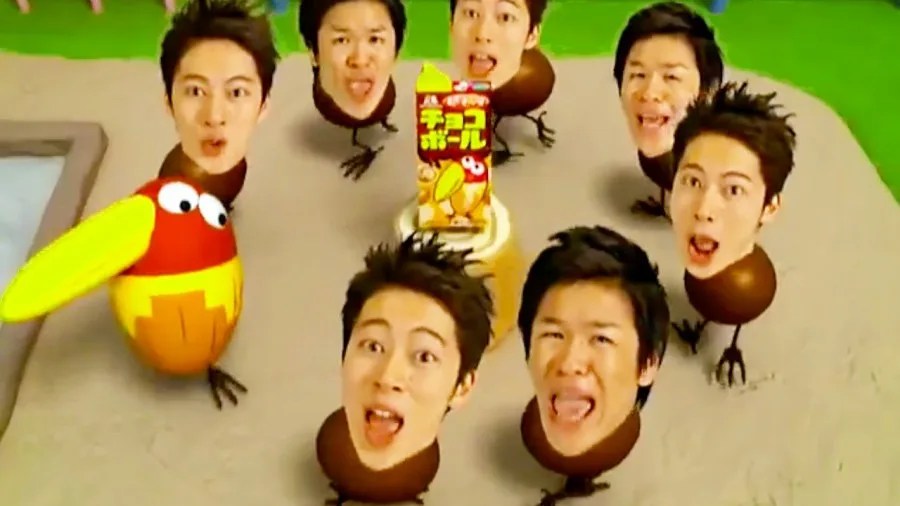
Japanese Commercials
According to extensive research on various Japanese TV channels, we conclude that Japanese commercials have the following characteristics:
- A smile to express happiness and satisfaction with a certain product and service;
- Close-ups of women, especially actresses, idol singers, movie stars, and TV talents, often appear instead of information about the content and effectiveness of the product;
- Gestures often appear as effective means of communication;
- Soft-sell approaches as opposed to hard-sell – are common;
- Inconsistency between the visual image and the product or service;
- More frequent appearance of TV personalities;
- Using trained animals, beauties, children;
- Frequent appearance of foreigners, especially Caucasians;
- Use of music to enhance the image;
- Frequent use of concepts where tradition and modernity combine to produce a beautiful contrast;
- The use of foreign languages, especially English;
- Frequent use of puns;
- The concept of “family” is often a central concept in advertising;
- Public service ads are rare;
- Comparative or challenge ads are rare;
- Advertising for alcoholic beverages and tobacco is common;
- The frequent appearance of mini-dramas or stories in commercials;
- Except for discount stores, supermarkets, and junk foods, the appearance of prices is rare;
- Reduction of commercial broadcast time; 15 or 30 seconds is common;
We can see the huge contrast between Japanese TV commercials and Western ones. Prices are not often used, the commercials are shorter, and generally, they do not have much relation to the product, focusing more on the story and the people on TV.
The Japanese use little speech to advertise products, focusing more on expressions and events around the commercial. Generally, facial expressions are used such as anger, perplexity, disdain, determination, interest, happiness, and sadness.
Of course, some things may have changed over the decades, but personally, I believe it is still the same. What do you think of this contrast between Japanese and Western television? We want to hear your comments at the end of the article.
If you want to know more about this study, look for Koji Akiyama’s study from Yamanashi University. You can find a PDF in English detailing these characteristics.
YouTube Channels with Japanese Commercials
There are channels on YouTube and some websites that are responsible for posting new videos and commercials from Japanese TV every week. We will leave the links to the channels and some videos below:
- JPCMHD Channel (Always new videos)
- Tumblr of Videos
- Commercials from Japan (some random channel)

Community
Comments
0 comments
There are no published comments in this language yet.
Send comment