

Previously, we wrote an article about Japanese clichés. This time we will talk a little about Chinese clichés and how they copy Japanese works.
China is a country famous for its dramas that explore local and oriental culture. Sometimes, they are very similar to Western soap operas.
Their format is sometimes referred to as dorama – dramas of Japanese origin. They have an influence of soap operas mixed with television series.
Chinese dramas have various production locations. Some are produced in Taiwan, Hong Kong, and Mainland China – thus, the style, language, and editing are affected.
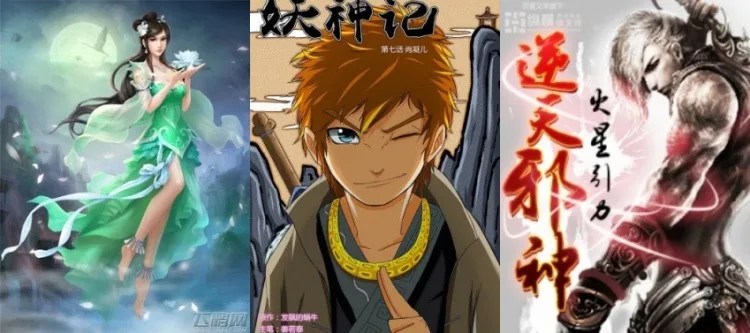
There are also anime of Chinese origin. Although little known, they are – in fact – a surprise for all viewers. Some manage to reach the quality level of the original Japanese anime. Others fall short.
There is also another genre of Chinese television production: web novels. Characterized by being available online, they do not have illustrations, are entirely written, and very famous.
However, in their stories, it is possible to see a pattern of plot, bringing a certain discomfort sometimes due to the triviality of some characters and scenic elements. They are present in the soap operas, web novels, and Chinese animes.
The main Chinese clichés
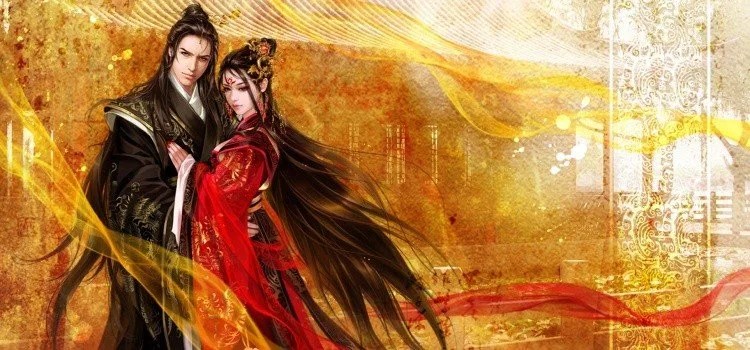
One of the first clichés that are more common in web novels is the master who has an extremely arrogant and perverted behavior. This type of character is present in almost all soap operas that depict ancient times of Chinese history.
In some animes, this stereotype is associated with the characters’ nosebleeds. Sometimes it even causes agony in the viewer – or reader – because the sexual connotation is known.
Another famous cliché is the protagonist who does not show his real power, allowing the enemy to take advantage of his goodwill. This makes the scenes, or small narratives of fights, very boring and causes despair in the reader.
Some animes, not only of Chinese origin, depict a superstition of Asian origin in general. The superstition says that when you sneeze, it is because someone is talking about you. In some Western cultures, it is said that if your ear is warm, it is because someone is speaking ill of you!
At certain moments in the plots, the protagonists are always saved by random characters. This, in fact, is not a specific cliché of web novels, Chinese soap operas, and Chinese animes, but rather of any good plot. However, good writing goes away when the main character always comes out unscathed from risky situations.
Because he stops showing his abilities, he stops showing the human side – where he is prone to mistakes. Thus, the main character becomes just a puppet in the middle of the story.

The excess of description in certain passages of web novels is truly overwhelming for the reader. This happens when some authors refer to the muse, who has “the softest white skin with a pearly tone” that has ever been seen on the face of China.
One of the cliché cases reported by viewers and readers of works of Chinese origin is related to fights. When the fight begins, there is no one around. Suddenly, a swarm of idle people starts watching the fight. Where do they come from?
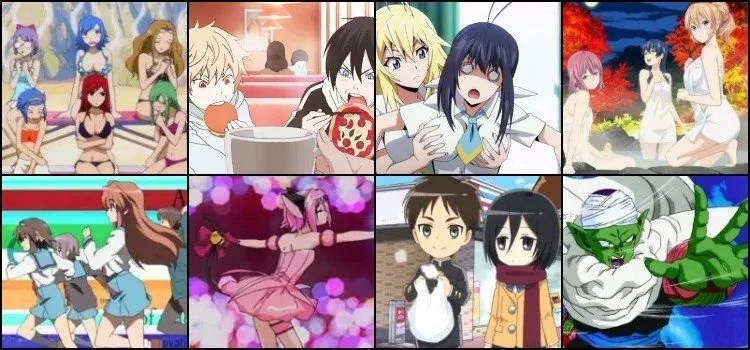
Another common theme is that every anime has a beach episode. But this practice is not common only in China, but also in all other animes and even in Western cartoons.
It is also common, in combat scenes, for the protagonist – or the enemy – to announce his powerful move. The famous shouts that seem to boost the strength of the blow make the scenes more exciting – however, very common and predictable for the more experienced.
Along with the shouting moves, there is always the character who eats non-stop. It seems that his stomach is just a hole that leads to another dimension.
Now, speaking of the protagonists specifically, you may have noticed that they are orphans – most of the time – or their mother left when they were children.
Another historical description of the characters is: the mother is dead and the father is a mysterious person who is somewhere in the world, being an opponent throughout the hero’s journey. Or a very powerful ally to defeat the great enemy of the moment.
Still about the main character, he will come out well from the situation. He will fall, will get beaten a lot, but will always get back up. He is also very handsome in all the plots, while the villain is a monster or ugly in appearance.
To conclude, a cliché that encompasses only Chinese fictions, the good man always belongs to the communist party.
In fact, it is a recurring pattern in the culture of Chinese stories, but this is part of something bigger, it is a political issue. The influence of Chinese communist politics will always be present in literary works. The exaltation of the communist party is part of the politics itself: the exaltation of the homeland and its leader.

Community
Comments
0 comments
There are no published comments in this language yet.
Send comment