

When thinking of a Japanese tree, the first that usually comes to mind is the famous cherry blossom, but this is not the only plant that draws attention for its beauty. The Japanese Maple is a plant that is also among the most exuberant.
Japan is very rich in plant diversity and even has exotic plants. The Japanese Maple, also known as Acer Palmatum (its scientific name), besides being beautiful and easy to find in Japan, can also be used to make bonsai.
This is possible due to the impressive adaptability of its foliage. Do you also enjoy different plants?
I bet you must have seen this tree passing by in some anime at a glance, as the Maple is one of the most popular trees in Japan. Come get to know the Japanese Maple better.
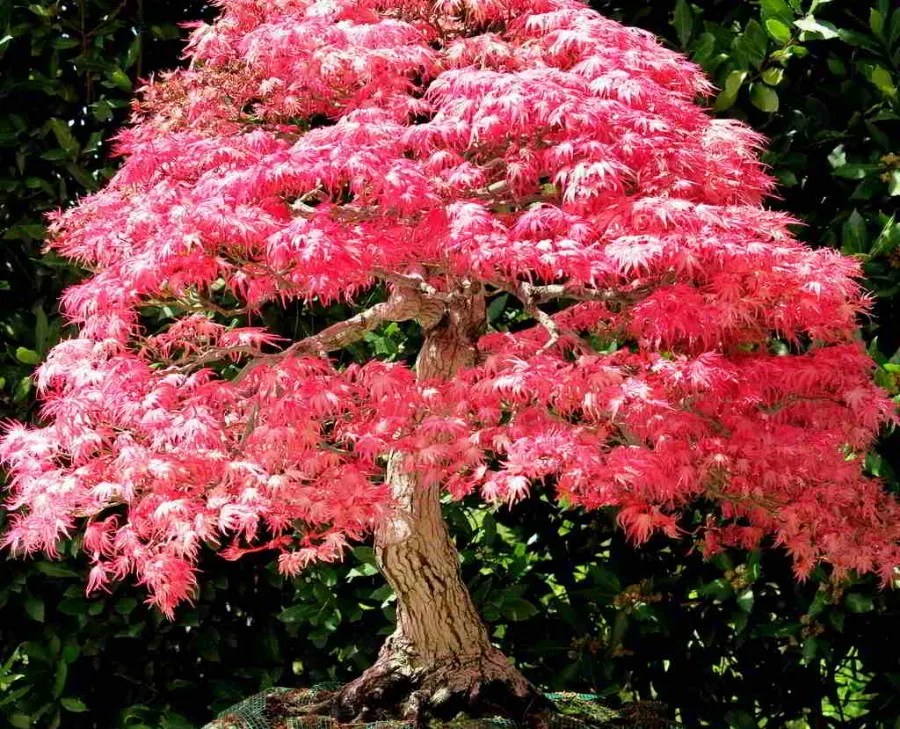
Characteristics of the Japanese Maple
The Japanese Maple also has other popular names such as Acer, Japanese Acer, Palmate Acer, and Red Japanese Maple. It belongs to the family of Sapindaceae (flowering plants).
This type of plant, besides being a common tree, can also be a Bonsai. Generally, the Japanese Maple thrives in environments with continental, Mediterranean, subtropical, and temperate climates.
Besides Japan, the tree is commonly found in Asia (where it originated), China, and South Korea. The foliage of the Japanese Maple changes color with the seasons. It can reach up to ten meters in height. In rare cases, it can reach sixteen meters.
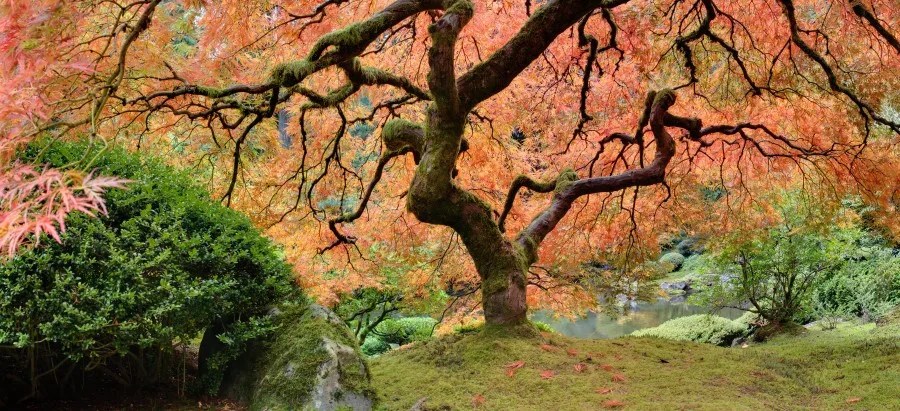
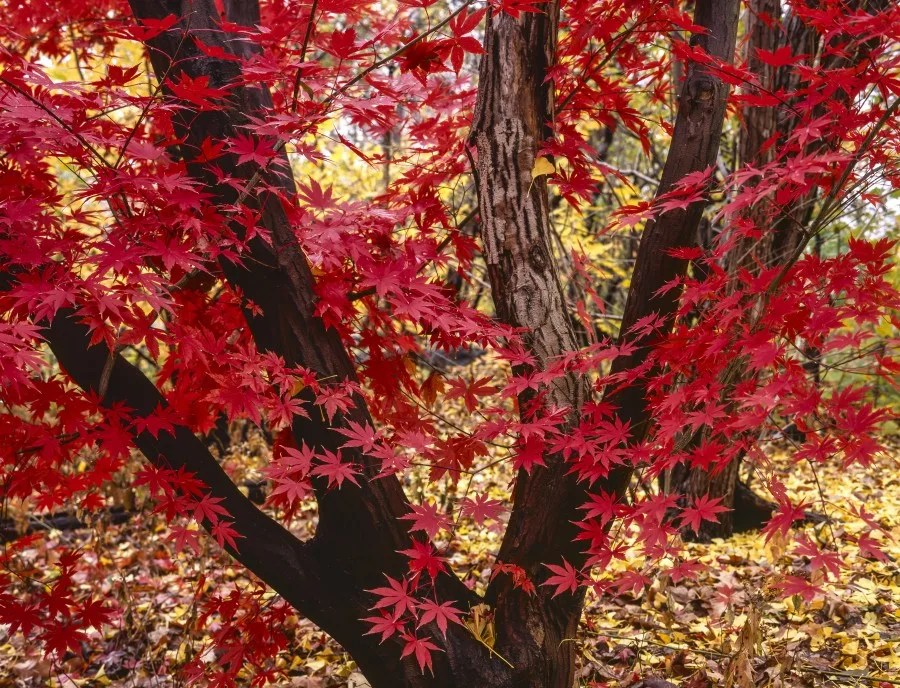
The leaves are large and shiny, ranging from reddish to more golden tones. The leaves can measure on average from five to twelve centimeters. Besides red, they can also be green or purple.
Its fruits develop in pairs resembling samaras. The fruits are produced in April and May. The Japanese Maple is an ideal tree for urban environments.
It is also highly sought after for bonsais due to its delicacy. The plant is even resistant to wind and the intense midday heat. The Maple can have several intertwined trunks.
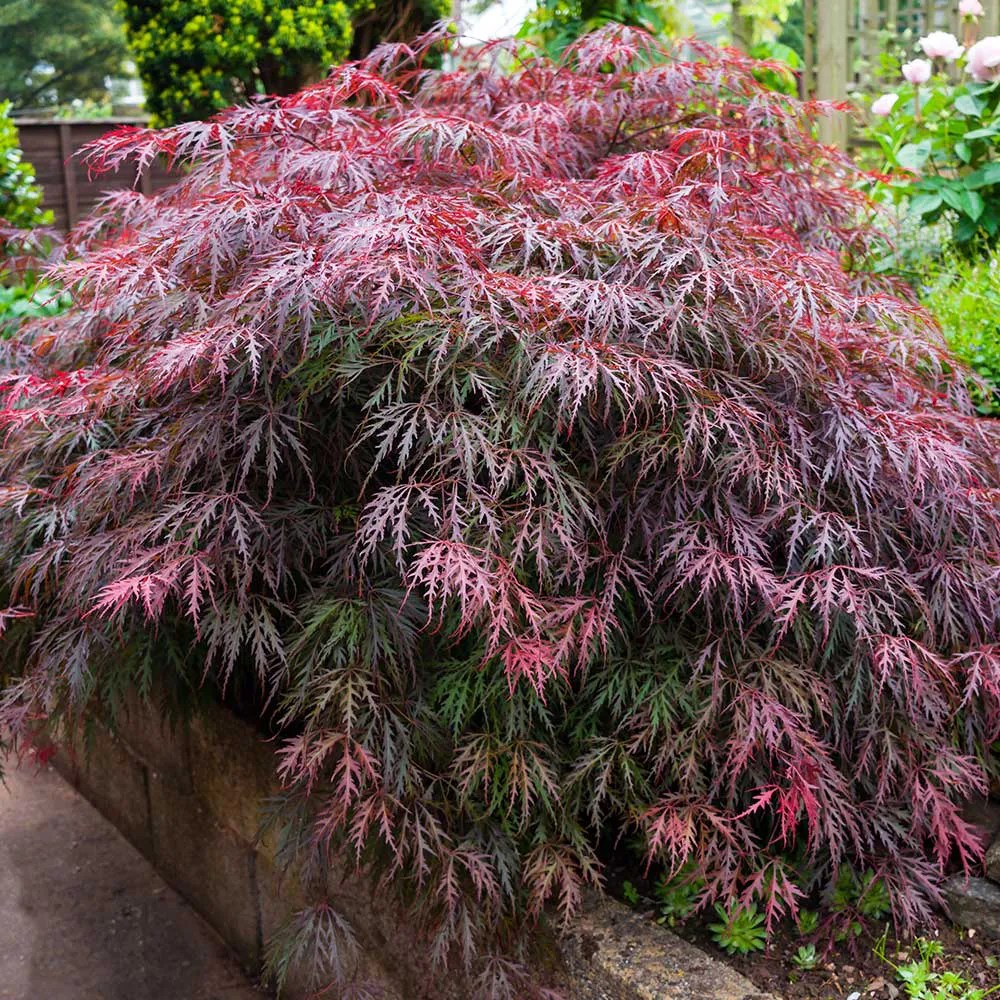
Acer Palmatum is divided into three subspecies:
- Acer palmatum subsp. Matsumure: large leaves up to 12 centimeters wide.
- Acer palmatum subsp. Palmatum: smaller leaves with 7 centimeters in width.
- Acer palmatum subsp. Amoenum: its leaves are 7 to 12 centimeters wide.
What care should be taken with the Japanese Maple?
The seeds of the Japanese Maple can be easily found in nurseries. The most cultivated species is the one with red foliage. I even took a look to see if it can be bought online, and it can! The average price is around R$150.
So if you live in Brazil, it is possible to have a Japanese Maple, preferably if you live in the southern and southeastern regions, as these places will allow the tree to adapt better since they are closer to the climate it needs to grow healthily.
It is important to be careful with excessive heat because it will lose its leaves prematurely and may die.
The Japanese Maple should be watered every day, but gradually, keeping an eye on it so that it does not become too dry or waterlogged.
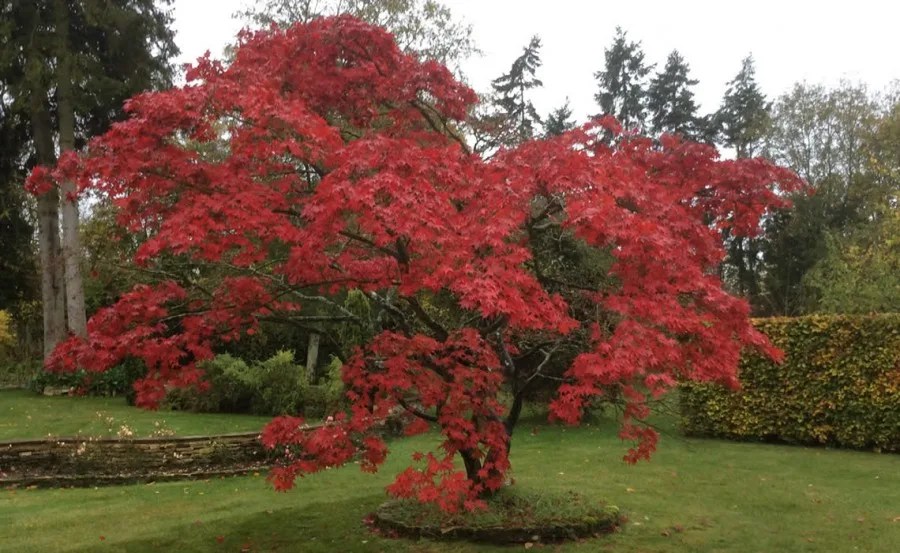
Recommendations for the Maple
Although it is a good tree for adaptation, the Japanese Maple should be located in a bright area, but not in direct sunlight.
The soil should be well-drained, deep, and have a pH between four and six. And always pay attention to watering.
The fertilizer should be applied in spring and summer. But to know the correct type of fertilizer for the Maple, consult a professional, as using the wrong fertilizer may hinder its proper development and may even lead to its death.
And last but not least: pruning. Especially if your Japanese Maple is in the form of a bonsai. Regular pruning can be done at any time of the year as needed, and formation pruning is best done in autumn.
Diseases and pests in the Japanese Maple
No plant is completely free of pests, and the Japanese Maple is no different. In this case, the most affecting pests are mealybugs and aphids.
- Mealybug: It is an insect that sucks the sap, causing malformations in the leaves and stem. Additionally, they excrete excess sap on the surface of the leaves, leading to the appearance of the so-called rust fungus.
- Aphid: Insects that attack the crops, causing loss of vigor, reducing growth, and decreasing flowering. Aphids feed on sap and also consume the leaves.
To prevent these pests, the planting area of the tree should be kept slightly moist. Prevention can also be done with eco-friendly insecticides, but consult a specialist on which ones are best for your type of Maple.
The Japanese Maple in tattoos
Despite the taboo, some Japanese people tend to tattoo leaves of trees from Japan because they are quite delicate, and the Japanese Maple is among them.
Many artists create designs based on these leaves for the creation of new tattoo models. To choose the best tattoo that pleases the person, besides the leaf model, they can choose a number of leaves that may indicate luck for them.
Some meanings attributed to tattoos resembling those of the Maple are self-control, memories, balance, among others.
So, do you feel like cultivating a Japanese Maple? Do you have a favorite Japanese plant?

Community
Comments
0 comments
There are no published comments in this language yet.
Send comment